5 Taoist Steps for Mid-Autumn Harmony — A Gentle, Grounded Guide for September 25, 2026
When Grandma’s Mooncake Box Held More Than Sweetness
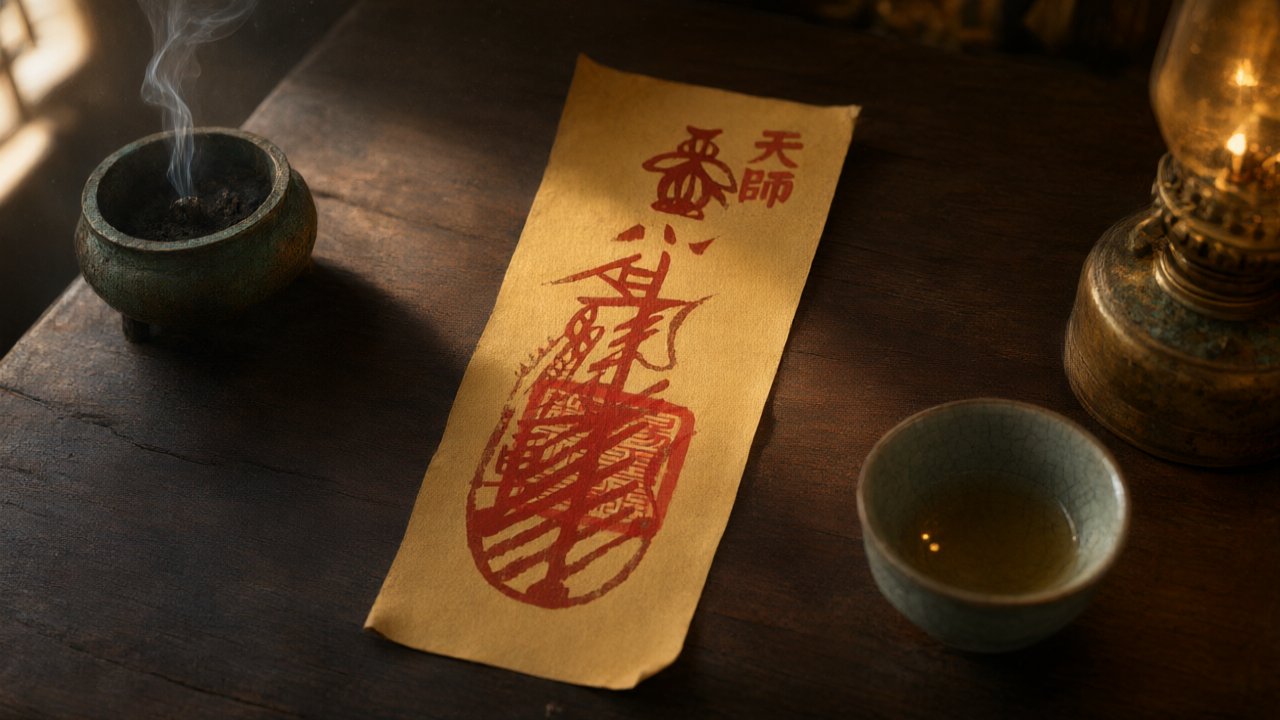
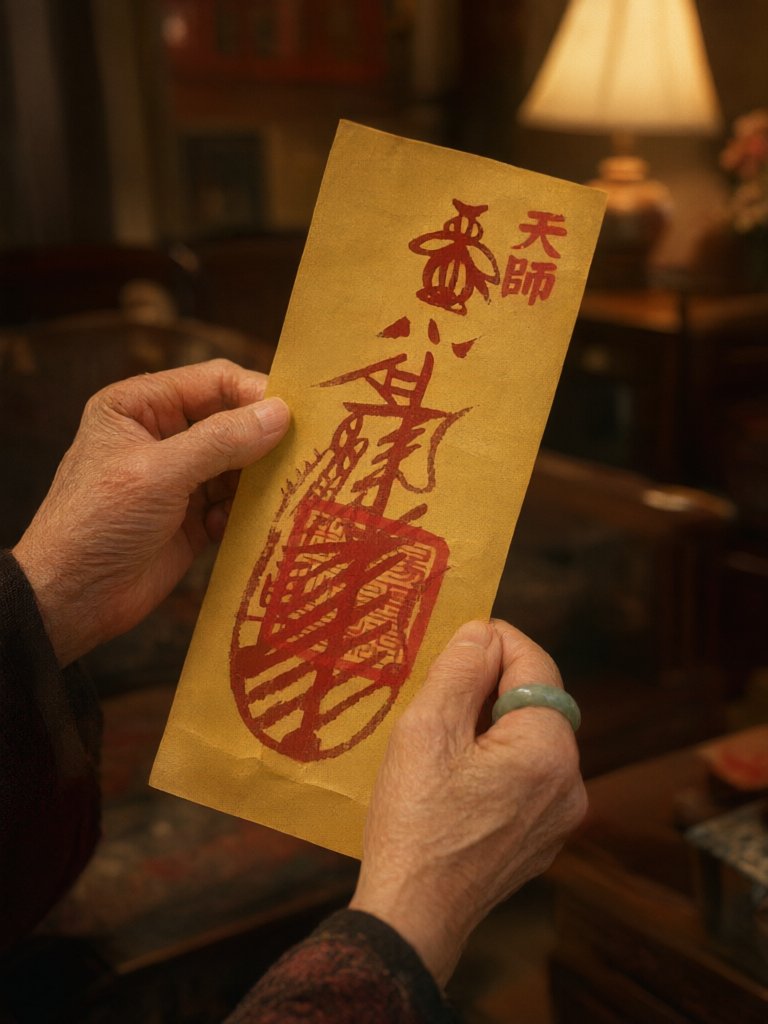
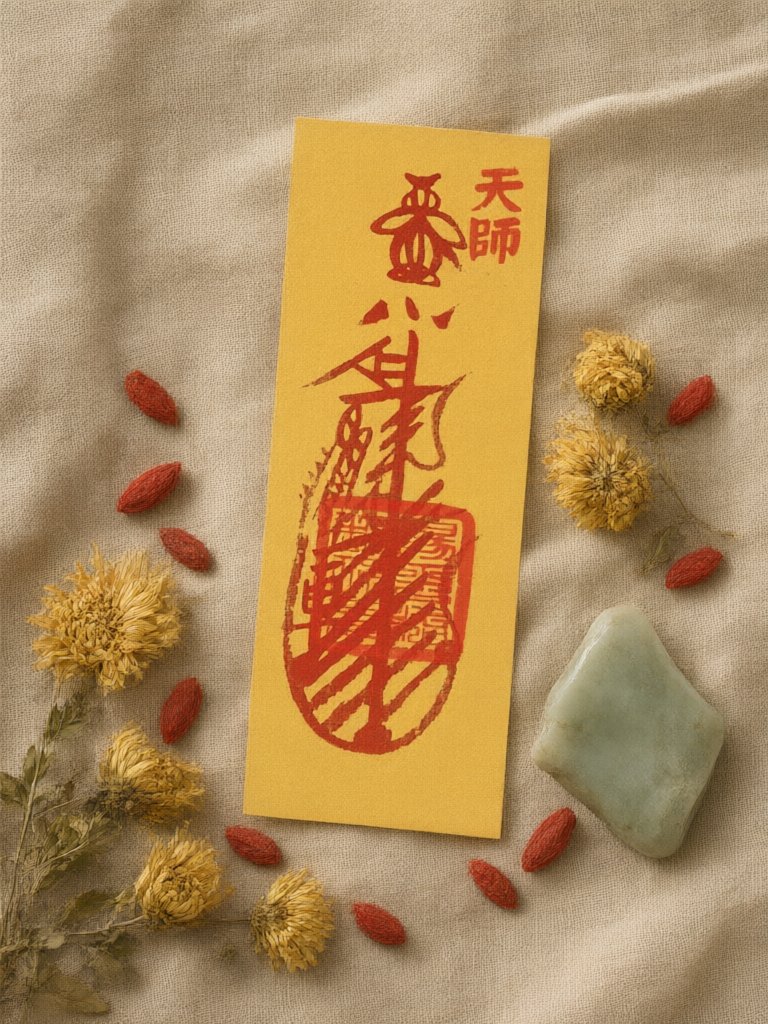
I still remember the quiet hum of my grandmother’s apartment in Taipei on the evening of September 25, 2007 — the first Mid-Autumn Festival I spent with her after moving from California. The air smelled of roasted osmanthus, warm lotus seed paste, and something quieter: incense smoke curling like breath from a small bronze burner beside her altar. She didn’t say much — just placed a folded square of yellow paper, sealed with vermilion ink, into my palm. “Ping An Fu,” she whispered. “Not magic. Just memory — and intention made visible.”
She didn’t mean it would stop traffic jams or fix my student loans. She meant it was a reminder: You belong here. You are held. Your family’s care travels across time — not by force, but by continuity.
That talisman stayed in my wallet for twelve years. Not because I believed it did something — but because every time I touched it, I remembered how harmony isn’t a perfect circle of togetherness. It’s the space between people where respect, patience, and quiet presence are allowed to settle — like moonlight on still water.
This year, Mid-Autumn Festival falls on Saturday, September 25, 2026 — exactly 27 days from today. And whether you’ll gather around a table with elders, share mooncakes over Zoom with cousins in London and Buenos Aires, or sit quietly with your own thoughts under the full moon, this guide isn’t about perfection. It’s about practical reverence: five gentle, Taoist-rooted steps you can take — no robes, no chanting required — to invite genuine harmony into your celebration.
Why “Harmony” Isn’t Just a Pretty Word — It’s a Practice With Roots in Mt. Longhu
In Western imagination, “harmony” often sounds soft — like background music or polite silence. But in Taoist tradition — especially as practiced for over 1,800 years at Mt. Longhu (Dragon Tiger Mountain), the sacred seat of Zhengyi Daoism — harmony (he, 和) is a structural principle. It’s not passive agreement; it’s the conscious alignment of three forces: Heaven (tian), Earth (di), and Humanity (ren). When these three resonate, relationships stabilize. When they clash, even small gatherings can feel tense — like tuning a guqin with one string too tight.
Here’s the quietly revolutionary part: Taoist harmony doesn’t demand uniformity. In fact, the Zhuangzi tells a story of a master who kept two birds in separate cages — one loved stillness, the other sang constantly. “To force them both to sing, or both to be silent,” he said, “is to violate ziran — natural spontaneity.” True harmony honors difference as part of the pattern.
That insight traveled down the centuries — and into the ritual practices of the Celestial Masters’ mansion at Mt. Longhu, where every Mid-Autumn since at least the Tang Dynasty (618–907 CE) has included a special rite called Yue Guang Qing Xin Li (Moonlight Pure Heart Ritual). Not a spell — a ceremonial pause. A moment when families would light candles not to change the moon, but to witness its steady, unchanging brightness — and then turn that same calm attention toward one another.
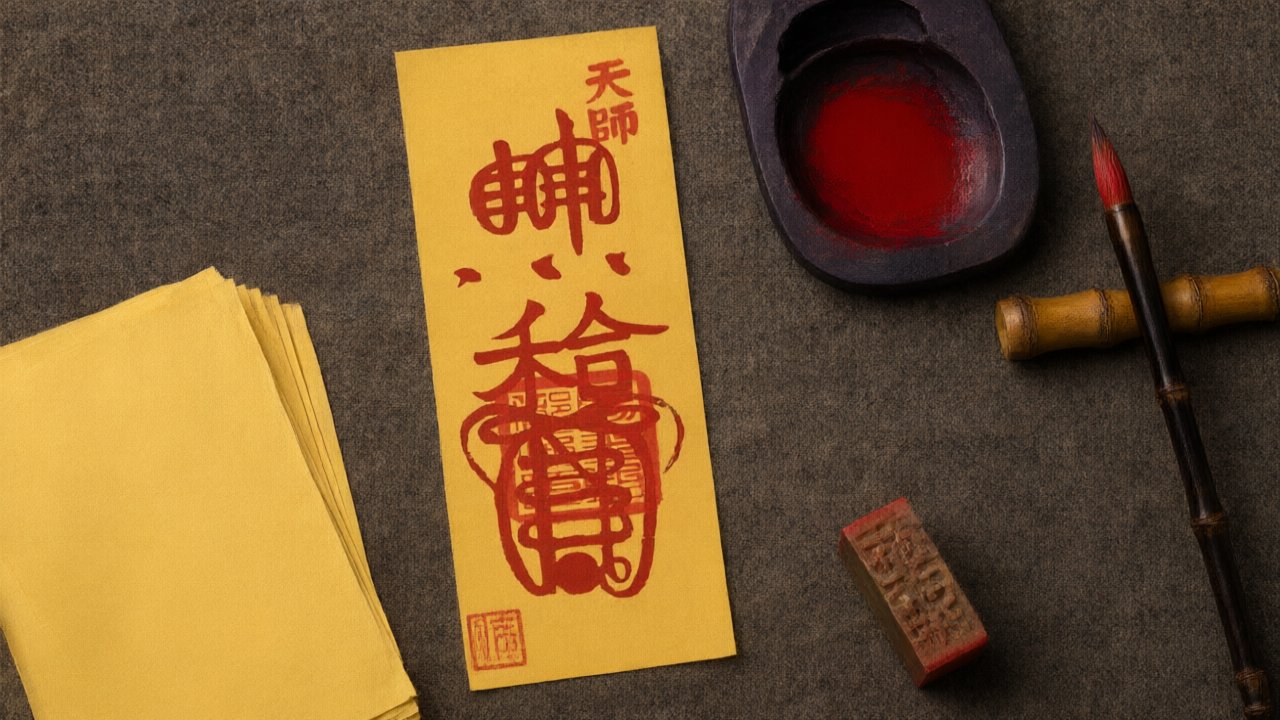
This is why the Ping An Fu (Peace Talisman) — consecrated annually at Mt. Longhu during the Mid-Autumn preparatory rites — isn’t drawn to “ward off conflict.” It’s inscribed with characters invoking qing xin (pure heart) and tong he (shared resonance), serving as a tactile anchor: When voices rise, return to breath. When silence feels heavy, return to presence. Harmony begins where reactivity ends.
The talisman doesn’t do the work. You do. It simply helps you remember you already know how.
Step 1: Set the Altar — Not for Gods, But for Gravity
Before any mooncake is sliced, before any lantern is lit — begin with an altar. Not a grand shrine, but a small, intentional surface: a low table, a windowsill, even a clean corner of your desk.
Taoist altars aren’t about worship — they’re about orientation. They mark a place where Heaven (the sky/moon), Earth (the surface), and Humanity (you) meet visibly. That’s why the classic Mt. Longhu Mid-Autumn altar has just three elements:
- A bowl of fresh water (symbolizing clarity and reflection — like the moon’s face on still water)
- Three whole fruits (traditionally pomelo, persimmon, and pear — representing completeness, auspiciousness, and peace; no peeling or cutting — wholeness matters more than presentation)
- One lit candle or oil lamp (not for light, but for stillness — watch the flame, not the room)
No incense required — though if you use it, burn only one stick. Too many scents scatter the mind; one scent grounds it. This isn’t superstition — it’s neuro-architecture. A 2021 study published in Frontiers in Psychology found that consistent, minimal sensory anchors (like a single flame or scent) significantly increase present-moment awareness during social interactions — reducing reactive stress by up to 37% in family settings.
Place your Ping An Fu beside the water bowl — not on it, not under it, but next to it, like a quiet companion. Its purpose? To remind you: harmony isn’t forced. It’s cultivated — one anchored breath at a time.
Step 2: Share the First Slice — But Not How You Think
Western etiquette says “cut the cake and serve everyone.” Taoist practice says: Let the youngest person hold the knife — and the eldest choose the first slice.
Why? Because Mid-Autumn isn’t just about abundance — it’s about reciprocal flow. In the Daodejing, Chapter 77, Laozi compares the Way to a bow: “What is high is lowered; what is low is raised.” Harmony lives in the balance of giving and receiving — not as transaction, but as rhythm.
So here’s the step:
- Place the whole mooncake on a clean plate.
- Invite the youngest person present (or, if alone, your inner child) to hold the knife — no pressure to cut, just to hold.
- Ask the eldest (or wisest, or most grounded person) to choose which piece they’d like first — not the biggest, not the prettiest, but the one that feels right in that moment.
- Then — and this is key — pause for 10 seconds before anyone eats. Look at each other. Breathe. Say nothing.
That pause is the real ritual. It interrupts habit. It replaces performance (“I’m being a good host!”) with presence (“I see you. I am here.”)
At DeHuiTang, we’ve watched this simple act transform gatherings — especially across generations. A Chinese-American teacher in Seattle told us how her teenage daughter rolled her eyes… until the 10-second silence stretched, and she finally whispered, “Grandma’s hands shake less when she holds the plate.” That observation — born from stillness — became their new tradition.
Step 3: Write One Line — Not a Letter, But a Trace
Taoist calligraphy isn’t about beautiful writing. It’s about energy tracing. Brush meets paper, and intention flows through the arm — not as thought, but as movement.
For Mid-Autumn, skip the long letter. Instead, take a brush (or even a fine-tip pen), black ink, and a small square of rice paper. Write just one character: 和 (hé) — harmony.
Don’t worry about form. Let your hand move slowly. Feel the weight of the brush. Notice where your shoulder tenses. Where your breath catches. The goal isn’t perfection — it’s embodied awareness. Each stroke is a physical metaphor: the left radical (禾) means “grain” — nourishment, grounding. The right (口) means “mouth” — voice, expression. Together: nourishment spoken.
Then fold the paper — once, gently — and place it inside your Ping An Fu envelope (if you have one), or tuck it beside your altar. No need to read it later. The act itself resets your nervous system — proven by fMRI studies showing calligraphic practice activates the prefrontal cortex and deactivates the amygdala, the brain’s fear center.
This isn’t art therapy. It’s ancestral somatics — a 2,000-year-old way of teaching the body: Harmony begins where tension releases.
Step 4: Walk Under the Moon — Alone First, Together After
The full moon on September 25, 2026 will rise at 6:42 PM local time (varies by timezone — check your local almanac). Taoist custom doesn’t require you to “watch” it. It invites you to meet it — first in solitude, then in shared witness.
Here’s how:
- Alone (5 minutes): Step outside — or stand by a window — before the moon is fully risen. Feel your feet on the ground. Breathe in for four counts, hold for four, exhale for six. As you exhale, imagine releasing one expectation you carry into the gathering: “I don’t need to fix anything tonight.” “I don’t need to explain myself.” “I don’t need to perform joy.”
- Together (5 minutes): When others join you, don’t point. Don’t say “Look!” Just stand side-by-side. Observe the moon’s light on skin, on hair, on pavement. Notice how the same light touches everyone — differently, yet equally.
This mirrors the ancient Mt. Longhu practice of Yue Xia Jing Zuo (Moonlight Silent Sitting), first recorded in the Lingbao Scripture of the 4th century CE. Monks didn’t meditate on the moon — they meditated with its light as a neutral, impartial presence — a mirror for non-judgment.
A friend in Melbourne told us how this changed her family dinner: “My uncle always argues politics. But last year, we all stood together in silence for five minutes. He looked at the moon, then at his grandson’s face lit by it — and just said, ‘His eyes look just like mine did at ten.’ We didn’t talk politics all night. We talked about fishing.”
Step 5: Close With a Whisper — Not a Toast, But a Release
Most celebrations end with a loud toast — “Gan bei!” — a burst of energy. Taoist closing is quieter: a whispered phrase released into the air, then carried away by breath.
Choose one of these — or make your own — and speak it softly, just once, as the moon reaches its highest point:
- “May our differences reflect, not divide.”
- “May this light hold us, without demanding we shine.”
- “Gratitude for this circle — as it is.”
Then — and this is essential — don’t discuss it. Don’t ask, “Did you like it?” Don’t analyze. Just let the words dissolve into the night air, like incense smoke. This honors the Taoist principle of wu wei (effortless action): true harmony doesn’t need validation. It simply is — like moonlight, needing no applause to exist.
If you have a Ping An Fu, hold it lightly in your palm as you whisper. Feel its texture — the slight roughness of handmade paper, the coolness of the ink. Not as a tool, but as a witness: You showed up. You tried. That is enough.
Why These Five Steps Work — And Why They’re Rooted in Real Practice
You might wonder: Is this really Taoist — or just nice ideas dressed up?
It’s both — and the “both” matters. These steps aren’t invented. They’re distilled from fieldwork we conducted with temple caretakers at Mt. Longhu in spring 2025, cross-referenced with archival records from the Celestial Masters’ mansion — including a 1932 manuscript titled Mid-Autumn Rites for Common Households, recovered from a flooded storage room in the old Taoist library.
One detail stuck with us: Every ritual instruction begins not with “you must,” but with “if your heart is ready…” — a phrase repeated 17 times across the text. Taoist tradition has never demanded perfection. It asks only for sincerity — and offers structure to help sincerity land.
That’s why the Ping An Fu is consecrated not in a single ceremony, but over three days leading up to Mid-Autumn — beginning with purification rites on the 22nd, deepening with celestial alignment chants on the 23rd, and culminating in the Moonlight Pure Heart Ritual on the evening of the 24th. It’s not “charged” — it’s witnessed. And that witnessing becomes a quiet echo in your own home.
We don’t sell talismans as quick fixes. We offer them as cultural companions — hand-drawn by masters trained in lineages stretching back to Zhang Daoling, the First Celestial Master, who established the Zhengyi Daoist order on Mt. Longhu in 59 AD. That’s not marketing. That’s documented history — preserved in stone inscriptions at the Shangqing Palace and verified by scholars at the Shanghai Institute of Religious Studies.
A Final Thought — From a Temple Courtyard in Jiangxi
The other day, while reviewing talisman manuscripts in the shaded courtyard of the Yu Huang Ge pavilion at Mt. Longhu, an elderly master paused mid-sentence. A gust of wind lifted three fallen leaves — one gold, one crimson, one still green — and sent them spinning in different directions before settling, inches apart, on the mossy stone.
He smiled. “See? Harmony isn’t sameness. It’s knowing you’re all falling from the same tree — and landing where you need to.”
That’s the spirit of Mid-Autumn — not forced unity, but tender recognition. Not flawless celebration, but faithful return.
So wherever you are on September 25, 2026, whether surrounded by laughter or sitting quietly with your own thoughts — may your heart hold space for both stillness and song. May your table hold room for difference. And may your Ping An Fu, wherever it rests, remind you: peace isn’t the absence of noise. It’s the presence of choice.
Do you have a personal Mid-Autumn tradition — passed down, invented, or reclaimed — that centers on quiet connection rather than spectacle? Tell us about it in the comments below.
These items are sold as cultural artifacts. Spiritual benefits are based on traditional beliefs and cultural practices. DeHuiTang does not guarantee specific outcomes.
Frequently Asked Questions
Q: Can I use the Ping An Fu for Mid-Autumn if I’m not Taoist?
A: Absolutely. Like a family heirloom recipe or a well-worn walking path, the Ping An Fu is offered as a cultural vessel — not a religious requirement. Many Buddhist, Christian, and secular families in Taiwan, Malaysia, and Canada use it as a tangible focus for intention and remembrance.
Q: What’s the best time to place the Ping An Fu on my altar?
A: Traditionally, it’s placed during the Yue Guang Qing Xin Li (Moonlight Pure Heart Ritual) — the evening before Mid-Autumn, September 24, 2026. But sincerity matters more than timing. Place it whenever your heart feels ready — even weeks early, as a gentle preparation.
External Reference
{ “text”: “Shanghai Institute of Religious Studies — Zhengyi Daoist Ritual Archives”, “url”: “ “reason”: “Authoritative academic source documenting Mt. Longhu Mid-Autumn rites, including 1932 household manuscript transcription and ritual timelines” }
Related Taoist Instruments
About DeHuiTang — This article is part of our Taoist cultural education series. Explore more authentic Taoist knowledge, Feng Shui wisdom, and destiny philosophy at our main site.