Your Relationship Has a Taoist Signature — What Does It S…

Your Relationship Has a Taoist Signature — What Does It Say?

When Grandma Folded Two Red Papers into One Wallet

{alt}
{alt}
{alt}

It was the summer of 2019, and I was helping my aunt clean out her late mother’s cedar chest in Vancouver. Beneath layers of silk handkerchiefs and faded qipao linings, we found a small cloth pouch — stiff with age, tied with faded red thread. Inside: two folded talismans, slightly yellowed at the edges, written in dense, elegant script. One bore the characters 夫妻和合 (Fu Qi He He) — Marital Harmony. The other, written in mirror-image ink, read 同心同德 (Tong Xin Tong De: “same heart, same virtue”). My aunt, a retired pediatrician who’d never set foot in a temple, held them gently. “She kept them in her wallet for 47 years,” she said, voice soft. “Not because she thought they’d fix things — but because they reminded her how to fix things.”

That moment — quiet, unceremonious, deeply human — is the real heart of Taoist relationship wisdom. Not spells. Not guarantees. Not cosmic matchmaking. But a signature: a quiet, handwritten affirmation of intention, rhythm, and mutual care — drawn not in magic, but in memory, movement, and meaning.

This isn’t a quiz that tells you your ‘compatibility score.’ It’s an invitation to recognize the Taoist signature already present — or waiting — in your relationship. And yes, it begins with something as simple — and profound — as folding two papers into one wallet.


The Ink That Doesn’t Command — It Consecrates

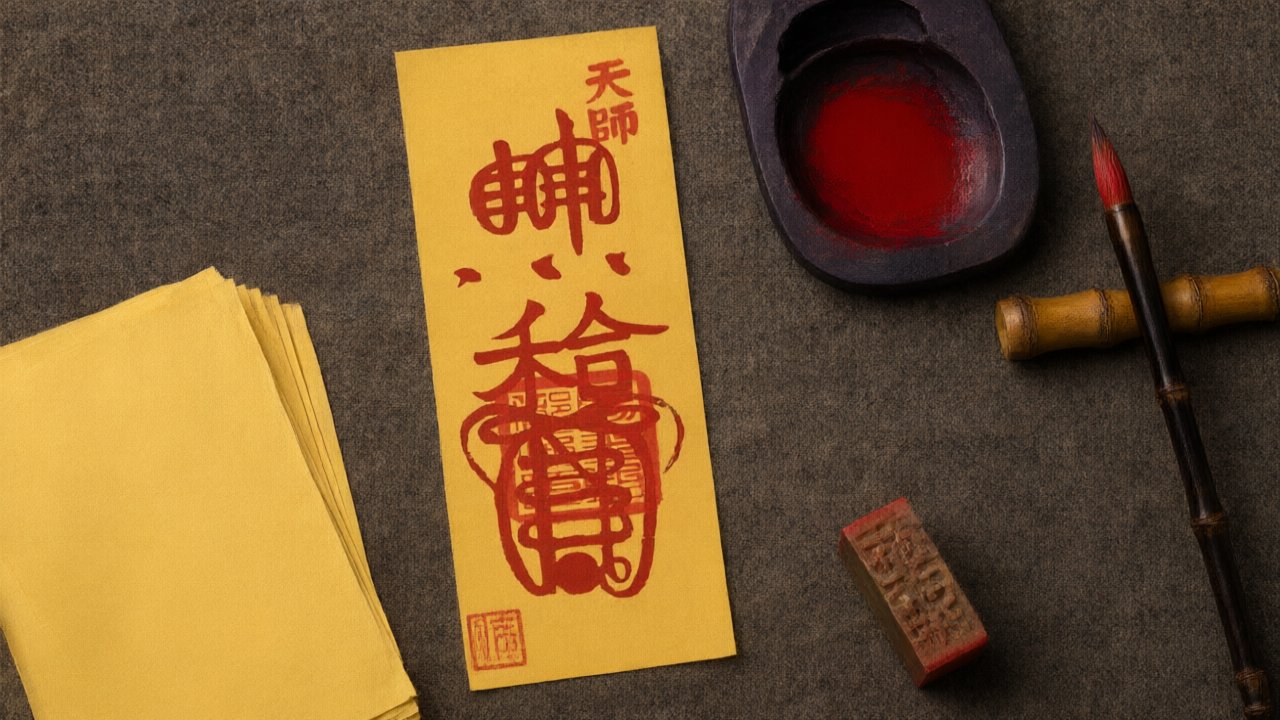
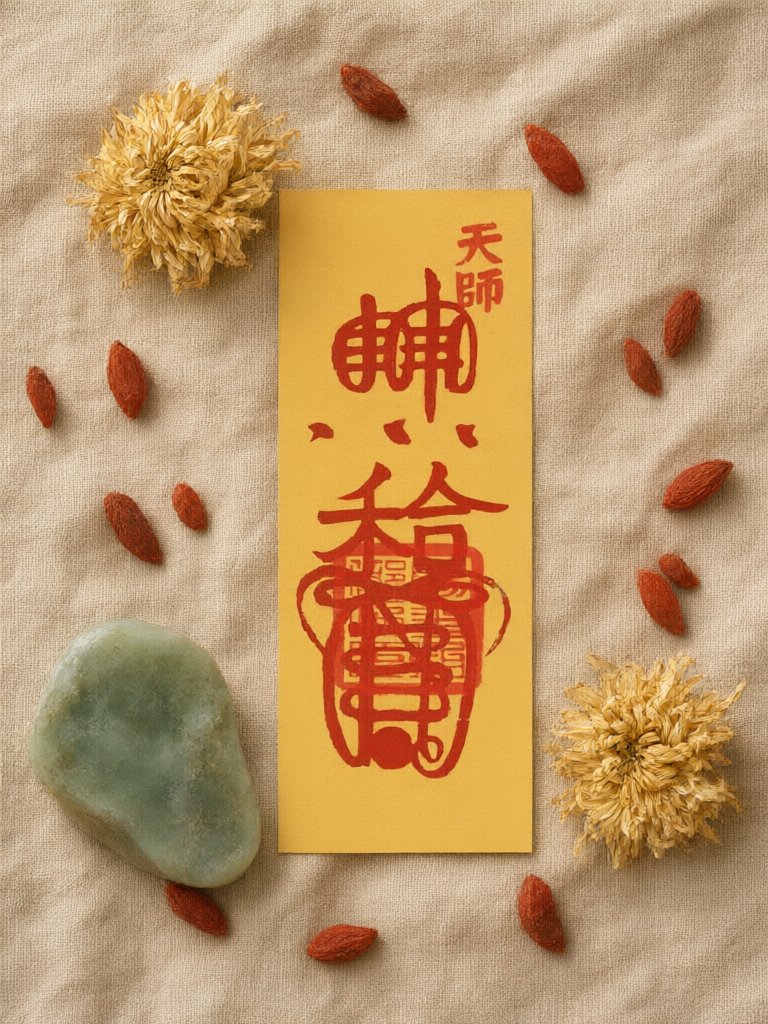
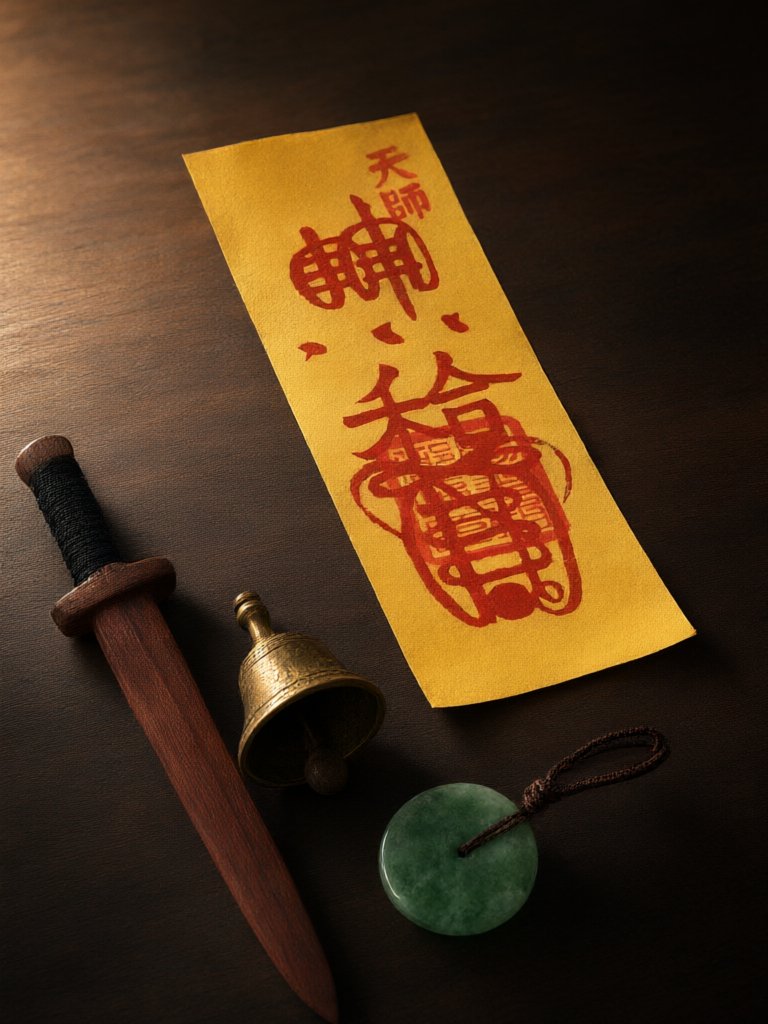
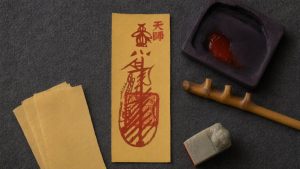
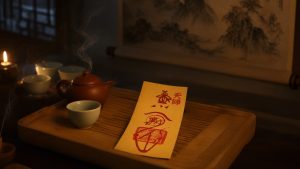
In 1015 AD, during the Northern Song Dynasty, the Celestial Master Zhang Jixian formalized the Fu Qi He He Fu (Marital Harmony Talisman) as part of the Zhengyi Daoist liturgical canon — not as a charm to force love, but as a ritual anchor for renewing covenant. At Mt. Longhu — the sacred seat of Zhengyi Daoism since 59 AD — this talisman has never been drawn in isolation. It is always prepared alongside its counterpart: the Xie Xin Fu (Harmonizing Hearts Talisman), which is placed not on the couple, but on the shared threshold — the doorframe, the altar ledge, the bedside table — marking the space between them as sacred ground.

Here’s what most miss: The Fu Qi He He Fu doesn’t bless individuals — it blesses relational grammar.

Think of it like calligraphy. In Chinese brushwork, the beauty isn’t in each isolated stroke — it’s in the breath between them: the pause before the downward sweep, the subtle lift before the turn, the weight shared across the paper’s grain. A rushed stroke breaks the flow. A heavy hand flattens the spirit. So too in marriage: Taoist tradition observes that harmony isn’t the absence of friction — it’s the presence of shared breath, mutual timing, and intentional spacing.

That’s why the talisman’s central character is 和 (He: harmony), not 愛 (Ai: love). He implies balance — like yin-yang swirling, not merging; like two trees sharing soil but growing toward different light. It’s the difference between ‘I want us to be happy’ and ‘I want to tend the conditions where happiness can grow between us.’

Historically, the talisman was drawn only after the couple completed three preparatory rites:
One shared silence (no phones, no words — just sitting together for 15 minutes);
One shared task (sweeping the floor, folding laundry, lighting incense — done side-by-side, without instruction);
One shared offering (placing two cups of tea on the family altar, then drinking from the same cup — symbolizing one vessel, two sips).

These weren’t ‘tests’. They were tuning forks. Each act calibrated attention — away from expectation, toward presence; away from performance, toward participation.

Bagua Mirror

Feng Shui Protection & Evil Warding Amulet

View Details

Yin Yuan He He Fu (姻缘和合符)

Love Harmony & Relationship Synergy Talisman

View Details

And today? You don’t need to travel to Mt. Longhu to begin. You just need to notice where your relational grammar is tight — and where it’s flowing.


The Five Signatures: What Your Relationship Is Already Saying (Without Words)

Taoist relationship observation doesn’t ask “Are you compatible?” It asks: “What kind of harmony are you practicing — consciously or unconsciously?”

Below are five relational signatures — drawn from centuries of temple records, family altar logs, and oral histories collected across Fujian, Jiangxi, and overseas Chinese communities — each with its own quiet language. Read them not as judgments, but as mirrors. Which feels most familiar — not in theory, but in your body, your breath, your Tuesday evening kitchen?

Signature 1: The Mirror-Image Pair (和合如镜 He He Ru Jing)

“We finish each other’s sentences — and rarely disagree.”

This signature appears when both partners move in near-perfect synchrony — same routines, same values, same emotional temperature. On the surface, it looks like ideal harmony. But Taoist elders caution: A mirror reflects, but does not deepen. Without contrast, there’s no growth edge. The Fu Qi He He Fu, when used here, is not about ‘fixing’ — but about introducing gentle asymmetry: taking separate walks, reading different books, choosing one decision per week that’s made solo — not to create distance, but to let new perspectives enter the shared space like fresh air.

Signature 2: The Interwoven Braid (盘根错节 Pan Gen Cuo Jie)

“We’re tangled — in history, in family, in old arguments — but we won’t let go.”

This is the signature of endurance. You’ve weathered storms. You know each other’s ghosts. The talisman here serves not as a shield, but as a knot-tender: a reminder that interweaving isn’t weakness — it’s structural strength. In Qingming Festival records from Longhushan village (1932), couples would write their grievances on rice paper, burn them over a shared bowl of water, then fold the ashes into a Fu Qi He He Fu — transforming heat into fertile soil. Modern practice? Try writing one thing you appreciate about how your partner holds tension — not resolves it, but holds it — and place it beside your talisman.

Signature 3: The Breathing Bellows (一开一合 Yi Kai Yi He)

“We expand and contract — sometimes together, sometimes apart — and somehow, it works.”

This is the most Taoist signature of all. Think of bellows: inhale (open), exhale (close), neither is ‘better’ — both are necessary. Couples with this rhythm often surprise outsiders: “How do you do that?” They don’t ‘do’ anything — they trust the cycle. The Fu Qi He He Fu supports this by being placed not on the person, but on the shared calendar — near the fridge, on a planner, or digitally as a recurring note: “This is our expansion week. This is our contraction week.” No explanation needed. Just acknowledgment.

Signature 4: The Unwritten Contract (默契 Mo Qi)

“We don’t talk about it — but we both know the rules.”

Silent agreements form the bedrock of many long marriages — from who handles taxes to how grief is expressed. But Taoist ritual masters warn: Unwritten contracts gather dust. Over time, assumptions calcify. The Fu Qi He He Fu becomes a ritual rewriting tool. Once a season, couples are invited to sit with the talisman and speak aloud one unwritten rule — not to change it, but to breathe life back into it. “I know you need quiet after work.” “I know you show love through fixing things.” Naming it renews it.

Signature 5: The Threshold Guardian (守门人 Shou Men Ren)

“We protect our relationship like a temple gate — warm inside, clear boundaries outside.”

This signature appears in couples who fiercely guard their shared energy — from overwork, from family enmeshment, from digital noise. Historically, the Fu Qi He He Fu was paired with a Men Shen Fu (Door God Talisman) — one for the inner harmony, one for outer boundary. Today, that might mean a shared ‘no phones after 8pm’ rule, or a monthly ‘threshold review’: “What drained us this month? What nourished us? What needs guarding next?”

Notice: none of these signatures demand perfection. None require grand declarations. All invite recognition — the first, gentlest, most powerful act of harmony.


The Real Ritual Happens After the Ink Dries

Last spring, I visited the old Zhengyi Daoist temple on Mt. Longhu’s southern slope — not the grand Celestial Masters’ Mansion, but the small, moss-covered Jingxin An (Still Heart Hermitage), where Master Lin, now 86, still draws talismans by lamplight. He showed me his personal Fu Qi He He Fu — not the pristine ones sold in shops, but one he’d used for 52 years with his late wife. Its edges were frayed. Tea stains bloomed like plum blossoms across the paper. A tiny sketch of two cranes — drawn in pencil — fluttered in the margin.

“When people ask me if it ‘worked’,” he said, grinding ink slowly, “I tell them: It worked every time I remembered to look at it — not as a promise, but as a question.

He paused, then smiled. “The real ritual isn’t drawing the talisman. It’s the moment after: when you put it down, and choose — again — to listen more closely, speak more softly, or simply sit in the same room without needing to fill the silence.”

That’s the quiet power of the Fu Qi He He Fu. It’s not a force applied to your relationship — it’s a compass held within it. A reminder that harmony isn’t a destination you arrive at, but a direction you continually face — together.

At Dehui Hall, every Fu Qi He He Fu is consecrated at Mt. Longhu following the Zhengyi lineage’s 1,800-year transmission — drawn by ordained priests, using aged ink and handmade xuan paper, then folded with the traditional triple-bow knot. It arrives not as a solution, but as a companion: a tangible echo of that ancient question — How shall we walk together, today?

So — what does your relationship’s Taoist signature say right now?

Do you have a family talisman — passed down, gifted, or quietly kept — that marked a turning point in your relationship? Not because it ‘fixed’ anything, but because it helped you remember something true?

Share your story below. We’ll feature one thoughtful reflection in next month’s Dehui Hall newsletter — along with a hand-drawn ink sketch inspired by your words.

These items are sold as cultural artifacts. Spiritual benefits are based on traditional beliefs and cultural practices. Dehui Hall does not guarantee specific outcomes.


FAQ

Q: Can the Fu Qi He He Fu be used by unmarried couples or LGBTQ+ partners?
A: Yes. In Zhengyi Daoist tradition, the talisman honors intentional, committed relationship — regardless of legal status or gender identity. Its core principle — He He (harmony through mutual respect and rhythmic attunement) — applies universally.

Q: How often should it be renewed?
A: Traditionally, it’s renewed annually — especially around the Spring Equinox (March 20–21), when yin and yang are in perfect balance. Many couples also renew it after major life transitions: moving, career shifts, or healing from conflict.


Further Reading & Cultural Sources

  • The Book of Balance: Marriage and Harmony in Daoist Ritual Texts, translated by Dr. Li Wei (University of Hong Kong Press, 2021) — https://www.hkupress.org/
  • Mt. Longhu Temple Archives: “Ritual Protocols for Marital Talismans, 1683–1949”, digitized collection (Longhu Shan Cultural Preservation Society)
  • Oral History Project: “Grandmothers’ Pouches — Domestic Talisman Practices in Overseas Chinese Families”, UCLA Asian American Studies Center (2024)

Frequently Asked Questions

What is the Fu Qi He He talisman, and how is it traditionally used in relationships?

The Fu Qi He He (Marital Harmony) talisman is a consecrated Taoist symbol rooted in Zhengyi Daoist practice, dating back to the Northern Song Dynasty. Traditionally, it’s not used to manipulate outcomes, but as a ritual anchor for renewing mutual intention and relational awareness. Paired with the Xie Xin Fu (Harmonizing Hearts), it’s placed on shared thresholds—not on individuals—to honor the sacred space between partners. Its purpose aligns with Taoist values: cultivating presence, timing, and balance—not control or guarantees.

Can I use a Taoist relationship talisman if I’m not religious or don’t practice Taoism?

Yes—many people engage with these talismans as cultural or contemplative tools rather than religious objects. In Taoist tradition, consecration emphasizes mindful intention over doctrine. Families have long kept talismans like Fu Qi He He as quiet reminders of care, rhythm, and shared commitment—similar to lighting a candle before a conversation. Dehui Hall prepares each talisman with traditional rites, but respectful personal meaning—not belief—is what gives it resonance in daily life.

Do Taoist relationship talismans 'fix' problems or guarantee harmony?

No. Within Taoist tradition, talismans like Fu Qi He He are not magical fixes or promises—they’re ceremonial supports for conscious practice. As the article notes, they bless ‘relational grammar,’ not individuals: encouraging shared silence, coordinated action, and intentional spacing. Harmony (He) is understood as dynamic balance—like yin-yang—not static perfection. Their role is cultural and symbolic: to ground attention, deepen presence, and honor the effort behind enduring care.

How is the Yin Yuan He He Fu different from the Fu Qi He He Fu?

The Fu Qi He He Fu centers marital covenant—used by committed partners to nurture ongoing harmony through shared ritual and threshold marking. The Yin Yuan He He Fu (‘Destiny & Harmony’ talisman) relates more broadly to relational affinity and auspicious connection—often sought during courtship or new partnerships. Both reflect Taoist principles of balance and intention, but differ in context and traditional usage. Neither overrides personal agency; both invite alignment with values like respect, patience, and mutual growth.

About DeHuiTang — This article is part of our Taoist cultural education series. Explore more authentic Taoist knowledge, Feng Shui wisdom, and destiny philosophy at our main site.
Scroll to Top
DeHuiTang · 德慧堂 — 龍虎山正一道法脈傳承
Official Site Sacred Artifacts Gallery Taoist Culture Blog