Which Mid-Autumn Talisman Matches Your Heart?
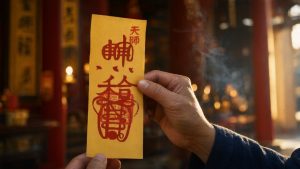
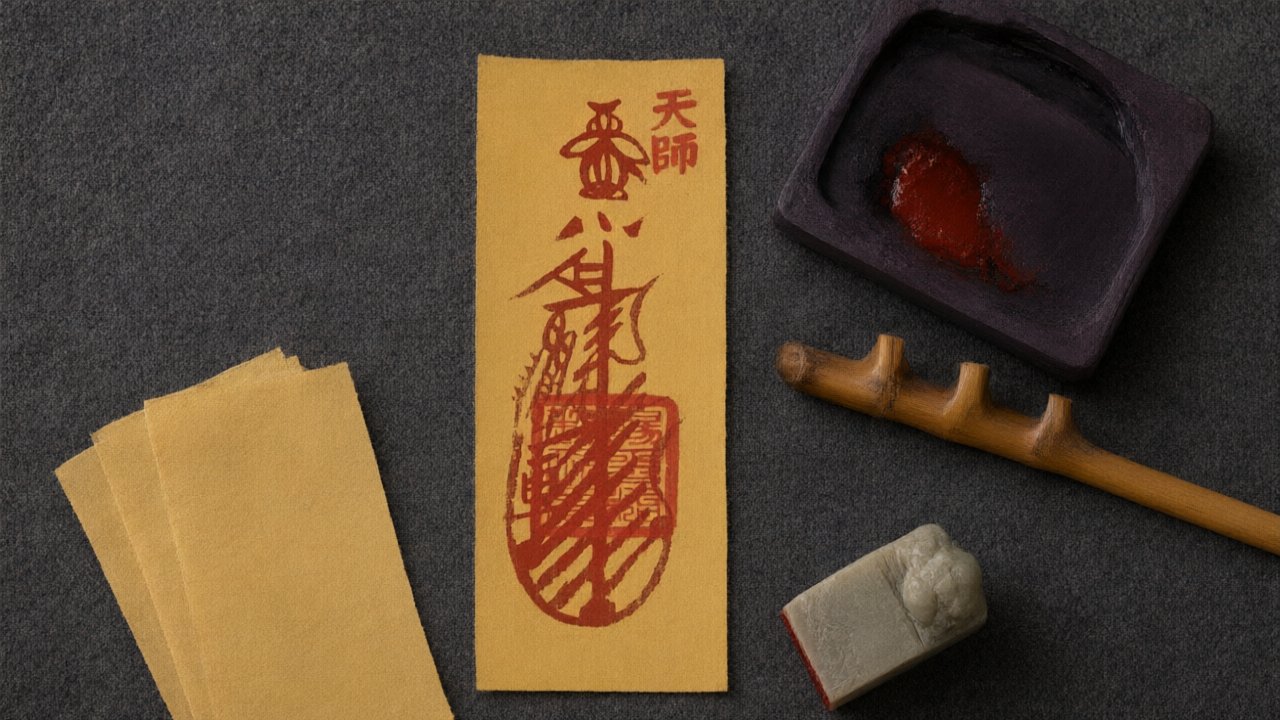
It was a rainy Tuesday in Vancouver — the kind where steam curls off takeout containers and streetlights flicker like tired stars. A woman in her late 30s, a pediatric nurse named Mei, pulled a small folded paper from her wallet. Not a receipt. Not a transit card. A Ping An Fu — a Peace Talisman — inked in vermilion on yellow rice paper, its edges softened by years of handling. She didn’t pray over it. She just held it while waiting for the bus, breathing slower, as if the paper itself remembered how to hold space for calm.
She told me later: “My grandmother gave it to me before I left Shanghai. She said, ‘Not for luck — for remembering you belong.’”
That moment — quiet, unceremonious, deeply human — is where Taoist tradition lives today. Not only in incense-thick halls or mountain temples, but in wallets, desk drawers, and the pause between one anxious thought and the next. And in 25 days — on September 25, 2026 — millions around the world will gather under the fullest moon of the year for the Mid-Autumn Festival (Zhongqiu). But long before lanterns glow and mooncakes are sliced, something older stirs: the quiet, collective turning inward — toward family, harmony, and the sacred rhythm of return.
This isn’t just a festival. It’s an emotional compass — calibrated by centuries of Taoist practice, celestial observation, and ancestral care. And at its heart lies a gentle, often overlooked truth: harmony isn’t passive. It’s practiced.
So let’s not talk about rituals first. Let’s begin with you — your rhythm, your relationships, your quietest longing this season. Because the Mid-Autumn Festival, in Taoist tradition, doesn’t ask you to perform perfection. It invites you to align — with time, with kin, and with the quiet strength that comes from knowing you are already held.
The Moon Isn’t Just Pretty — It’s a Cosmic Mirror
Most people know the Mid-Autumn Festival celebrates the harvest moon. Few know that in Zhengyi Daoist cosmology — the lineage rooted for over 1,800 years at Mt. Longhu in Jiangxi Province — the full moon of the 8th lunar month isn’t merely symbolic. It’s operative.
Here’s the key knowledge point — wrapped not in doctrine, but in lived practice:
The moon is seen as the visible face of Yin Qi — the receptive, nourishing, reflective energy that balances Yang’s active, outward force. On Zhongqiu, Yin Qi reaches its annual peak — not as emptiness, but as deep receptivity: the capacity to listen, to receive, to restore relational equilibrium.
Think of it like tuning a guqin — the ancient seven-string zither. You don’t force the strings into harmony. You adjust tension just so, until resonance emerges naturally. That’s what Zhongqiu does for families. It’s not about fixing broken bonds — it’s about creating the energetic stillness where mending becomes possible.
This understanding shaped real ritual architecture. At the Celestial Masters’ Mansion on Mt. Longhu — first established in 59 AD — the annual Zhongqiu ceremony wasn’t held indoors. It took place on the Moon-Worshipping Terrace (Bai Yue Tai), an open-air stone platform facing west, built during the Song Dynasty (960–1279 CE). Why? Because Taoist priests understood: to honor Yin Qi, you must meet it where it lives — in open sky, in reflected light, in shared silence beneath the moon’s silver wash.
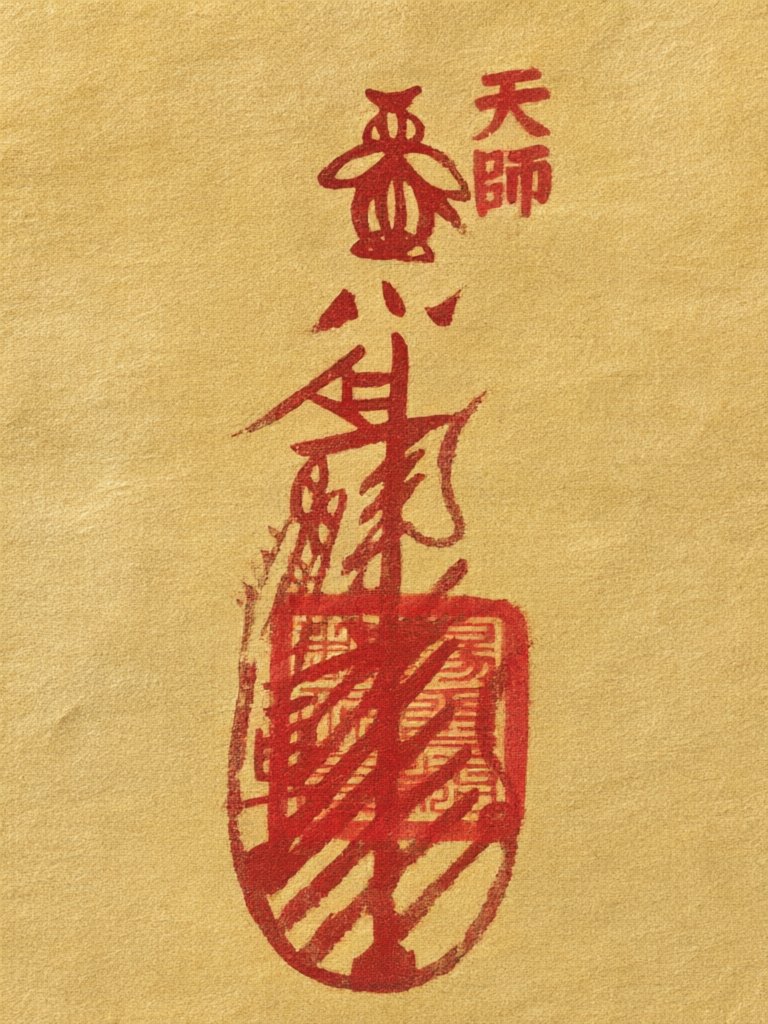
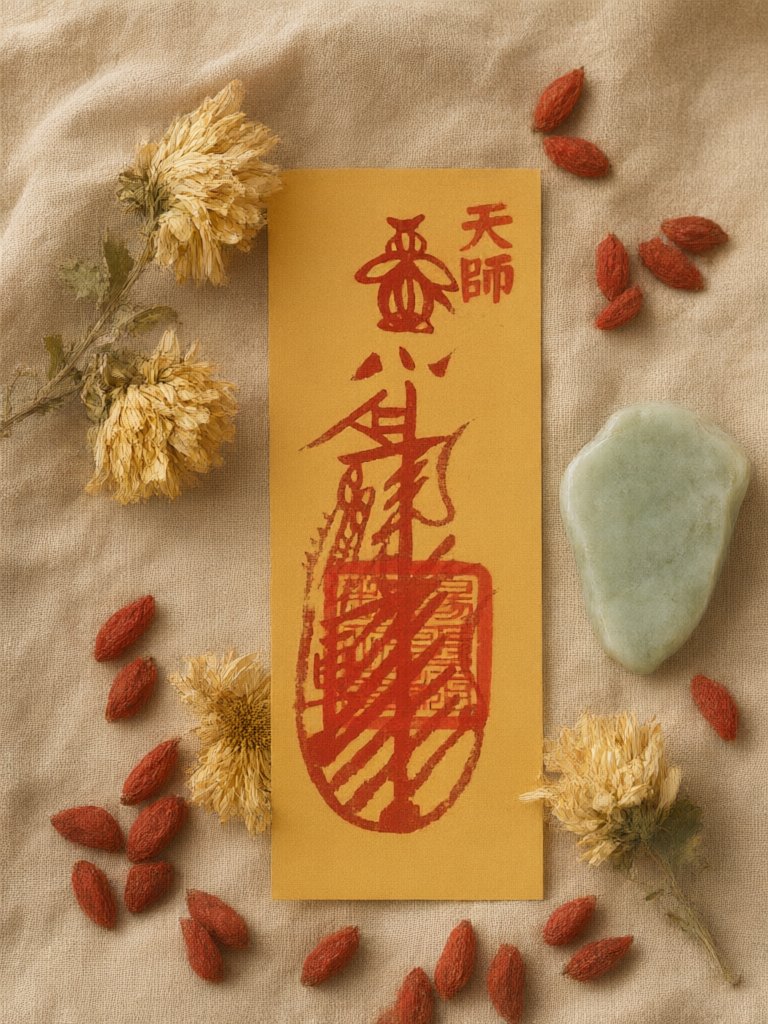
And here’s where tradition meets the modern wallet: the Ping An Fu — the Peace Talisman — is not a shield against chaos. It’s a resonance marker. Consecrated during the waxing moon phase leading up to Zhongqiu, its calligraphy, seals, and ritual breath imprint the practitioner’s intention to hold space for harmony. When Mei holds hers, she isn’t summoning magic — she’s activating memory: of her grandmother’s hands, of Mt. Longhu’s misty peaks, of a thousand years of people choosing calm over clamor, connection over correction.
That’s why, in our workshop behind the old temple gate in Longhushan Town, every Ping An Fu drawn in August carries a subtle variation — a tiny crescent moon glyph woven into the lower left corner of the talisman’s border. Not for decoration. It’s a quiet signature of timing — a reminder that this object was made in conversation with the moon’s ascent. You won’t see it unless you hold it up to the light. But the master who draws it feels it — a soft pulse in his wrist as the brush touches paper.
Harmony Isn’t One Size — It’s a Spectrum (And Yours Has a Name)
Let’s pause — because here’s where fun meets reverence.
Taoist tradition never prescribes one way to honor Zhongqiu. There’s no universal “correct” offering, no single “best” talisman. Instead, Zhengyi Daoism offers archetypal harmonies — distinct relational energies that each resonate with different expressions of peace, unity, and belonging.
That’s why we created this interactive guide — not as a quiz, but as a mirror. Answer these three questions honestly — not as you wish you were, but as you are right now, in this season of your life:
🌙 Question 1: When you imagine your ideal Mid-Autumn gathering, what’s the first detail that comes to mind?
- A. The scent of osmanthus tea steaming in a shared cup
- B. Laughter echoing across a crowded courtyard
- C. Two chairs side-by-side on a quiet balcony, watching the moon rise
- D. A handwritten note tucked into a mooncake box, addressed to someone far away
🌙 Question 2: What’s the biggest relational tension you’re holding gently this month?
- A. Balancing work deadlines with family calls
- B. Navigating differing values with elders
- C. Feeling disconnected despite being surrounded by people
- D. Carrying grief or absence that makes celebration feel complicated
🌙 Question 3: Which phrase feels most true today?
- A. “I need stillness to reconnect with what matters.”
- B. “I need warmth to soften old boundaries.”
- C. “I need clarity to honor both my needs and theirs.”
- D. “I need continuity — to feel my roots while living far from home.”
No right or wrong answers. This isn’t about judgment — it’s about resonance.
Now, tally your letters.
If you chose mostly A: You resonate with Jing He — Harmony Through Stillness. Your peace is found in presence, not performance. You honor Zhongqiu by creating sanctuary — a quiet corner, a shared cup, a moment of unbroken attention. For you, the Ping An Fu serves as an anchor — a tactile reminder to return to breath, to slow down, to let the moon’s calm seep in.
If you chose mostly B: You embody Rong He — Harmony Through Warmth. You’re the bridge-builder, the laughter-starter, the one who holds space for contradiction without collapse. Your Mid-Autumn power lies in joyful inclusion. You might pair your Ping An Fu with a small peach wood charm — symbolizing longevity and benevolent authority — to gently reinforce your role as relational keeper.
If you chose mostly C: You carry Ming He — Harmony Through Clarity. You value honesty, fairness, and mutual respect above forced cheer. Your peace comes from aligned boundaries and clear intention. For you, the Ping An Fu works best when placed near a writing desk or journal — a reminder that harmony includes speaking your truth with kindness.
If you chose mostly D: You live Gen He — Harmony Through Continuity. You hold memory like sacred text. Your strength is intergenerational — carrying stories, recipes, and quiet blessings across oceans and time zones. Your Ping An Fu gains depth when paired with a small vial of soil from your hometown (a traditional practice among overseas Chinese families) — grounding ancestral love in present soil.
None of these are fixed identities. They’re seasonal currents — shifting with your life’s tides. A Jing He person may become Gen He when they start sharing stories with their children. A Rong He soul may need Ming He tools after a family conflict. That’s the Taoist wisdom: harmony isn’t static. It’s a verb — practiced, adjusted, renewed.
And that’s why, every year since 2018, Dehui Hall has offered consecrated Ping An Fu talismans drawn specifically for the Mid-Autumn cycle — not as guarantees, but as companions for the practice. Each batch is ritually prepared over three days beginning on the 15th day of the 7th lunar month (August 24, 2026), culminating in the final consecration under moonlight on the eve of Zhongqiu — September 24, 2026.
We don’t ship them early. We wait. Because in Taoist tradition, timing is part of the blessing.
The Real Magic Is in the Holding
There’s a story from the Record of the Celestial Masters (Tianshi Zhuan), compiled in the 6th century CE, about a young priest who asked his master: “How do I know if my talisman works?”
The master didn’t answer. He handed the student a cup of tea, then pointed to the steam rising — invisible, yet undeniable. “Does the steam ‘work’?” he asked. “Or is it simply the natural expression of heat meeting air?”
The Ping An Fu is like that steam. It doesn’t create peace — you already carry it. It simply helps you recognize the conditions where peace can rise: stillness, warmth, clarity, continuity. It’s a cultural artifact — a vessel for intention, crafted with reverence, consecrated in community, carried with memory.
When you hold one this September — whether it’s your first or your tenth — you’re not performing superstition. You’re joining a lineage: the grandmother in Shanghai, the priest on Mt. Longhu, the nurse in Vancouver, the student in London opening a care package from home. You’re saying, quietly: I choose alignment. I choose remembrance. I choose to hold space — for myself, for my people, for the moon’s slow, steady return.
So here’s your invitation — not to buy, but to reflect:
What does your harmony look like this season?
Is it the courage to set a boundary? The tenderness to reach out after silence? The patience to sit beside someone without fixing? The gratitude to taste mooncake and remember your mother’s hands shaping the dough?
That’s where the real talisman lives — not on rice paper, but in your choice.
And if you’d like a Ping An Fu drawn with Mid-Autumn intention — consecrated by masters at Mt. Longhu, timed to the moon’s ascent, and shipped with a small guide on how to honor it quietly in your own rhythm — you’ll find them at Dehui Hall. No grand promises. Just quiet support, rooted in 1,800 years of practice.
Because some traditions endure not because they demand belief — but because they meet us, exactly as we are, holding space for what’s already true.
These items are sold as cultural artifacts. Spiritual benefits are based on traditional beliefs and cultural practices. Dehui Hall does not guarantee specific outcomes.
FAQ
Q: Can I use a Ping An Fu for Mid-Autumn even if I’m not Taoist?
A: Absolutely. The Ping An Fu is offered as a cultural artifact — a tangible expression of peace and harmony valued across East Asian traditions. Many Buddhist, Confucian, and secular families use it as a meaningful seasonal practice, honoring its historical roots without religious obligation.
Q: How should I care for my Ping An Fu before Mid-Autumn?
A: Traditionally, it’s kept in a clean, dry place — a drawer, a small cloth pouch, or tucked inside a book. Some place it near a window on moonlit nights in late August and early September. Avoid direct sunlight for long periods, and never laminate or fold it sharply. Its power lies in its integrity — physical and symbolic.
Further Reading & Cultural Context
For deeper insight into the Taoist cosmology of the moon and Yin Qi, we recommend the academic resource The Taoist Tradition of Lunar Observance by Dr. Li Wei, published by the Institute of Chinese Studies at Fudan University (2021). Link to open-access chapter — a rigorously researched, accessible overview of how celestial cycles shape ritual timing in Zhengyi Daoism.
Frequently Asked Questions
Can I use a Ping An Fu for Mid-Autumn even if I’m not Taoist?
Absolutely. The Ping An Fu is offered as a cultural artifact — a tangible expression of peace and harmony valued across East Asian traditions. Many Buddhist, Confucian, and secular families use it as a meaningful seasonal practice, honoring its historical roots without religious obligation.
How should I care for my Ping An Fu before Mid-Autumn?
Traditionally, it’s kept in a clean, dry place — a drawer, a small cloth pouch, or tucked inside a book. Some place it near a window on moonlit nights in late August and early September. Avoid direct sunlight for long periods, and never laminate or fold it sharply. Its power lies in its integrity — physical and symbolic.
Related Taoist Instruments
About DeHuiTang — This article is part of our Taoist cultural education series. Explore more authentic Taoist knowledge, Feng Shui wisdom, and destiny philosophy at our main site.