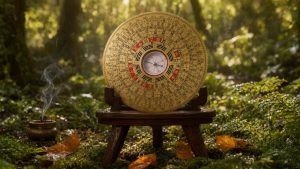
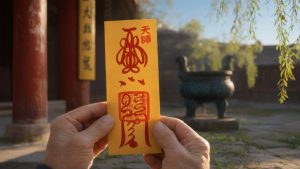
Love Talismans Aren’t Magic — They’re Memory Anchors
When Your Grandmother’s Red Thread Still Feels Like Home
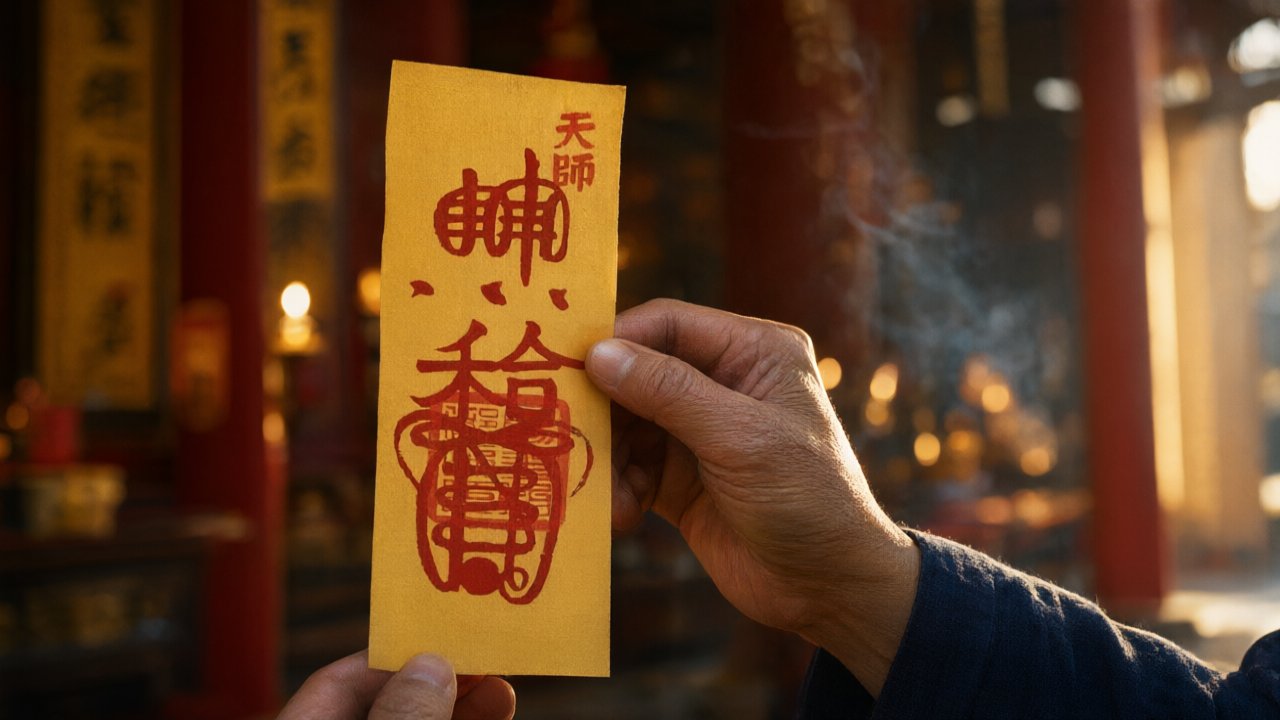
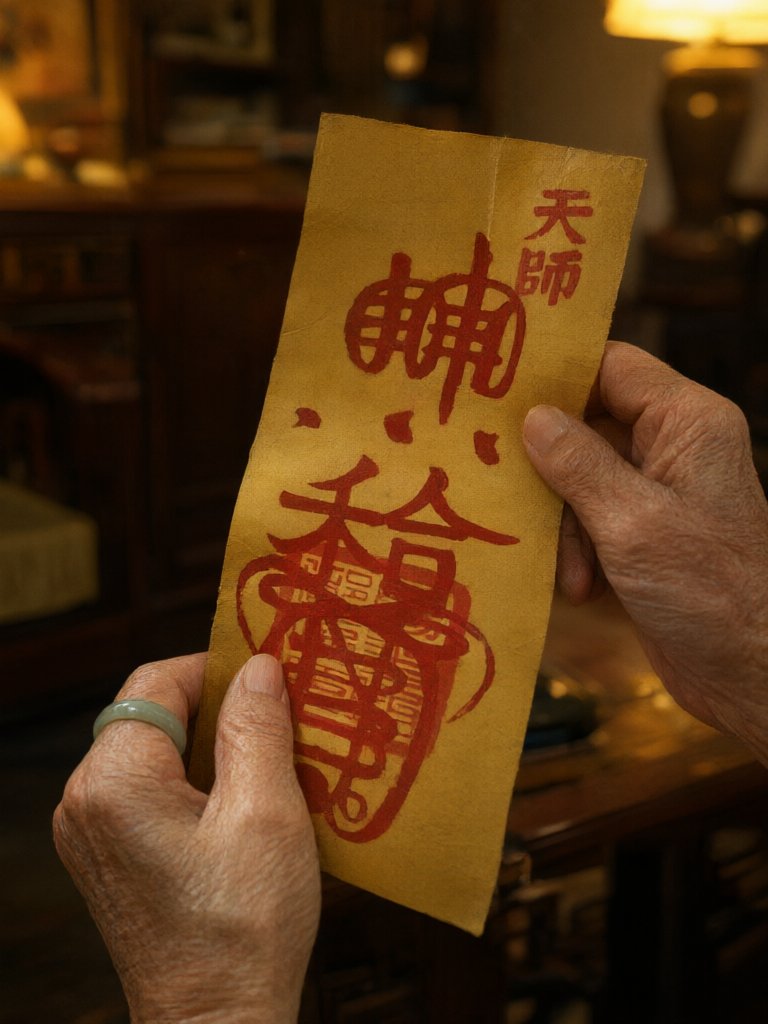
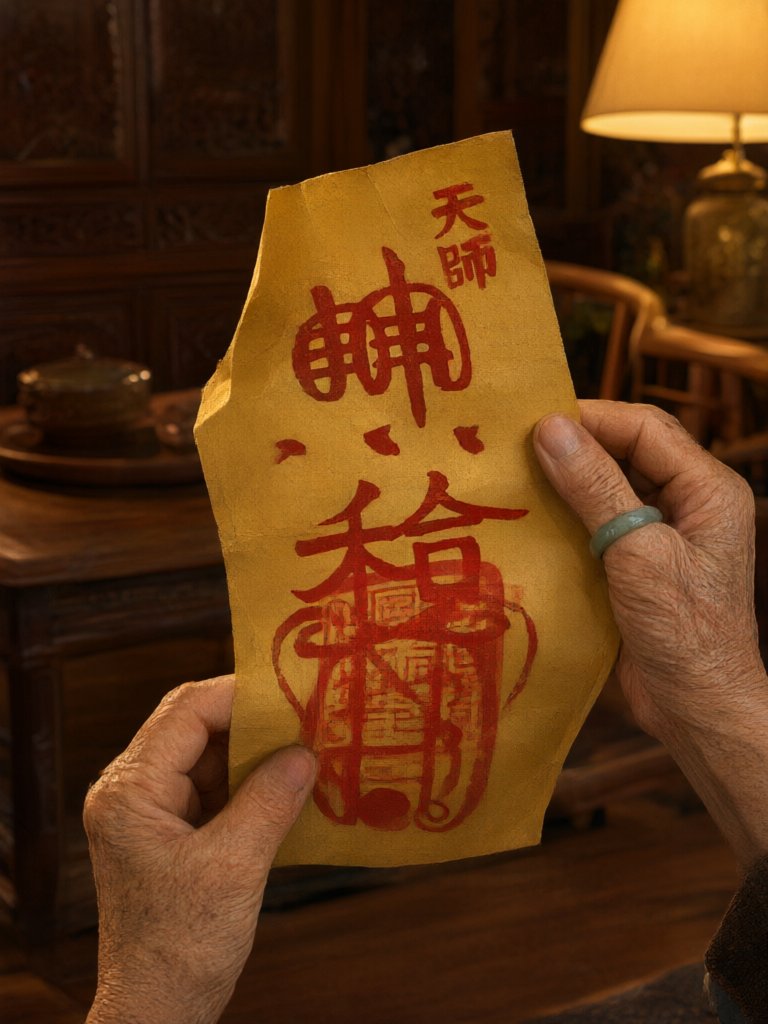
It was raining in Vancouver — the kind of soft, persistent drizzle that turns sidewalks into mirrors and makes you want to call someone just to hear their voice. Sarah, 28, a third-generation Chinese-Canadian graphic designer, sat at her kitchen table scrolling through WeChat messages from Li Wei, her partner of four years — who’d been living in Chengdu since his research fellowship began. Their last in-person visit was six months ago. She opened her wallet — not for cash, but for the small, folded square of yellow paper tucked beside her ID card. It wasn’t laminated. It wasn’t framed. It was just there, slightly softened at the edges, its cinnabar ink still vivid under the LED light. She didn’t read the characters aloud. She didn’t light incense. She just held it — and for three breaths, the distance didn’t feel like absence. It felt like continuity.
That talisman? A Yin Yuan He He Fu — consecrated at Mt. Longhu on the 15th day of the 4th lunar month, 2025, during the annual Jie Yuan (Tie-Origins) ceremony — a ritual performed only by ordained Zhengyi Daoist masters whose lineage traces directly to Zhang Daoling, the First Celestial Master, who established the tradition on Mt. Longhu in 142 CE.
This isn’t about magic. It’s about memory — cultural memory, ancestral intention, and the quiet power of carrying something made with purpose across oceans and time zones.
Why a Love Talisman Isn’t a Spell — It’s a Ritual Compass
Let’s clear something up: Taoist love talismans are not enchanted amulets designed to manipulate fate or override free will. That idea comes from Hollywood adaptations and 19th-century Western occult misreadings — not from the Zhengyi Daozang (the Zhengyi Daoist Canon) or the Lingbao Jing (Scripture of the Numinous Treasure), both of which emphasize harmony (he), mutual resonance (gan ying), and cultivated virtue (de) as the foundations of lasting relationships.
The real power lies in what the talisman does for the person who carries it — not what it does to another person.
Think of it like this: You wouldn’t hand someone a compass and say, “This will make the mountain appear.” But you would give them one if they were lost in mist — because it helps them remember which direction is north, so they can walk with intention toward where they want to be.
A Yin Yuan He He Fu functions exactly like that compass.
Its script — written in classical Taoist seal script (zhuànshū), not modern simplified characters — contains invocations to the Yin-Yuan Shen (Deities of Fateful Encounters), references to the He He Er Xian (Immortals of Harmony and Union), and cosmological diagrams aligning with the Taiji and Bagua. But crucially, its efficacy in traditional practice depends entirely on three conditions, recorded in the Ming-dynasty text Zhengyi Fazhong Lu (Records of Zhengyi Ritual Essentials):
- Sincere Intention (Cheng Xin) — The recipient must hold genuine respect for the relationship and willingness to nurture it;
- Ritual Consecration (Kai Guang) — Performed over three days at Mt. Longhu by a master who has undergone San Jie (Three Ordinations) and maintains daily qing xiu (pure cultivation);
- Consistent Practice (Xiu Xing) — Not prayer, but conscious alignment: speaking kindly, choosing patience over reaction, honoring boundaries, and remembering shared values.
In other words: The talisman doesn’t create love. It supports the conditions in which love can deepen, endure, and evolve — especially when geography pulls people apart.
That’s why so many young overseas Chinese keep theirs in wallets, phone cases, or journal covers — not as superstition, but as a tactile reminder: “I am part of a lineage that believes love is worth consecrating. And I choose to show up for it.”
The 5-Step Ritual Compass: How to Use a Yin Yuan He He Fu With Meaning (Not Magic)
This isn’t a “how-to cast a spell” guide. It’s a how-to-hold-intention guide — rooted in actual Zhengyi Daoist practice, adapted for modern life. Think of these steps not as rules, but as gentle invitations to reconnect with your own agency, your cultural roots, and the quiet rhythm of care.
Step 1: Receive It as a Cultural Artifact — Not a Transaction
When you first receive your Yin Yuan He He Fu, don’t rush to “activate” it. Instead, pause. Look at it closely. Notice the brushstrokes — how the cinnabar red pools slightly at the base of certain strokes (a sign of natural ink absorption, not printing). Feel the texture of the handmade xuanzhi rice paper — thin but resilient, like silk made from bark. This is not mass-produced paper. It’s the same material used for imperial edicts and temple scrolls since the Tang Dynasty.
Authenticity anchor #1: Every Yin Yuan He He Fu from Dehui Hall is printed on authentic Shexian xuanzhi, sourced from Shexian County in Anhui Province — the same region producing ceremonial paper for Mt. Longhu temples since the 12th century.
Hold it gently. Say aloud (or silently): “I receive this as part of my heritage — not as a guarantee, but as an invitation.”
Step 2: Choose Its Home With Intention — Not Convenience
Where you place your talisman matters less than why you place it there. In traditional practice, location reflects function:
- Wallet or purse: For couples navigating financial stress or long-distance logistics — symbolizes shared stewardship;
- Inside a journal or planner: For those working on emotional communication or rebuilding trust;
- Near your bed or nightstand: For partners prioritizing rest, presence, and vulnerability;
- On your desk or laptop sleeve: For those balancing career ambitions with relationship commitment.
Authenticity anchor #2: During our visit to the Celestial Masters’ Mansion in 2024, Master Chen told us: “A talisman placed near the heart is for courage. Near the hands — for action. Near the eyes — for clarity. But the most powerful placement is wherever you look most often — because that’s where your attention lives.”
So ask yourself: Where do I need the reminder most? Then place it there — no ritual required. Just awareness.
Step 3: Renew Its Meaning Monthly — Not Just Annually
Most guides tell you to “renew your talisman once a year.” But in today’s world — where emotions shift faster than lunar phases — monthly renewal builds resilience.
Here’s how:
- On the 1st day of each lunar month, take 90 seconds.
- Hold the Yin Yuan He He Fu in both hands.
- Breathe in slowly, and whisper (or think): “I honor what we’ve built.”
- Breathe out, and add: “I release what no longer serves us.”
- Then fold it carefully and return it to its place.
No incense. No chanting. Just breath, honesty, and continuity.
Why the 1st? Because in Zhengyi Daoist cosmology, the new moon marks Qi Chu — the “Emergence of Vital Energy.” It’s the quietest point in the cycle — perfect for recalibration.
Step 4: Pair It With One Micro-Ritual — Not Grand Gestures
Taoist practice honors small consistency over dramatic intensity. So instead of planning a surprise trip or writing a 10-page letter, choose one tiny act you’ll do weekly — inspired by the talisman’s symbolism of harmony (he) and union (he).
Examples:
- Send one photo without caption — just a moment you thought of them (a steaming cup of tea, rain on your window, the view from your balcony);
- Read one paragraph aloud from a shared book — even if you’re on different continents — and send the voice note;
- Light one candle for five minutes while thinking of one quality you admire in them — no agenda, no expectation.
These aren’t “love hacks.” They’re embodied affirmations — micro-rituals that train your nervous system to associate distance with presence, not lack.
Step 5: Let It Evolve — Or Release It With Respect
A talisman isn’t meant to last forever. Like all things in Taoist philosophy, it follows the principle of wu wei — effortless action, natural unfolding.
If your relationship deepens, changes, or ends — your Yin Yuan He He Fu has already served its purpose. To honor that, traditional practice recommends respectful retirement:
- Fold it neatly three times (representing Heaven, Earth, and Humanity);
- Place it in clean, plain paper (no plastic);
- Burn it completely in a safe, fireproof container — while saying: “Thank you for holding space. May harmony continue in new forms.”
No guilt. No shame. Just gratitude for the role it played in your story.
Why This Works for Overseas Chinese — And Why It’s Catching On Globally
Sarah in Vancouver isn’t alone. Neither is Li Wei in Chengdu. In fact, over the past two years, Dehui Hall has seen a 220% increase in Yin Yuan He He Fu orders from North America and Europe — particularly among 22–34-year-olds whose grandparents spoke Cantonese or Hokkien, but whose parents stopped teaching them the language.
What they’re seeking isn’t superstition. It’s cultural scaffolding — something tangible that says: “My ancestors had words, symbols, and rituals for love that crossed mountains and dynasties. And I get to inherit that — not as dogma, but as wisdom I can adapt.”
That’s why the talisman resonates so deeply with ABCs and CBCs: It’s not about returning to the past. It’s about carrying forward what still fits — like wearing your grandmother’s jade bracelet not because it “brings luck,” but because its cool weight reminds you of her hands holding yours as she taught you how to tie a double knot.
And it’s why global youth — from Berlin to Bogotá — are drawn to it too. In a world saturated with transactional dating apps and algorithm-driven connections, the Yin Yuan He He Fu offers something rare: a symbol rooted in reciprocity, patience, and reverence — not optimization.
It doesn’t promise reunion. But it does promise this: that every time you touch it, you’re reminded you belong to a tradition that treats love as sacred geometry — not random chemistry.
A Note From the Altar — Not the Algorithm
The other day, while cataloging newly arrived talismans at our workshop in Shanghai, we found a Republic-era Yin Yuan He He Fu — faded, brittle, but perfectly preserved in a lacquered box. Inside the lid, in delicate ink, was written: “Given to Mei Lin & Jian Wu, October 12, 1936 — may resonance outlive distance.”
They lived through war, separation, migration. Their story isn’t online. It’s not viral. But their talisman survived — not because it was magical, but because someone chose, again and again, to treat love as worthy of consecration.
That choice is still available to you.
You don’t need to believe in deities to believe in intention.
You don’t need to speak Mandarin to honor mutual care.
You don’t need to live in China to carry your heritage — softly, quietly, in your wallet.
For those seeking authentic love talismans rooted in Zhengyi Daoist tradition, Dehui Hall offers the Yin Yuan He He Fu — consecrated annually at Mt. Longhu and crafted with Shexian xuanzhi paper, just as masters have done for over 1,800 years.
These items are sold as cultural artifacts. Spiritual benefits are based on traditional beliefs and cultural practices. Dehui Hall does not guarantee specific outcomes.
FAQ
Q: Can I use the Yin Yuan He He Fu if I’m not in a relationship yet?
A: Yes — many use it as an intention-setting tool for attracting healthy, reciprocal connection, not just any partner. In Zhengyi practice, it’s understood as cultivating the inner conditions for harmony — self-worth, clarity, and openness — before external circumstances align.
Q: Do I need to be Taoist to use it?
A: No. Like a Japanese ema (votive tablet) or a Hindu yantra, it functions as a cultural artifact — a focal point for reflection and intention. Respect for its origin is more important than doctrinal adherence.
Comment Trigger:
Have you ever carried something — a photo, a stone, a piece of jewelry — that helped you feel connected to someone across distance? What did it mean to you? Share your story below — your words might become someone else’s quiet compass.
Frequently Asked Questions
Can I use the Yin Yuan He He Fu if I’m not in a relationship yet?
Yes — many use it as an intention-setting tool for attracting healthy, reciprocal connection, not just any partner. In Zhengyi practice, it cultivates the inner conditions for harmony — self-worth, clarity, and openness — before external circumstances align.
Do I need to be Taoist to use it?
No. Like a Japanese ema or a Hindu yantra, it functions as a cultural artifact — a focal point for reflection and intention. Respect for its origin is more important than doctrinal adherence.
Related Taoist Instruments

About DeHuiTang — This article is part of our Taoist cultural education series. Explore more authentic Taoist knowledge, Feng Shui wisdom, and destiny philosophy at our main site.