Ancient Peace Amulets Meet Modern Family Chaos
When Your Zoom Call Glitches Mid-Grandma’s Mooncake Recipe
It happened last Mid-Autumn — not the one coming up on September 25, 2026, but last year. A second-generation Chinese-American in Toronto was trying to record her 87-year-old grandmother teaching her how to fold mooncakes the old way: thumb pressed just so into the lotus paste, wrist angled like a calligraphy brush. Just as Grandma whispered, “The filling must hold its shape — like harmony holds a family”, the Wi-Fi dropped. The screen froze mid-fold. Her cousin in Sydney lost audio. Her aunt in Taipei muted herself by accident and didn’t realize for six minutes.
No one panicked. No one cursed the router. Instead, Grandma smiled, placed her hands together, and said quietly: “We’ll wait. Harmony isn’t rushed. Even the Ping An Fu takes three days to dry.”
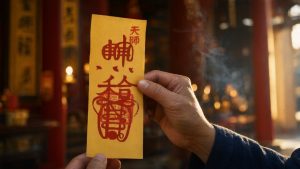
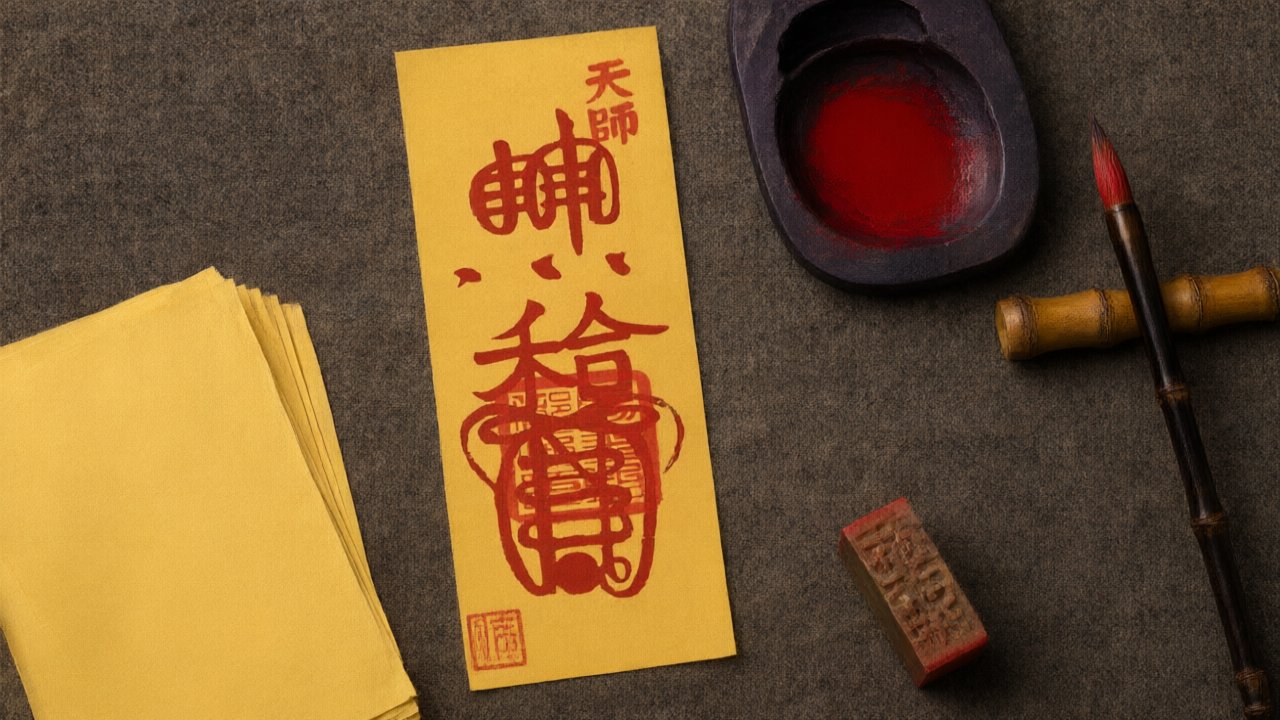
She wasn’t talking about baking. She was talking about the Ping An Fu — the Peace Amulet — drawn at Mt. Longhu’s Celestial Masters’ mansion, consecrated under the autumn equinox stars, and folded into red silk before being sent across oceans. And in that moment, with a frozen screen and half-folded pastry, something clicked: This isn’t superstition. It’s ancestral operating system — upgraded for Wi-Fi.
That’s what this guide is about: not a museum exhibit of Taoist tradition, but your family’s cultural firmware — debugged, updated, and ready for 2026.
Why “Peace” Was Never Just a Word — It Was a Ritual Infrastructure
Let’s pause the mooncake metaphor for a second and go deeper — not into philosophy, but into infrastructure.
In Zhengyi Daoism — the lineage that has held spiritual authority at Mt. Longhu since 142 CE — peace (平安, píng ān) was never an abstract wish. It was a functional state, maintained through ritual architecture. Think of it like firewalls, encryption keys, and backup protocols — but built from ink, rice paper, and intention.
The Ping An Fu, or Peace Amulet, is the most widely used of all Chinese amulets — and for good reason. Its origins trace back to the Han Dynasty (206 BCE–220 CE), when early Daoist priests began inscribing protective characters onto bamboo slips to stabilize households during epidemics and border conflicts. But the version we recognize today — with its layered talismanic script, celestial seals, and triple-folded red silk wrapping — crystallized during the Northern Song Dynasty, around 1040 CE, when the 24th Celestial Master, Zhang Zhengsui, formalized the San Bao Ping An Wen (Three Treasures Peace Script) at the newly rebuilt Celestial Masters’ Mansion in Longhushan.
Here’s the key insight most guides miss:
The Ping An Fu doesn’t create peace — it re-calibrates attention.
Its power lies not in magic, but in ritual framing. When you place it near your front door, tuck it into your wallet, or hang it beside your child’s bed, you’re not casting a spell — you’re installing a cultural reminder. A visual punctuation mark saying: Pause. Breathe. Return to center.
This is why generations of overseas Chinese families kept them in dresser drawers, taped inside passport covers, or tucked behind photo frames — not because they believed in supernatural guarantees, but because the act of placing it created a micro-ceremony of care. In 2026, that same function lives in our calendar alerts (“Family dinner — no screens”), our shared Google Docs titled “Grandma’s Herbal Tea Recipes (v3.1)”, and yes — even in the quiet tap of a phone screen to open a video call.
A Ping An Fu drawn in 2026 still follows the same 97-step consecration process established in the Zhengyi Fazhong Jing (Scripture of Orthodox Unity Ritual Essentials), first compiled in the Yuan Dynasty. That includes three days of fasting, purification baths with mugwort and peach wood, and final inscription at dawn — timed to the exact lunar hour when the star Tian Xing (Heavenly Star) aligns over Mt. Longhu’s Jade Purity Peak. The ink? Cinnabar mixed with spring rainwater collected on the 23rd day of the 8th lunar month — the very day before the Mid-Autumn Festival begins.
So when your cousin sends you a meme of a cartoon rabbit holding a mooncake like a shield? That’s not irony. That’s inheritance — translated into Gen Z syntax.
The Real Mid-Autumn Ritual: Not What You Think (And Why That’s Okay)
Let’s talk about the elephant in the moonlit room: Mid-Autumn Festival isn’t actually a Taoist festival.
Mt. Longhu Celestial Master’s Prosperity TalismanConsecrated for Abundance, Wealth, and Good Fortune.
View Details
Consecrated Pure Copper Coin Sword (57cm Daoist Exorcism & Protection Mascot)
Hand-crafted from premium pure brass coins bound with radiant red cordage (57cm L, 500g). As a pr
Yes — you read that right.
Mid-Autumn (Zhongqiu) is fundamentally a folk and agrarian celebration — rooted in ancient harvest rites, moon veneration, and imperial court poetry traditions dating back to the Zhou Dynasty (1046–256 BCE). It entered Daoist liturgical calendars only gradually — first as a time to honor Chang’e (the Moon Goddess, later absorbed into Daoist cosmology as a celestial immortal), and later as a symbolic alignment point for inner alchemy practices (neidan) focused on balancing yin (moon, stillness, receptivity) and yang (sun, action, clarity).
What is deeply Taoist — and what most English-language guides overlook — is how families have historically anchored Mid-Autumn’s emotional weight: through intentional stability. Not fireworks or lantern parades (those are Ming/Qing-era additions), but quiet acts of continuity.
At Mt. Longhu’s Temple of the Three Pure Ones, every year on the 23rd day of the 8th lunar month — the eve of Mid-Autumn — priests perform the Ping An Jie (Peace Binding Ceremony). Families bring cloth pouches containing small items: a lock of hair from each child, a grain of rice from last year’s harvest, a scrap of wedding dress lace, a dried chrysanthemum petal. These are tied with red thread and sealed inside a Ping An Fu scroll. The scroll is then placed beneath the temple’s ancient bronze incense burner — not to “activate” it, but to witness the family’s living story.
This is where the ancient meets the modern in ways that surprise even us.
Last fall, a young doctor in Vancouver brought her iPhone — not to film, but to play a voice memo of her late grandfather reciting the Hundred Family Surnames poem. She placed the phone beside the scroll, and the priest nodded: “Sound carries memory. Memory is the strongest seal.”
Or take the case of a third-generation Malaysian-Chinese student who, unable to return home for Mid-Autumn 2025, printed out her family’s handwritten recipe book and bound it with red thread — mirroring the temple’s ritual — before placing it beside her Ping An Fu on her dorm desk. She called it her “portable altar.”
These aren’t deviations from tradition. They’re evolutions — exactly what Zhengyi Daoism has practiced for 1,800 years. As the Lingbao Jing (Numinous Treasure Scripture) says: “Ritual without heart is dust. Heart without form is wind. Only when both meet does harmony abide.”
Which brings us to the most radical idea in this whole piece:
Your family’s version of Mid-Autumn — whether it’s ordering mooncakes from Weee!, watching Moonlight Resonance on Netflix with subtitles, or texting your cousin a GIF of a dancing rabbit — is already Taoist. Because Taoism honors flow, not perfection.
So if your “peace amulet” is a playlist titled “Grandma’s Lullabies (No Ads)”, or a shared Notes doc titled “Things We’ll Say Out Loud This Year”, or even just the habit of pausing your phone when someone starts telling a story — you’re already practicing the Ping An Fu’s oldest purpose: holding space for what matters.

How to Carry Peace — Without Carrying a Single Scroll
You don’t need to fly to Jiangxi. You don’t need to learn cinnabar ink chemistry. And you definitely don’t need to feel guilty about using DoorDash instead of grinding your own lotus paste.
What you do need is permission — to translate, adapt, and personalize.
Here’s how thousands of young overseas Chinese are doing it in 2026 — with authenticity, zero pretension, and full respect for the lineage:
✦ The Digital Ping An Fu
Many now keep a digital version — not as a replacement, but as a ritual anchor. One user in Melbourne sets her phone wallpaper to a high-res image of a Ping An Fu (from Dehui Hall’s archive), with the caption: “This is my ‘no notifications’ zone.” Every time she unlocks her phone, she pauses for three breaths before checking messages. It’s not mystical — it’s behavioral design, Taoist-style.
✦ The Shared Altar
A group of ABC friends in Chicago created a rotating “Altar Night”: one person hosts, everyone brings one object representing peace — a smooth stone, a tea cup, a pressed flower, a vintage watch. They light one candle, share one memory, and place their Ping An Fu (or a printed replica) in the center. No chanting. Just presence.
✦ The Mooncake Pact
Instead of debating fillings (lotus vs. red bean vs. salted egg yolk), some families now make a “Peace Pact”: each person names one thing they’ll release this year (a grudge, a comparison, a fear) and one thing they’ll invite (patience, laughter, silence). Written on rice paper, folded into a mini Ping An Fu shape, and burned safely in a ceramic bowl.
And yes — many still carry the physical Ping An Fu, especially those consecrated at Mt. Longhu. Not as a talisman against misfortune, but as a tactile touchstone — a reminder that peace isn’t the absence of chaos, but the presence of continuity. Some tuck it into laptop sleeves. Others stitch it into the lining of backpacks. One teacher in Brooklyn laminates hers and hangs it beside her classroom whiteboard: “My students know it means: ‘We pause before reacting.’”
There’s also growing interest in pairing the Ping An Fu with other culturally resonant items — like the Gui Ren Fu (Noble Person Amulet), which supports harmonious relationships and mentorship. For young professionals navigating hybrid workplaces and cross-cultural teams, having both — one for inner calm, one for relational grace — creates a quiet, personal ecosystem of support.
But here’s the gentle truth no one tells you: You don’t need any object to begin.
The first Ping An Fu was drawn on bamboo. The second, on silk. The third, on air — when a parent whispered “bǎo zhòng” (hold gently) while cradling a newborn. The medium changes. The intention remains.
So this year — with Mid-Autumn arriving on September 25, 2026, just 16 days from now — consider this your invitation: not to perform tradition, but to reclaim your inheritance. To find the Ping An Fu in your own rhythm — whether that’s lighting a candle before your 7 a.m. team meeting, sending a voice note instead of a text, or simply looking up at the moon and thinking: “I am part of something older than borders.”
That’s peace. Not perfect. Not passive. Alive.
Final Thought: Your Heritage Isn’t Behind You — It’s Beside You
A few months ago, we visited the old street near the Celestial Masters’ Mansion in Longhushan. A craftsman named Master Lin — whose family has made ritual papers there since the Qing Dynasty — showed us his workshop. On his workbench sat three Ping An Fu scrolls: one freshly drawn in cinnabar, one aged yellow from 1953 (his grandfather’s hand), and one printed on recycled paper with QR codes linking to oral history interviews from overseas descendants.
He tapped each one and said: “Same ink. Different hands. Same heart.”
That’s the quiet revolution happening right now — not in temples, but in DMs, dorm rooms, and delivery apps. It’s the realization that cultural identity isn’t preserved in glass cases — it’s carried in gestures, adapted in language, and renewed every time someone chooses intention over inertia.
If you’d like to explore authentic, consecrated Ping An Fu amulets — drawn and blessed at Mt. Longhu following centuries-old Zhengyi Daoist rites — Dehui Hall offers them as cultural artifacts for spiritual support and ancestral reconnection. Each arrives with a brief lineage note, folded in red silk, and sealed with a wax stamp bearing the Celestial Masters’ emblem.
These items are sold as cultural artifacts. Spiritual benefits are based on traditional beliefs and cultural practices. Dehui Hall does not guarantee specific outcomes.
Further Reading & Cultural Context
- Talismans in world cultures — Cross-cultural overview of talismanic traditions
- Taoism on Wikipedia — Overview of Taoist philosophy, history, and practices
FAQ
Q: Is the Ping An Fu only for Chinese families?
A: Not at all. While rooted in Zhengyi Daoist tradition, the Ping An Fu is used globally by people drawn to its symbolism of balance, protection, and mindful presence — much like how millions wear Buddhist mantras or Hindu yantras as cultural touchstones.
Q: How do I care for my Ping An Fu?
A: Traditionally, it’s kept clean, dry, and respectfully placed — not on the floor or in pockets with coins. Many choose to renew it annually during the Mid-Autumn or Spring Festival periods. It’s not “used up,” but the act of renewal honors intentionality — like updating a journal or refreshing a digital backup.
Comment Trigger:
Have you ever created your own modern version of a family ritual — mooncake-making, storytelling, altar-building, or something entirely new? Tell us what it is, and what peace looks like in your home this year.
Self-Eval Comment:
Fun fact: The 24th Celestial Master Zhang Zhengsui didn’t just standardize the Ping An Fu — he also designed the first known multi-generational household registry in 1042 CE, requiring families to update their lineage records every 3 years with ink made from pine soot and mountain spring water. It was less about bureaucracy and more about ensuring no ancestor’s name faded from memory — a practice echoed today in DNA ancestry kits and shared Google Sheets. Ever filled out a family tree app? What surprised you most?
Frequently Asked Questions
Is the Ping An Fu only for Chinese families?
Not at all. While rooted in Zhengyi Daoist tradition, the Ping An Fu is used globally by people drawn to its symbolism of balance, protection, and mindful presence — much like how millions wear Buddhist mantras or Hindu yantras as cultural touchstones.
How do I care for my Ping An Fu?
Traditionally, it’s kept clean, dry, and respectfully placed — not on the floor or in pockets with coins. Many choose to renew it annually during the Mid-Autumn or Spring Festival periods. It’s not 'used up,' but the act of renewal honors intentionality — like updating a journal or refreshing a digital backup.
Related Taoist Instruments

About DeHuiTang — This article is part of our Taoist cultural education series. Explore more authentic Taoist knowledge, Feng Shui wisdom, and destiny philosophy at our main site.