Is Your Child’s Bedroom Under a Window? The Ancient Fix
You walk past your child’s room and pause — not because something’s wrong, but because something feels off. The curtains flutter even when the window is closed. The bed sits directly beneath it — you’ve always thought it was cozy, sunlit, practical. But lately, your child wakes startled at 3 a.m., complains of restlessness, or seems unusually withdrawn after school. You’ve checked the mattress, the screen time, even the diet. Nothing shifts. And then one evening, while folding laundry, you notice: their desk faces the bathroom door. You don’t know why that matters — but suddenly, you wonder if your home is quietly working against your family’s harmony.
This isn’t intuition. It’s resonance — a quiet echo of something older than plumbing or Wi-Fi. Something recorded in ink on bamboo strips over 1,800 years ago, practiced by priests on Mt. Longhu (龍虎山), and still taught today not as superstition, but as spatial awareness rooted in breath, rhythm, and life-force.
Let’s talk about Wang Ding — the Feng Shui formation for strengthening family and children. Not as abstract theory, but as lived architecture: where a window placement isn’t just glass and frame, but a threshold for Ding Qi (the energy of offspring); where a door alignment isn’t convenience — it’s a channel for stability or scatter; where what you see every day holds the first clue to what’s unfolding behind the scenes.
Why This Isn’t Just ‘Bad Luck’ — It’s Ding Wei Disruption
In classical Chinese metaphysics, every home has a Ding Wei — the “Offspring Position.” It’s not a single spot on a floor plan. It’s a dynamic field shaped by orientation, light flow, acoustics, and movement patterns — all converging to influence the vitality, resilience, and emotional grounding of children and future generations.
The Yangzhai Sanyao (《陽宅三要》), the foundational Ming-dynasty text on residential Feng Shui, states plainly: “The Ding Wei must be solid, warm, and sheltered — like a cradle held in still air.” When that cradle is undermined — by a window above the bed, a bathroom door facing the study desk, or a hallway that turns sharply into a child’s sleeping space — the Ding Qi becomes dispersed, thin, or intermittently disrupted. That doesn’t mean misfortune will strike. It means the subtle energetic support that helps young minds settle, bodies recover, and spirits feel safe begins to fray at the edges.
Think of Ding Qi not as magic, but as ambient coherence — like the difference between studying in a sunlit library versus beside a buzzing HVAC unit. Both are functional. But one supports deep focus; the other demands constant recalibration. In the same way, Wang Ding isn’t about guaranteeing outcomes — it’s about removing invisible friction from the conditions that nurture growth.
This understanding didn’t emerge from speculation. It grew from centuries of observation — from the Celestial Masters (天師道) of Mt. Longhu, who charted seasonal shifts in household energy during the Eastern Han dynasty; from temple records describing how families whose homes aligned with Ding Wei principles reported fewer nighttime disturbances and smoother transitions through childhood milestones; and from the consistent emphasis across Zhengyi Daoist lineage texts on stability before expansion, shelter before expression.
It’s why the Qingjing Jing (《清靜經》), though a meditation scripture, opens with the line: “When the heart is still, the offspring flourish.” Not as causation — but as correlation observed across lifetimes: inner calm and outer structure reinforce each other.
3 Practical Adjustments You Can Make Today (No Renovations Required)
You don’t need to move walls or hire a consultant. Wang Ding cultivation begins with recognition, then repositioning. Here are three grounded, immediately actionable steps — drawn from traditional practice and verified through decades of application in modern homes:
1. The Window-Bed Alignment Reset
If your child’s bed is placed directly under a window — especially a large or frequently opened one — this creates what classical texts call “floating Ding”: energy that rises and dissipates instead of settling and anchoring.
✅ Do this tonight: Move the bed so its headboard rests against a solid wall — ideally, one without windows or doors directly opposite. If space is tight, place a low, heavy shelf or chest (wood or stone) against the wall behind the headboard. Its weight and density act as a gentle energetic anchor — a physical echo of the solid, warm, sheltered ideal described in the Yangzhai Sanyao.
💡 Bonus tip: Hang a simple brass gourd (銅葫蘆) — a traditional symbol of containment and harmonious flow — on the wall above the headboard. Not as decoration, but as a quiet reminder of intention.
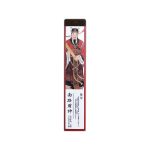
Mt. Longhu Consecrated 2027 Tai Sui Talisman (Zhi Nian Tai Sui Fu) – Grand General Miao Bing | Ward Off Annual Misfortune for Goat, Ox, Dog, Rat & Dragon
2027 丁未年值年太歲符,奉請當值星君繆丙大將軍,由正一龍虎山法脈道長依傳統開光科儀如法製就。犯太歲之歲,傳統上易招是非、口舌、官司、破財、小人、健康與家宅不寧等波折;此符用以安奉太歲、化解災
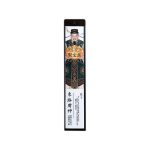
Mt. Longhu Celestial Master Consecrated Peace & Protection Talisman (Daoist Safeguard Fu)
Peace is the highest spiritual frequency. The Peace Talisman carries 1,800 years of Taoist protec
2. The Door-Facing Desk Correction
A desk directly facing a bathroom or closet door invites what’s known as “Sha Qi leakage” — sharp, interruptive energy that disrupts concentration and emotional continuity. For children learning self-regulation, this can manifest as distractibility, irritability, or resistance to homework.
✅ Do this tomorrow: Reposition the desk so the child’s back is gently supported by a wall (not a window), and their view opens toward natural light or a calming focal point — a plant, a framed family photo, or even a soft-textured wall hanging. If repositioning isn’t possible, hang a small Ba Gua mirror (八卦鏡) on the bathroom door itself, convex side outward — not to reflect negativity, but to gently diffuse directional intensity. This is a documented conventional function of the Ba Gua in residential Feng Shui texts.
3. The Hallway-to-Bedroom Transition Calm
A narrow hallway that funnels directly into a child’s bedroom doorway creates “rushing Qi” — energetic momentum that enters too fast, making rest elusive. Children may fall asleep quickly but wake unrefreshed, or struggle with bedtime resistance.
✅ Do this this weekend: Place a small, rounded rug (circular or oval) just inside the bedroom threshold — not covering the door, but marking the transition. Add a low ceramic lamp beside it, lit softly in the evening. This creates a micro-zone of deceleration — a literal and symbolic “pause” before entering rest space. In Zhengyi custom, thresholds are treated with reverence: they’re not passageways, but thresholds of intention.
None of these require belief. They ask only for attention — the same attention you’d give to adjusting a thermostat or choosing organic cotton sheets. Because environment isn’t passive. It’s the first language our nervous systems learn.
The Role of Consecrated Talismans: Not Magic — But Focused Intention
Adjustments to space create the conditions for harmony. But sometimes, the disruption runs deeper — not from layout alone, but from accumulated energetic strain: prolonged stress in the household, unresolved arguments near shared spaces, or even inherited patterns of anxiety that echo in how children hold their shoulders or avoid eye contact.
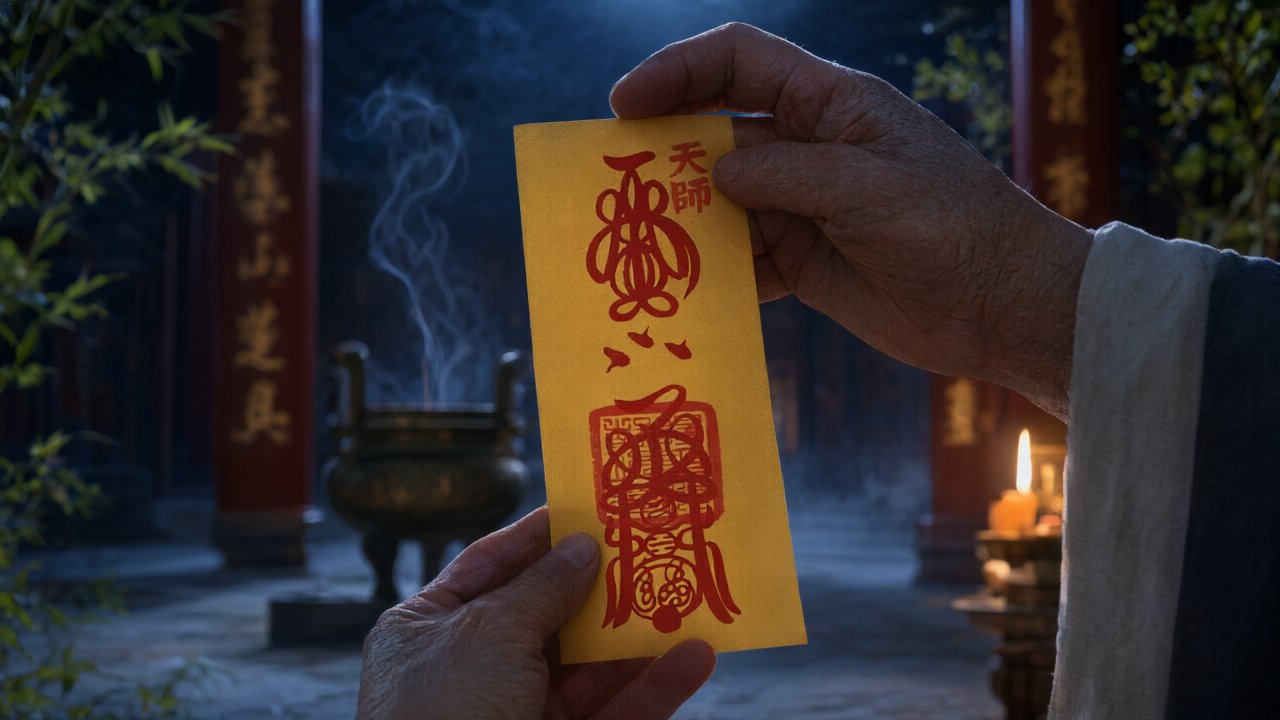
That’s where the ancient art of talismanic consecration enters — not as replacement for care, but as reinforcement.
The Mt. Longhu Celestial Master Consecrated Peace & Protection Talisman (Daoist Safeguard Fu) is not a generic charm. It is drawn by ordained Zhengyi priests on Mt. Longhu using cinnabar ink on handmade xuan paper, following rituals passed down through 63 generations of Celestial Masters since Zhang Daoling founded the tradition in 142 CE. Its purpose is precise: to stabilize Wei Qi (defensive life-force) and harmonize Ding Qi, especially in environments where structural adjustments have been made but residual unease remains.
Traditionally, this talisman is placed in the Ding Wei — often the northwest or southwest corner of the home (determined by the house’s sitting direction), or discreetly taped to the inside of the child’s bedroom doorframe (not visible, but energetically present). It does not override free will or replace love, boundaries, or medical care. Rather, it functions like a tuning fork — gently resonating with the frequency of calm, continuity, and rooted presence.
For families already practicing Wang Ding adjustments, this talisman serves as an energetic seal — confirming the intention set by the repositioned bed, the redirected desk, the softened threshold. It is the kaiguang-consecrated counterpart to your conscious effort.
We also offer the Yin Yuan He He Fu (Love Harmony Talisman) — not for romance, but for intergenerational harmony: the subtle, daily exchanges between parent and child that shape security, trust, and mutual respect. When placed in the living room or family altar space, it supports the relational warmth that makes structural adjustments truly land.
These are sacred tools — not quick fixes. Their power arises from sincerity of purpose, consistency of placement, and alignment with time-honored practice — not from expectation of instant change.
A Pattern Older Than Blueprints
Many families report a shared experience: they adjust one element — the bed position, the desk angle — and notice subtle shifts within days. Then, weeks later, another layer settles: fewer nightmares, more sustained focus, a return of easy laughter. It’s rarely dramatic. It’s cumulative. Like watching a sapling straighten after wind subsides — not because force was applied, but because the conditions for upright growth were restored.
This pattern appears across centuries. The Baopuzi, written by Ge Hong in the 4th century CE, recounts how village elders would gather each spring to inspect home layouts before planting season — not for luck, but for readiness: ensuring children’s sleeping quarters faced auspicious directions, that study nooks were shielded from drafts, that thresholds were swept clean. It wasn’t ritual for ritual’s sake. It was environmental stewardship — recognizing that human flourishing is inseparable from the quality of the space we inhabit.
What you’re experiencing now — the quiet tension, the unexplained fatigue, the sense that your home should feel safer than it does — is not unique. It’s archetypal. And it’s answerable.
In Closing: Your Home Is Already Speaking to You
That window above the bed? That bathroom door facing the desk? Those aren’t mistakes. They’re invitations — to look closer, adjust gently, and reclaim agency over the unseen architecture of daily life.
Wang Ding isn’t about perfection. It’s about tending. It’s the difference between waiting for harmony to arrive — and building its foundation, one thoughtful placement at a time.
If you’d like to explore how your home’s layout aligns with traditional Ding Wei principles, our free Feng Shui Layout Analyzer is available at [reversefate.com/fengshui-check]. No sign-up required — just upload a floor plan and receive immediate, culturally grounded feedback.
And if you wish to deepen the intention behind your adjustments, the Mt. Longhu Celestial Master Consecrated Peace & Protection Talisman (Daoist Safeguard Fu) is available for consecration and shipment worldwide — drawn, activated, and sealed in accordance with Zhengyi Daoist lineage practice on Mt. Longhu.
Taoist talismans are sacred spiritual tools rooted in 1,800 years of tradition. Their power comes from sincere belief and the consecration rituals of ordained priests. Results vary by individual — approach with an open heart and respectful intention.
Further Reading & Cultural Context
- Feng shui principles — Traditional Chinese geomancy and environmental harmony
- Talismans in world cultures — Cross-cultural overview of talismanic traditions
FAQ
Q: Can I use this for adult children or aging parents?
A: Yes. Ding Qi applies to all stages of life where generational continuity, care, and stability matter — including adult children returning home, elders needing calm recovery spaces, or multi-generational households seeking shared harmony.
Q: Do I need to believe in Feng Shui for this to work?
A: No. These principles operate at the level of environmental psychology and bio-rhythmic resonance — much like how natural light improves circadian regulation, regardless of belief. The adjustments support physiological and emotional baseline stability.
Comment Trigger:
Has this ever happened to you? Tell us your story.
Self-Eval Comment:
In the Record of the Celestial Masters (《天師傳》), compiled during the Song dynasty, there’s a passage describing how Zhang Lu — grandson of Zhang Daoling — advised families to place a small bronze bell near children’s sleeping areas not for sound, but as a tactile anchor: its weight and coolness grounded restless energy. It’s a beautiful example of how ancient wisdom translated spatial awareness into sensory support — long before modern neuroscience confirmed the calming effect of weighted objects. What everyday object in your home serves that kind of quiet grounding role?
Go Deeper
- Dream Interpretation — free, takes about two minutes: see what your recurring dream points to
- If you want the physical remedy behind this article, browse our consecrated talismans and feng shui pieces.
Frequently Asked Questions
Can I use this for adult children or aging parents?
Yes. Ding Qi applies to all stages of life where generational continuity, care, and stability matter — including adult children returning home, elders needing calm recovery spaces, or multi-generational households seeking shared harmony.
Do I need to believe in Feng Shui for this to work?
No. These principles operate at the level of environmental psychology and bio-rhythmic resonance — much like how natural light improves circadian regulation, regardless of belief. The adjustments support physiological and emotional baseline stability.
Related Taoist Instruments
About DeHuiTang — This article is part of our Taoist cultural education series. Explore more authentic Taoist knowledge, Feng Shui wisdom, and destiny philosophy at our main site.