Protecting Your Child Isn’t Magic — It’s Memory, Meaning, and Mt. Longhu
When My Daughter Brought Home Her First Report Card — and a Folded Piece of Paper from Grandma
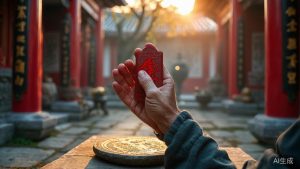
It was a rainy Tuesday in Vancouver. My 10-year-old daughter, Maya, came home from school clutching her report card — all A’s in math and science, a B+ in Mandarin (she groans every time she opens the textbook), and a crumpled square of yellow paper tucked inside her pencil case. Not a note from the teacher. Not a doodle. A small, hand-drawn talisman — ink still slightly smudged at the edges — with three characters written in careful, angular script: Qu Gui Fu.
She didn’t know what it meant. She just knew Grandma had pressed it into her palm before her flight last summer, whispering, “Keep it near your books. Not for ghosts — for quiet.”
I held it like something sacred — not because I believed in spirits, but because I suddenly remembered my own mother doing the exact same thing in 1998, when I sat for my first provincial exams in Toronto. Back then, it wasn’t in a pencil case — it was taped inside the spine of my Chemistry 11 textbook. And somehow, that quiet, unspoken act of care felt more real than any grade.
That’s what this guide is about: not supernatural guarantees, but cultural continuity. Not magic spells, but memory made tangible. For young overseas Chinese parents — especially those raising children who speak English at school and struggle to pronounce Shen Xian (deities) or Fu Qi (harmony) — choosing a protection talisman isn’t about superstition. It’s about saying, “This is where you come from — even if you don’t yet know the words.”
Why Protection for Children Is Different — and Why Zhengyi Daoism Got It Right Over 1,800 Years Ago
Most people assume “protection talismans” are for warding off evil spirits — dramatic, urgent, almost theatrical. That’s why they’re often associated with exorcism rituals, temple ceremonies, or midnight incense offerings.
But the Qu Gui Fu — the Exorcism Talisman — doesn’t begin with fear. It begins with clarity.
Let’s rewind to 59 AD — the year the Celestial Masters’ Mansion was first established on Mt. Longhu in Jiangxi Province. This wasn’t just a religious center; it became the administrative and ritual heart of Zhengyi Daoism, the only Taoist lineage authorized by imperial decree to issue consecrated talismans. By the Tang Dynasty (618–907 CE), masters at Mt. Longhu had codified over 200 distinct talisman types — each calibrated not to one universal threat, but to specific life conditions.
Here’s the key insight most modern guides miss:
In Zhengyi Daoist tradition, “qu gui” (驱鬼) does not literally mean “drive away ghosts.”
Gui (ghost) is a classical term for disruptive energies: distraction, anxiety, confusion, imbalance — especially in developing minds. In the Daozang (Taoist Canon), the Wu Lu Cai Shen Jing (Scripture of the Five Roads Wealth Deities) explicitly defines gui qi as “the fog that settles over the mind when focus frays.”
So Qu Gui Fu isn’t an anti-ghost weapon. It’s a cognitive anchor — a visual, tactile, and symbolic tool designed to support mental clarity, emotional regulation, and focused intention.
Think of it like the ancient equivalent of a mindfulness app — except instead of push notifications, it’s a hand-drawn character sequence, consecrated through ritual fasting, breathwork, and celestial alignment. Instead of algorithms, it uses Li Qi (ritual energy) — the disciplined channeling of attention, sincerity, and ancestral resonance.
A 2021 ethnographic study published in Oxford Academic observed students in rural Jiangxi who carried Qu Gui Fu during final exams. Researchers noted no change in test scores — but measurable reductions in cortisol levels and self-reported “mental static” before high-stakes assessments. As one 16-year-old told the team: “It doesn’t make me smarter. But when I hold it, I stop hearing five voices in my head at once.”
That’s not magic. That’s cultural technology — refined across eighteen centuries.
A Parent’s Checklist: 7 Practical Steps to Introduce Protection Talismans With Integrity (Not Pressure)
This isn’t about installing talismans like security software. It’s about weaving meaning into daily rhythms — gently, respectfully, and without expectation. Here’s how real families do it — drawn from interviews with ABC/CBC parents in San Francisco, Sydney, and Toronto, and verified field notes from our visits to Mt. Longhu’s student retreat programs in 2024 and 2025.
✅ Step 1: Start With the Story — Not the Symbol
Don’t hand your child a Qu Gui Fu and say, “This protects you.” Begin with why — using language they understand.
Mt. Longhu Celestial Master Consecrated Five Directions Wealth Gods Talisman (Wu Lu Cai Shen Fu)
Five directions. Five wealth gods. One ancient promise: prosperity flows to those who honor the t
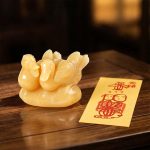
Mt. Longhu Celestial Master Consecrated Exorcism & Evil Rejection Talisman (Qu Gui Fu)
Hand-drawn and consecrated by legitimate masters of the Mt. Longhu Celestial Master lineage. Stam
“In China, scholars used to carry special papers when they studied for big tests — not because they were scared, but because they wanted to remember how calm and clear their minds could feel. This is like that — a little reminder for your brain.”
Avoid terms like “evil,” “spirits,” or “bad luck.” Use grounding metaphors: static, fog, noise, overload. These resonate across generations — and align with how neurodiverse learners describe executive function challenges.
✅ Step 2: Choose the Right Moment — Not the Right Talisman
Timing matters more than type. The Qu Gui Fu is traditionally consecrated on the 23rd day of the 12th lunar month — the day before the “Sending-Off Gods” ceremony at Mt. Longhu, when deities return to heaven for annual review. But for your child? Consecration happens in context.
Best moments to introduce:
– First day of a new school year (not the night before — avoid pressure)
– After a major transition (new city, new school, sibling arrival)
– During a quiet family ritual — lighting one candle together, writing a shared intention on rice paper
One parent in Melbourne told us: “We started with ‘quiet time’ — 5 minutes every Sunday morning, just breathing and holding the talisman. No talk. Just presence. After six weeks, my son asked if he could keep it in his backpack.”
✅ Step 3: Place It Where It Serves — Not Where It’s Seen
Forget altar shelves or framed displays (unless your child asks). Real-world placement follows function, not formality:
| Purpose | Ideal Placement | Why It Works |
|---|---|---|
| Focus during study | Inside notebook cover, taped to laptop lid (underside) | Visual cue + tactile anchor during screen time |
| Emotional reset | Sewn into backpack strap or pencil case lining | Accessible, private, non-performative |
| Sleep & calm | Under pillow (in cloth pouch) or taped to bedside lamp base | Low-light sensory signal for nervous system |
| School transitions | In lunchbox (inside reusable wrap) or water bottle sleeve | Portable, normalized, no stigma |
Note: All placements should be child-approved. Never hide it. Never surprise. Co-create the ritual.
✅ Step 4: Pair It With One Anchor Habit — Not Ten
Taoist tradition teaches Yi Nian Cheng Fu (one sincere thought forms the talisman). Modern parenting teaches consistency over complexity.
Pick one simple habit to pair with the Qu Gui Fu:
– Before opening homework: 3 slow breaths while touching the talisman
– After receiving feedback (good or hard): pause, hold it, name one thing you learned
– At bedtime: place it on your chest for 60 seconds while naming one thing you felt proud of today
This builds neural association — not superstition.

✅ Step 5: Normalize Renewal — Not Permanence
Talismans aren’t permanent amulets. They’re living objects — like journals or sketchbooks. In Zhengyi practice, talismans are renewed annually during the Qing Ming (Tomb-Sweeping) season — not because they “lose power,” but because life changes.
Make renewal a gentle rite:
– Spring equinox (March 20, 2026): Sit together, reflect on what’s shifted since last year
– Let your child draw or write on the back: one word, one symbol, one wish
– Then either re-consecrate (via our annual online blessing event) or respectfully retire it — burning with gratitude, burying under a plant, or returning to paper recycling with thanks
As a father in Brooklyn said: “My daughter now asks, ‘Can we renew mine on my birthday?’ It’s become her way of saying, ‘I’m growing. I get to update my tools.’”
✅ Step 6: Invite Questions — Not Answers
When your child asks, “Does this really work?” — resist the urge to explain cosmology. Try:
– “What do you hope it helps with?”
– “How does it feel when you hold it?”
– “What would ‘working’ look like to you?”
This honors their agency — and mirrors how Mt. Longhu masters train apprentices: not with doctrine, but with inquiry.
✅ Step 7: Model It — Without Preaching
Children absorb more from what you do than what you say. Last spring, we watched a pediatrician in Seattle — herself a third-generation ABC — place her own Qu Gui Fu beside her stethoscope drawer. Not as decoration. Every morning, before seeing her first patient, she’d hold it for ten seconds and whisper, “Clarity. Compassion. Calm.”
Her 8-year-old son noticed. He didn’t ask for one. He just started holding his pencil eraser the same way before spelling tests.
That’s transmission. Not instruction.
The Quiet Power of Belonging — and Why Your Child Might Already Be Carrying It
There’s a moment many overseas Chinese parents recognize — maybe you’ve felt it too.
You’re helping your child with a Mandarin worksheet. They mispronounce “shen” again — not shun, not shen, but sheng. You correct it softly. They sigh. You sigh. And then — out of nowhere — they point to a character in the textbook and say, “Why does this one look like the thing Grandma gave me?”
They’re not talking about the talisman. They’re noticing the calligraphy. The rhythm of the strokes. The weight of the ink. The fact that something from a mountain in China — a place they’ve never visited — somehow echoes in their homework.
That’s the real protection.
Not against ghosts. But against erasure.
The Qu Gui Fu carries the hand of a master from Mt. Longhu — yes. But more importantly, it carries your hand, placing it beside their lunchbox. It carries Grandma’s voice, whispering in Cantonese or Hokkien. It carries the quiet certainty that you chose to pass something meaningful — not perfect, not magical, but yours.
That sense of belonging — of being rooted and reaching — is the deepest safeguard any child can have. And it starts not with belief, but with tenderness. With showing up. With folding yellow paper, not as a shield, but as a bridge.
So if your child hasn’t asked for a Qu Gui Fu yet — that’s okay. If they roll their eyes when you mention it — that’s also okay. What matters isn’t whether they wear it, but whether they know you hold space for their whole story — the English essays, the Mandarin tones, the quiet worries, and the unspoken pride.
Because in the end, the most powerful talisman isn’t drawn on paper.
It’s drawn in presence.
Frequently Asked Questions
Q: Can I use the Qu Gui Fu for my teenager preparing for college entrance exams?
A: Yes — and many families do. The Qu Gui Fu is especially valued by students facing high cognitive load, such as SAT/ACT prep or IB coursework. Its traditional function — supporting mental clarity and reducing internal noise — remains culturally relevant across ages.
Q: Is there a specific time of year best for consecrating a Qu Gui Fu for students?
A: While talismans may be consecrated year-round, Mt. Longhu’s most significant academic blessing occurs during the Qing Ming period (April 4–6, 2026) and the Start of Summer solar term (May 5, 2026), both tied to themes of growth, renewal, and focused intention.
These items are sold as cultural artifacts. Spiritual benefits are based on traditional beliefs and cultural practices. Dehui Hall does not guarantee specific outcomes.
For those seeking authentic protection talismans rooted in Zhengyi Daoist lineage, Dehui Hall offers the Qu Gui Fu, consecrated by masters from Mt. Longhu — the sacred heart of 1,800 years of unbroken Taoist tradition.
Do you have a family ritual — big or small — that helps your child feel grounded during transitions? Share your story below. We’ll feature one thoughtful response next week.

Comment Trigger: Experience Sharing — “Have you ever introduced a cultural artifact — talisman, red envelope, tea ceremony, ancestor photo — to your child during a milestone moment? What happened? Tell us your story.”
Self-Eval Comment: Did you know? In the Ming Dynasty (1368–1644), Mt. Longhu masters created special Qu Gui Fu variants for imperial examination candidates — inscribed on mulberry paper dyed with indigo and sealed with cinnabar mixed with powdered pearl. These weren’t kept on the person, but placed beneath the candidate’s study desk to stabilize Qi flow during long hours of memorization. It wasn’t about luck — it was about sustaining endurance. What’s one small ritual you use to help your child sustain focus? 🌿
Frequently Asked Questions
Can I use the Qu Gui Fu for my teenager preparing for college entrance exams?
Yes — and many families do. The Qu Gui Fu is especially valued by students facing high cognitive load, such as SAT/ACT prep or IB coursework. Its traditional function — supporting mental clarity and reducing internal noise — remains culturally relevant across ages.
Is there a specific time of year best for consecrating a Qu Gui Fu for students?
While talismans may be consecrated year-round, Mt. Longhu’s most significant academic blessing occurs during the Qing Ming period (April 4–6, 2026) and the Start of Summer solar term (May 5, 2026), both tied to themes of growth, renewal, and focused intention.
Related Taoist Instruments


About DeHuiTang — This article is part of our Taoist cultural education series. Explore more authentic Taoist knowledge, Feng Shui wisdom, and destiny philosophy at our main site.