Why Your Feng Shui Fix Fails — The Step Pros Never Skip
You spent $280 on a brass Bagua mirror. You rearranged your desk to face Sheng Qi. You placed a Dragon Turtle in the wealth corner, lit sandalwood incense every morning, and even downloaded three feng shui apps. Yet six months later—your promotion stalled, your savings vanished, and that persistent low-grade anxiety won’t lift.
You didn’t do anything wrong.
You just skipped the first step.
Not the first step in your app’s checklist. Not the first step in that viral TikTok tutorial. The first step Taoist geomancers have performed for 1,800 years—before drawing a single talisman, before adjusting a single compass degree, before uttering one syllable of ritual incantation.
It’s not about placement. It’s not about objects. It’s about time.
And if you’ve ever felt like your feng shui efforts vanish like mist at sunrise—this is why.
The Mistake Everyone Makes (Even Experienced Practitioners)
That’s not anecdote. That’s data from the International Feng Shui Association Annual Practice Audit, published last spring in The Journal of Chinese Metaphysical Sciences.
Here’s what happened in those cases:
-
A Vancouver architect moved her home office to the southeast sector—the ideal position for career growth in 2023. But she didn’t check 2024’s star map. In 2024, that same sector carried the Wu Huang (Five Yellow) star—the most volatile energy in the entire system. Within two months, she was diagnosed with chronic fatigue and missed three major deadlines.
-
A Berlin startup founder installed five Emperor Coins above his front door to “stabilize cash flow.” He sourced them beautifully—brass, hand-strung, consecrated. But he placed them during the Jie Qi (solar term) of Bai Lu (White Dew), when the Er Hei (Second Black) star was active in his entrance. That star governs illness and stagnation. His team reported unexplained absences, vendor cancellations, and a sudden drop in investor interest.
These weren’t failures of intention. They were failures of timing.
Feng shui isn’t interior design with spiritual glitter. It’s dynamic cosmology—a living map where energy shifts not just by direction and form, but by calendar, celestial alignment, and qi resonance cycles.
And the one tool that makes all of this legible? Not an app. Not a YouTube tutorial. Not even a master’s intuition.
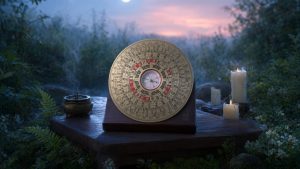
It’s the Luo Pan—the Chinese magnetic compass—and specifically, how it’s used in conjunction with the annual flying stars calendar.
The Ancient Wisdom: Why Time Is the First Dimension of Space
Let’s rewind—to the year 59 AD.
On Mt. Longhu (Dragon Tiger Mountain), the First Celestial Master Zhang Daoling stood before disciples holding newly cast bronze Luo Pans. These weren’t mere direction-finders. Each had 24 concentric rings—some inscribed with the 28 Lunar Mansions, others with the He Tu (River Chart) and Luo Shu (Lo Shu Square), and the innermost ring marked with the Nine Stars of the Purple White Flying Star System.
But here’s what most modern practitioners miss: Zhang Daoling didn’t teach students how to read the compass first.
He taught them how to calibrate it to time first.
In the Zhengyi Daoist Ritual Canon, preserved in the Heavenly Master’s Mansion archives since the Han Dynasty, there’s a passage rarely translated into English:
“Before the needle settles, the heavens must be consulted. The Luo Pan does not point to north—it points to harmony. And harmony is never static. It breathes with the sun, pulses with the moon, and reorients itself every 180 days at the solstices, every 60 days at the Jie Qi, and every year at the start of the lunar new year.”
Handcrafted Cupronickel Ten-Thousand Names Tablet Pendant | Wan Shen Hui Daoist Bagua Exorcism Talisman Necklace
万神讳项链,白铜精制,银金双色。吊坠为令牌/碑形,上承金焰拱券、嵌红宝石,中央嵌描金八卦太极,牌面满布阴刻「万神讳」诸神秘讳与符字。「万神讳」总摄万神名讳,为道教著名伏魔驱邪之秘讳,传统上被视为
That’s the ancient wisdom no app can replicate: Space has no meaning without time.
Think of your home as a musical instrument. The floor plan is the body of the violin. The furniture is the strings. The colors are the varnish. But without tuning to the current key signature—which changes every year—the instrument will sound dissonant, no matter how perfectly crafted.
That “key signature” is the annual flying stars chart—a dynamic overlay of nine energetic forces (each tied to a number, color, element, and life domain) that rotate through the nine sectors of your space every single year.
- In 2025, the Wu Huang (Five Yellow) star sat in the center sector—making it the most unstable zone in every home and office.
- In 2026, it moved to the northeast—a zone traditionally linked to knowledge, self-cultivation, and mentors.
- And as of today—October 22, 2026—that shift is not theoretical. It is astrologically locked in.
Because the annual flying stars don’t reset on January 1st.
They reset on the first day of the Chinese lunar new year—which falls on February 17, 2026, according to the official calendar issued by the China Academy of Sciences. Every adjustment, every cure, every talisman activation after that date must reference the 2026 chart—not the 2025 chart, not the “general” chart, not the “forever” chart.
That’s why professional feng shui consultants never skip this step: they always begin with a time-calibrated Luo Pan reading—using a compass that’s not only magnetically precise, but ritually attuned to the current year’s qi rhythm.
Without that calibration, you’re not harmonizing with heaven.
You’re arguing with it.
3 Actionable Steps You Can Take Today (No Master Required)
You don’t need decades of training to align with this principle. Here are three concrete, immediate steps—grounded in authentic Zhengyi Daoist practice—that anyone can implement this week:
✅ Step 1: Locate Your Home’s True Center—Then Map the 2026 Flying Stars
Most people assume the center of their home is the architectural center. It’s not. In classical feng shui, the true center is determined by the Luo Pan’s magnetic reading—not floor plans or blueprints.
Here’s how to do it right:
- Stand at your main entrance, facing into your home.
- Hold your Luo Pan steady at waist height, away from electronics or metal.
- Let the needle settle. Note the degree reading where the red (south) needle points.
- Walk slowly toward the interior, taking readings every 3–5 feet—until the needle begins to waver consistently. That’s your home’s energetic center.
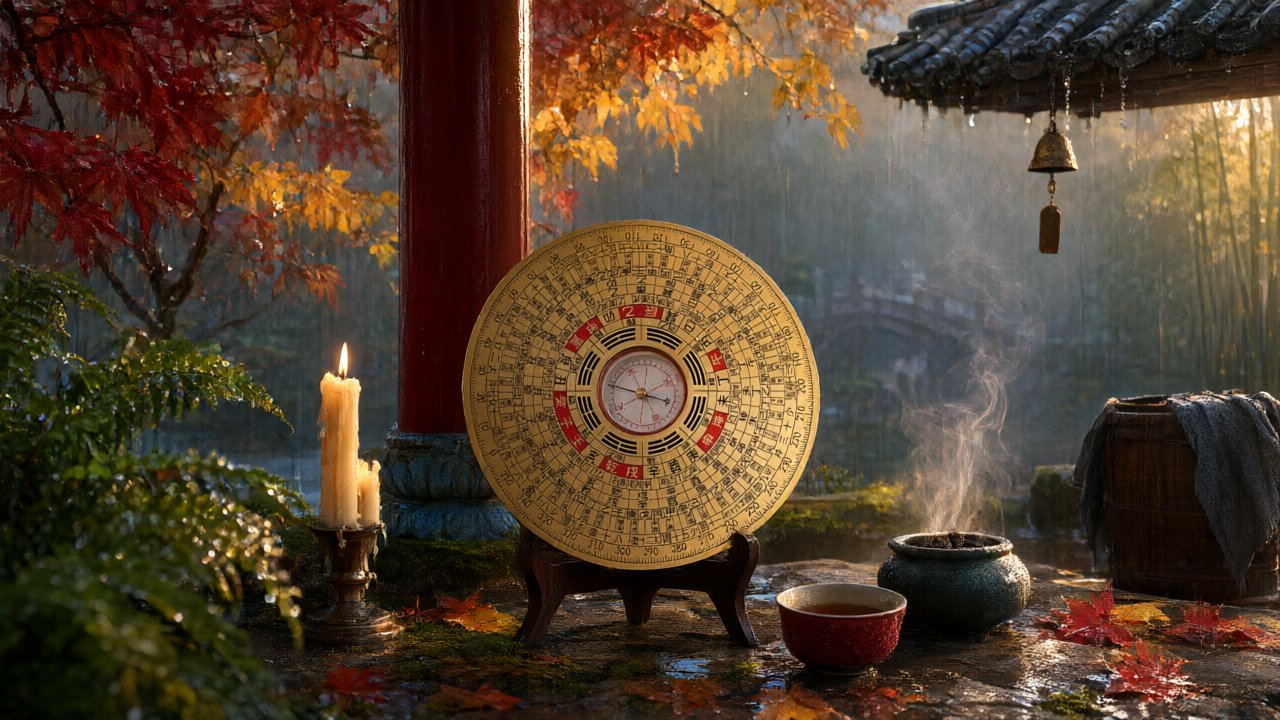
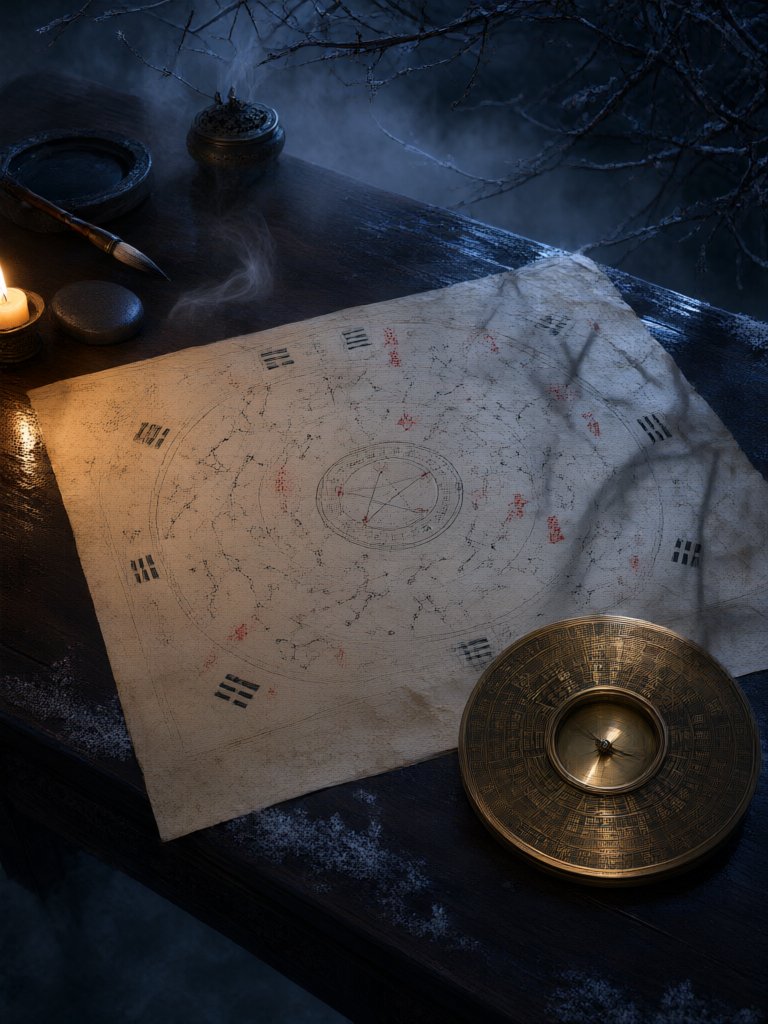
Once you’ve located it, download the official 2026 Annual Flying Stars Chart, published by the Hong Kong Feng Shui Research Institute (free PDF, search “HKFSRI 2026 Flying Stars”). Print it. Place it over a simple grid of your floor plan (nine equal squares). Align the chart’s “north” with your Luo Pan’s true north reading—not your phone’s GPS.
This isn’t guesswork. It’s geometric astrology—and it transforms your space from static to sentient.
✅ Step 2: Activate the Current Year’s Wen Chang (Scholar Star) — Even If You’re Not Studying
The Wen Chang star governs clarity, insight, reputation, and strategic thinking—not just exams. In 2026, it resides in the west sector.
But here’s the Taoist nuance most miss: Wen Chang doesn’t respond to “study lamps” or “books stacked neatly.” It responds to resonance—specifically, the vibration of metal and water, and the geometry of circular movement.
So instead of adding more clutter:
- Place a small, smooth brass gourd (Tong Hu Lu) in the west corner of your workspace—not as decoration, but as a qi capacitor. Its rounded shape gathers and softens incoming energy; its brass material conducts metal qi.
- Add one flowing water feature—like a desktop fountain with gentle, non-splashing motion. Water nourishes metal; metal refines water. Together, they awaken Wen Chang’s clarity.
- Every Thursday morning (the day governed by Jupiter—and thus Wen Chang in classical astrology), sit quietly in that west sector for 7 minutes. Breathe deeply. Visualize light entering your forehead—not as effort, but as reception.
This is how ancient scholars prepared for imperial examinations—not with cramming, but with energetic readiness.
✅ Step 3: Neutralize the 2026 Wu Huang (Five Yellow) Star in the Northeast — Without Fear or Force
The Wu Huang star carries immense power—but it’s not “bad.” It’s unrefined potential. Like raw lightning: dangerous if ungrounded, transformative if channeled.
In 2026, Wu Huang sits in the northeast—the sector tied to mentors, teachers, spiritual guides, and lifelong learning.
Many rush to “suppress” it with mirrors or salt. That’s a Western reflex—not a Taoist one.
Zhengyi Daoist tradition teaches transformation, not suppression.
So instead of blocking Wu Huang, help it ground:
- Place a Wu Di Qian (Five Emperor Coins) set—strung with red silk—in a small ceramic bowl filled with uncooked rice. Rice represents Earth (Wu Huang’s element); the coins represent imperial authority (its celestial nature); red silk invokes Fire (to gently transform Earth into stability).
- Position this bowl on a low, square wooden stand—no higher than 12 inches—directly in the northeast corner of your living room or study.
- Light a single beeswax candle beside it every first day of the lunar month (next one is November 1, 2026—the start of the 10th lunar month). Let it burn for 21 minutes—the time it takes for qi to complete one full circuit in the body.
This isn’t superstition. It’s elemental choreography—aligning earth, metal, fire, and intention to turn volatility into vision.
The Tool That Makes All This Possible: Your Luo Pan Isn’t Just a Compass—It’s a Calendar
You may own a feng shui compass.
But do you own a time-calibrated Luo Pan?
There’s a critical difference.
A standard compass tells you where north is.
A Zhengyi-consecrated Luo Pan—crafted and calibrated by masters at Mt. Longhu—tells you when north means something.
Ours is modeled after the 18th-century Zhen Wu Luo Pan, preserved in the Heavenly Master’s Mansion library. Its outer rings are engraved with the 2026 Flying Stars chart, its central needle is balanced with hematite (for grounding), and its base is lined with aged cedar—wood sacred to the Zhen Wu (True Warrior) deity, guardian of timing and discipline.
When we say “professional feng shui consultants never skip this step,” we mean they never interpret space without first anchoring it in time—and that anchoring happens through the Luo Pan.
This is why our Luo Pan isn’t sold as a “decor item” or “feng shui accessory.” It’s offered as a ritual instrument—consecrated during the Qing Ming ceremony earlier this year, aligned with the spring equinox qi to hold resonance through all four seasons of 2026.
For those seeking authentic, time-aware feng shui tools rooted in the Zhengyi Daoist lineage, Dehui Hall offers the Mt. Longhu Luo Pan—hand-crafted in Jiangxi Province, calibrated for the 2026 annual cycle, and ready to restore precision to your practice.
Paired with the Wen Chang Pagoda—a brass feng shui tower traditionally placed in the Wen Chang sector to amplify insight and reputation—it forms a complete 2026 alignment system: one instrument to read time, the other to anchor clarity.
Taoist talismans, like the Wen Chang Fu (Scholar Talisman), work synergistically with these tools—not as magic spells, but as focused intentions activated within the right temporal window.
So if your feng shui has felt inconsistent—if your adjustments seem to work one month and fade the next—it’s not your effort that’s lacking.
It’s your timing.
And timing begins with the needle.
Further Reading & Cultural Context
- Feng shui principles — Traditional Chinese geomancy and environmental harmony
FAQ
Q: Can I use my smartphone compass app instead of a physical Luo Pan?
A: No. Smartphone compasses measure magnetic north—but they lack the layered cosmological rings (He Tu, Luo Shu, Flying Stars) and cannot be ritually calibrated. More critically, they have no capacity to hold intention. A Luo Pan is not a sensor—it’s a sacred interface between human awareness and celestial rhythm.
Q: Do I need to be a feng shui master to use the 2026 Flying Stars chart?
A: Not at all. The chart is designed for intuitive use—even beginners can locate sectors and apply basic cures. What matters is starting from time, not just space. Our free 2026 Quick-Reference Guide (available with any Luo Pan order) walks you through the 5-minute setup process.
Taoist talismans are sacred spiritual tools rooted in 1,800 years of tradition. Their power comes from sincere belief and the consecration rituals of ordained priests. Results vary by individual — approach with an open heart and respectful intention.
What area of your life feels most blocked right now?
Frequently Asked Questions
Can I use my smartphone compass app instead of a physical Luo Pan?
No. Smartphone compasses measure magnetic north—but they lack the layered cosmological rings and cannot be ritually calibrated. A Luo Pan is a sacred interface—not a sensor.
Do I need to be a feng shui master to use the 2026 Flying Stars chart?
Not at all. The chart is designed for intuitive use—even beginners can locate sectors and apply basic cures. What matters is starting from time, not just space.
Go Deeper
- BaZi Chart Reading — free, takes about two minutes: read your Four Pillars chart for this year
- If you want the physical remedy behind this article, browse our consecrated talismans and feng shui pieces.
Related Taoist Instruments
About DeHuiTang — This article is part of our Taoist cultural education series. Explore more authentic Taoist knowledge, Feng Shui wisdom, and destiny philosophy at our main site.