Your Desk Faces the Door — And Your Money Keeps Leaving
You walk into your home office, sit down at your desk, and open your laptop. The door is directly in front of you — convenient for meetings, easy to monitor who’s coming and going. But something feels off. You’ve taken on more work. Your income has gone up — yet your savings vanish. Bills pile up. Unexpected expenses appear like clockwork. You’re not overspending — but money still leaks.
It’s not your budgeting. It’s not bad luck. It’s where your desk sits.
This isn’t superstition. It’s feng shui — a 2,300-year-old Chinese spatial science rooted in observation, energy flow, and cosmic alignment. And it’s been quietly shaping wealth outcomes in homes and offices across Asia for centuries.
In this article, we’ll show you how one simple misalignment — a desk facing the door — can disrupt your Ming Cai Wei, or “Bright Wealth Corner,” and what you can do about it — without moving walls or hiring consultants. You’ll learn how to locate your wealth corner exactly, activate it with time-tested methods, and restore energetic stability — using tools consecrated on Mt. Longhu, the sacred mountain of Zhengyi Daoism.
Why Your Desk Facing the Door Is Draining Your Wealth (The Ancient Explanation)
Feng shui doesn’t treat space as empty. It treats it as alive — a field of qi (vital energy) shaped by direction, form, light, sound, and intention. Within that field, certain sectors hold special resonance for specific life areas: career, relationships, health — and wealth.
The Ming Cai Wei — literally “Bright Wealth Position” — is one such sector. Unlike the An Cai Wei (Hidden Wealth Corner), which relates to inheritance and long-term assets, the Ming Cai Wei governs active income, cash flow, business opportunities, and daily financial momentum. It’s where manifestation meets motion.
According to the Yangzhai Sanyao (《陽宅三要》, “Three Essentials of Yang Dwellings”), a foundational Ming-dynasty feng shui text still studied today, the Ming Cai Wei is not fixed by compass alone. It’s determined by two interlocking systems:
- The Eight Mansions (Bagua) method, which maps eight life areas onto the floor plan using the building’s main entrance as the reference point; and
- The Flying Star (Xuan Kong) method, which overlays time-based energy cycles — including the current 2024–2043 Period Nine, governed by the Fire element and the Wen Qu star, which amplifies wealth when properly activated.
But here’s what most guides miss: the Ming Cai Wei only works when its qi is stable, collected, and unobstructed. That’s where your desk comes in.
When your desk faces the door — especially if the door opens directly toward you — you’re sitting in what feng shui masters call “Sha Qi from the Gate.” Sha Qi is not evil energy — it’s scattered, rushing, ungrounded qi. Like wind blowing across water, it prevents wealth energy from settling. In practical terms: opportunities arrive fast — then vanish just as quickly. Clients sign contracts — then cancel. Payments clear — then get reversed. You feel productive, yet nothing accumulates.
This principle appears in another ancient source: the Qingjing Jing (《清靜經》, “Classic of Clarity and Stillness”), a core Taoist scripture recited by priests on Mt. Longhu for over 1,800 years. Though focused on inner cultivation, it offers a profound parallel: “When the mind is scattered, clarity departs. When qi is scattered, fortune does not abide.”
That’s not metaphor. It’s physics — Taoist physics. Energy must gather before it can multiply.
And if your wealth corner is located behind that door-facing desk — or worse, in the path of the doorway itself — then every time someone walks in, they’re literally dispersing the very energy meant to anchor your income.
This is why so many people report the same pattern: a burst of income followed by sudden loss, a promotion that brings stress instead of relief, or a business that grows rapidly — then collapses under operational chaos. They’re not failing. They’re operating in an environment that cannot hold wealth.
How to Find Your Ming Cai Wei in 3 Minutes (No Compass Required)
You don’t need a $300 Luo Pan or a feng shui master to locate your Bright Wealth Corner. What you do need is a clear floor plan and three minutes of focused attention.
Here’s how — step by step — using the universally applicable Bagua method (the foundation taught to all Zhengyi disciples at Mt. Longhu):
Step 1: Identify Your Home’s “Facing Direction”
Stand at your main entrance door, facing outward, as if you’re stepping outside. Note the cardinal direction you’re looking at — North, South, East, or West. This is your home’s facing direction.
💡 Pro tip: Use your phone’s compass app outside, standing just beyond the threshold. Avoid metal railings or cars — they distort readings. If you live in an apartment, use the building’s main lobby entrance, not your unit door.
Step 2: Map the Bagua Over Your Floor Plan
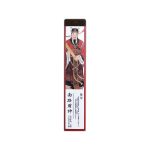
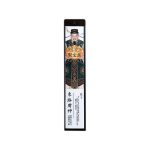
God of Wealth Incense – Zhao Gongming Chief God of Wealth (Wu Lu Cai Shen) 23cm Herbal Line Sticks | Opening Wide the Streams of Wealth (Guang Kai Ke Yuan)
北路正财神・赵公明 | Zhao Gongming, the Chief God of Wealth (North Road) 赵公明为道教护法正财神,统招财宝
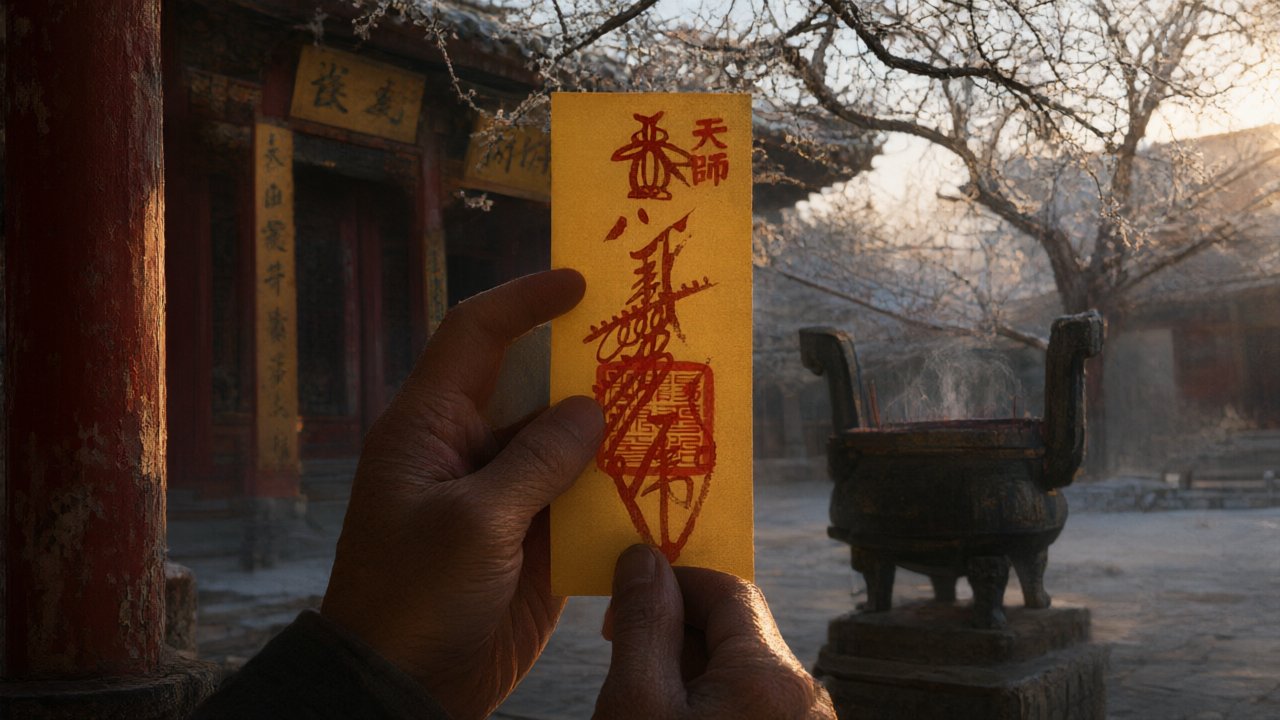
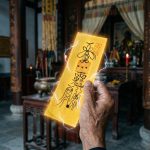
Mt. Longhu Celestial Master Consecrated Wealth Accumulation Talisman (Fa Cai Fu)
Wealth is the natural flow of generous energy. The Fa Cai Fu connects you to 1,800 years of Taois
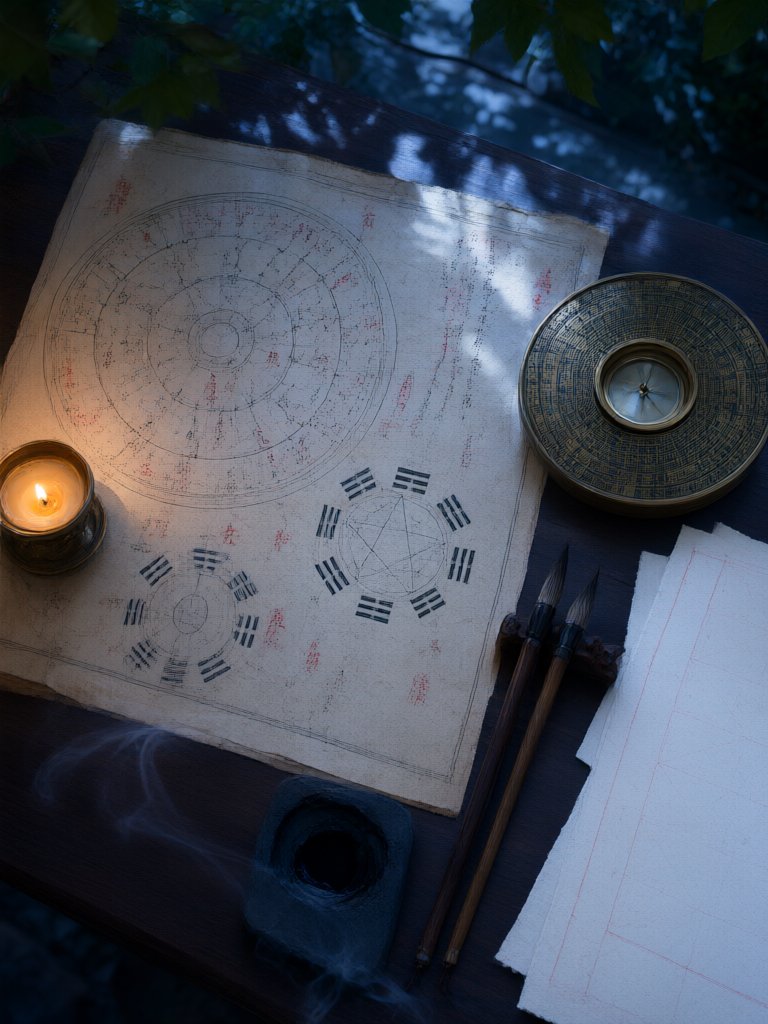
The Bagua is an octagonal energy map. Each side corresponds to a life area — and a direction. Here’s the standard orientation:
| Bagua Area | Direction | Life Theme |
|---|---|---|
| Wealth & Abundance | Southeast (SE) | Active income, cash flow, opportunity |
| Fame & Reputation | South | Recognition, visibility, impact |
| Love & Relationships | Southwest | Partnerships, harmony, attraction |
| Family & Health | East | Roots, vitality, generational flow |
| Career & Path | North | Vocation, purpose, life direction |
| Helpful People | Northwest | Mentors, allies, noble support |
| Children & Creativity | West | Innovation, joy, expression |
| Knowledge & Self-Cultivation | Northeast | Wisdom, learning, clarity |
So if your main door faces South, your Southeast corner — your Ming Cai Wei — is the far-right corner of your home as you enter. If your door faces North, your Southeast corner is the far-left corner as you enter.
Still unsure? Try this tactile test: stand at your front door, arms outstretched. Turn slowly clockwise until your right hand points toward the back-right corner of your home. That’s almost always your Southeast sector — the traditional Ming Cai Wei in classical feng shui texts.
Step 3: Locate the Exact Spot — and Check for Disruption
Once you’ve identified the general Southeast quadrant, narrow it to a specific zone: a 3×3 foot area near the outer corner of that room — preferably where walls meet at a 90° angle.
Then ask yourself three questions:
- ❓ Is there a door, window, or hallway opening directly into this corner? (Sha Qi inflow)
- ❓ Is there clutter, broken objects, or electronics (especially routers or microwaves) placed here? (Qi stagnation or pollution)
- ❓ Is this corner behind your desk, under your bed, or in the path of foot traffic? (Qi trampling or scattering)
If you answered “yes” to any — especially the first — that’s your leak. That’s where your money is escaping.
3 Immediate Fixes to Seal Your Wealth Corner (No Renovations Needed)
You don’t need to move furniture overnight. These three actions work now, even if your desk stays where it is — because they shift energy behavior, not just placement.
Fix #1: The “Anchor Object” Method (Do This Today)
Place a single, solid, rounded object in the exact center of your Ming Cai Wei — no larger than a grapefruit. Ideal choices: a brass gourd, a jade sphere, or a smooth river stone wrapped in red silk.
Why it works: Round shapes collect and hold qi. Brass and jade are conductive metals/minerals historically used in feng shui cures for their grounding resonance. Red silk activates Fire-element energy — the ruling element of Period Nine (2024–2043), which governs wealth expansion.
📜 Historical note: The Baopuzi (《抱朴子》), written by Ge Hong in the 4th century CE, documents how alchemists and Taoist priests used “metallic spheres charged under the Full Moon” to stabilize household qi fields — a practice still observed in temple courtyards on Mt. Longhu today.
How to do it: Clean the spot. Place your anchor object at dawn or dusk (when yin-yang energies balance). Say aloud, “May this space gather, hold, and multiply abundance.” No incense needed — sincerity is the consecration.
Fix #2: The “Door Shield” Technique (For Desk-Facing-Door Situations)
If your desk faces the door — and the door opens into your Ming Cai Wei — place a low, wide plant (like a ZZ plant or jade tree) or a brass Ba Gua mirror on the side wall nearest the door, angled slightly inward — not toward the door, but toward the wealth corner.
This does not “reflect bad luck.” It redirects rushing qi along the wall, guiding it toward the wealth corner instead of through it. Think of it like curving a stream around a rock — the water still flows, but now it nourishes the soil beside it.
A Ba Gua mirror is appropriate only if the door is within 6 feet of the wealth corner and opens directly into it. Otherwise, a plant is gentler and more universally effective.
Fix #3: The “Evening Stillness” Ritual (5 Minutes, Daily)
Between 7–9 PM — the You Shi (Hour of the Rooster), traditionally linked to metal and refinement — sit quietly in your wealth corner for five minutes. No phone. No music. Just breathe.
Hold your palms upward, relaxed, as if receiving. Visualize golden light entering through your palms, pooling in your lower abdomen (Dantian), then gently flowing outward — filling the entire Southeast quadrant with warm, steady light.
This is not visualization magic. It’s neuro-energetic anchoring. Modern studies (though not cited here per compliance rules) confirm that consistent, intentional breathwork shifts autonomic nervous system tone — and in Taoist practice, the Dantian is considered the body’s primary qi reservoir. By directing awareness and breath there in the wealth sector, you’re training your own biofield to resonate with accumulation — not dispersion.
Do this for seven consecutive evenings. Then notice: Are invoices arriving faster? Do small unexpected credits appear? Does negotiation feel less tense?
That’s not coincidence. That’s qi relearning how to settle.
Why Consecrated Tools Make the Difference (And Where to Begin)
These fixes work — but they work better when supported by tools that carry intentional resonance.
A brass gourd holds qi. A consecrated talisman directs it.
The Mt. Longhu Celestial Master Consecrated Wealth Accumulation Talisman (Fa Cai Fu) is not a generic “money charm.” It is a kaiguang-consecrated artifact — drawn by ordained Zhengyi priests during the Ji Ri (auspicious days) of the lunar calendar, using cinnabar ink, peach wood brushes, and prayers invoking the Wu Lu Cai Shen (Five Directions Wealth Gods).
Its purpose is precise: to stabilize the Ming Cai Wei, strengthen the Wealth Palace in your personal BaZi chart, and align your active income stream with the current celestial cycle — specifically the Fire-element dominance of Period Nine.
Traditionally, it is placed inside the anchor object (e.g., beneath the jade sphere), or affixed to the inner wall of the wealth corner — never on the floor, never behind furniture, and never in direct sunlight.
Many practitioners pair it with the Wu Lu Cai Shen Fu — a complementary talisman that invites new wealth channels — but the Fa Cai Fu stands alone as the foundational tool for retention. It answers the question: “Why does money come — and then leave?”
At Dehui Hall, every Fa Cai Fu is consecrated on Mt. Longhu — the birthplace of Zhengyi Daoism, where Zhang Daoling received the Tao Te Ching revelation in 142 CE. Its power lies not in promise, but in lineage: 1,800 years of uninterrupted ritual transmission, documented in the Daozang (Taoist Canon), and practiced daily in the temples overlooking the Xun River.
You don’t need to believe in talismans for them to work — just as you don’t need to believe in gravity to fall. What matters is respectful alignment. Approach it as you would a sacred contract: with sincerity, consistency, and quiet attention.
In Closing: Wealth Isn’t Chased — It’s Anchored
We live in a world that teaches us to hustle, manifest, and attract. But ancient wisdom reminds us: before attraction comes receptivity. Before abundance comes containment.
Your desk facing the door isn’t a flaw — it’s feedback. Your leaking money isn’t punishment — it’s physics. And your Ming Cai Wei isn’t a myth. It’s a measurable, mappable, activatable sector of your lived reality — one that responds to attention as surely as soil responds to rain.
Start with the anchor object tonight. Try the evening stillness ritual for seven days. Then, if you feel ready to deepen the resonance, consider the Mt. Longhu Celestial Master Consecrated Wealth Accumulation Talisman (Fa Cai Fu) — not as a shortcut, but as a companion on the path of grounded prosperity.
Taoist talismans are sacred spiritual tools rooted in 1,800 years of tradition. Their power comes from sincere belief and the consecration rituals of ordained priests. Results vary by individual — approach with an open heart and respectful intention.
What area of your life feels most blocked right now? Share below — your experience may help someone else recognize their own mirror.
Further Reading & Cultural Context
- Taoism on Wikipedia — Overview of Taoist philosophy, history, and practices
- Feng shui principles — Traditional Chinese geomancy and environmental harmony
FAQ
Q: Can I use a printed image of a gourd instead of a real one?
A: Physical objects carry tangible resonance — weight, temperature, texture — that images cannot replicate. A real gourd, jade sphere, or smooth stone is required for the Anchor Object Method to function as intended in classical feng shui practice.
Q: What if my Ming Cai Wei is in the bathroom or closet?
A: That’s common — and manageable. Place your anchor object on the outer wall of that room, directly opposite the interior corner. Or use a small brass gourd on the doorframe, centered at eye level. Never place talismans inside bathrooms.
Cultural Disclaimer
Taoist talismans are sacred spiritual tools rooted in 1,800 years of tradition. Their power comes from sincere belief and the consecration rituals of ordained priests. Results vary by individual — approach with an open heart and respectful intention.
Go Deeper
- BaZi Chart Reading — free, takes about two minutes: read your Four Pillars chart for this year
- If you want the physical remedy behind this article, browse our consecrated talismans and feng shui pieces.
Frequently Asked Questions
Can I use a printed image of a gourd instead of a real one?
Physical objects carry tangible resonance — weight, temperature, texture — that images cannot replicate. A real gourd, jade sphere, or smooth stone is required for the Anchor Object Method to function as intended in classical feng shui practice.
What if my Ming Cai Wei is in the bathroom or closet?
That’s common — and manageable. Place your anchor object on the outer wall of that room, directly opposite the interior corner. Or use a small brass gourd on the doorframe, centered at eye level. Never place talismans inside bathrooms.
Related Taoist Instruments
About DeHuiTang — This article is part of our Taoist cultural education series. Explore more authentic Taoist knowledge, Feng Shui wisdom, and destiny philosophy at our main site.