You Keep Dreaming About Water — Here’s What Taoism Says
Have you woken up again with the taste of salt on your lips — even though you haven’t been near the sea? Or found yourself standing ankle-deep in a river that wasn’t there when you fell asleep? Maybe you’re floating in a vast, silent lake — calm, but strangely weightless. Or worse: you’re drowning, gasping, and the water won’t let you surface… only to jolt awake at 3 a.m., heart pounding, sheets damp.
You’ve had this dream — not once, not twice — but three times this month. Five times this year. It returns like tide, inevitable and uninvited. You scroll through dream dictionaries, read about Freudian symbols or Jungian archetypes, and still feel no closer to meaning. You wonder: Is something wrong with me? Is my body trying to tell me something? Is this a warning?
That question — quiet, persistent, personal — is where ancient Chinese dream wisdom begins. Not with diagnosis, not with therapy, not with interpretation as psychological correction — but with recognition. In the tradition of Mt. Longhu (龍虎山), the sacred mountain of Zhengyi Daoism (正一道), recurring dreams about water are not random neural noise. They are linguistic echoes — messages written in the oldest language Taoism knows: the language of qi, yin, and shen (spirit-mind).
This isn’t about sleep science. It’s about sacred resonance.
Water Isn’t Just Water — It’s the First Symbol of the Unseen
In Western self-help culture, water in dreams is often flattened into one of two meanings: emotion (‘you’re feeling overwhelmed’) or subconscious (‘something hidden is rising’). Helpful — yes. Complete — no. Because it misses the foundational truth Taoist dream practice has held for over 1,800 years: water is not a metaphor. It is a manifestation.
Think of it this way: in the Yangzhai Sanyao (《陽宅三要》, The Three Essentials of Yang Dwellings), a foundational feng shui text compiled during the Ming Dynasty, water is never discussed as ‘symbolic’. It is treated as a physical carrier of qi — a substance that gathers, stores, moves, stagnates, and floods real energy. A pond in front of a home isn’t ‘like’ abundance — its shape, depth, and flow directly influence how wealth qi accumulates in that household. A leaking pipe beneath the floor isn’t ‘representative’ of loss — in traditional belief, it is a literal leakage of prosperity qi.
So when water appears in your dreams — especially repeatedly — Taoist masters from Zhang Daoling’s lineage did not ask what it means emotionally. They asked: What is the state of your inner water?
Because in the Qingjing Jing (Classic of Clarity and Stillness), one of the most recited scriptures in Zhengyi Daoist temples on Mt. Longhu, it says plainly: “The mind is like water. When still, it reflects heaven and earth. When stirred, it clouds the mirror of spirit.”
That line is not poetic decoration. It is an operational principle.
Your recurring water dream is not a puzzle to solve — it is a reading. A diagnostic reflection of your shen (spirit-mind) and jing (essence), two of the Three Treasures (Jing-Qi-Shen) that form the core of Daoist cultivation. And just as a physician might check your pulse, a Daoist master would first observe the quality of your water dream — because each variation maps to a specific energetic condition.
Let’s break down what the tradition actually observes — not what modern apps guess.
Four Water Dreams — And What Each One Traditionally Reveals
Taoist dream interpretation doesn’t rely on universal dictionaries. It relies on pattern recognition, honed over centuries of recording dreams in temple logbooks and correlating them with daily life, health, and seasonal shifts. Below are four of the most commonly reported water dreams — and what they traditionally indicate, according to classical frameworks used by Zhengyi priests on Mt. Longhu.
1. Calm, Deep, Reflective Water (Lake, Pond, Still Ocean)
You stand at the edge. The surface is glass. You see stars, clouds, your own face — clear, unmoving.
This is the most auspicious water dream — and also the rarest in modern life. In the Baopuzi (《抱朴子》, Master Who Embraces Simplicity), Ge Hong writes that such dreams appear when shen is settled and qi is abundant. It signals harmony between yin (stillness, receptivity) and yang (clarity, awareness). Your spirit-mind is acting like a perfectly polished bronze mirror — undisturbed, luminous, capable of true perception.
But here’s the nuance modern guides miss: this dream often appears just before a major life pivot, not during stability. Why? Because stillness precedes action. Like the moment before a bow is drawn — the string taut, the arrow aligned, the breath held — this dream reflects a deep internal alignment preparing for outward movement. If you’ve had this dream recently, don’t assume everything is ‘fine’. Ask instead: What am I ready to release? What new direction feels quietly inevitable?
2. Flowing, Clear, Gentle River or Stream
You walk beside it, or float downstream. The current is steady, cool, effortless. No rocks, no rapids.
This is the dream of unobstructed flow. In classical bazi (Four Pillars) analysis, water represents the career palace and the resource element. A gentle river signals that your life force — your wei qi, or defensive energy field — is moving without resistance. It traditionally correlates with periods where opportunities arrive organically, relationships deepen without strain, and decisions feel intuitively right.
But again — context matters. The Yangzhai Sanyao notes that rivers must flow toward the dwelling to be auspicious. So if your dream-river flows away from you — or you’re watching it recede — it may reflect a subtle withdrawal: of energy, of interest, of commitment. Not failure — but recalibration. In Zhengyi custom, this is seen as yin qi gently reordering itself, like water finding a new channel after rain.
3. Murky, Churning, or Storm-Tossed Water
The ocean heaves. Waves crash. The water is brown, thick, swirling. You’re clinging to something — a raft, a branch, your own arms.
This is the most frequently reported recurring water dream today — and it’s not a sign of pathology. In the Daozang (Taoist Canon), murky water is consistently linked to sha qi — disruptive, scattering energy — particularly when it arises alongside emotional exhaustion or decision fatigue. But crucially, it is not interpreted as ‘you’re broken’. It is read as your system responding to overload.
Think of it like a pressure valve. When your jing (vital essence) is depleted — by chronic stress, digital saturation, or unresolved grief — the body and spirit cannot maintain crystalline clarity. Murkiness is the natural state of water under turbulence. In Mt. Longhu monastic practice, this dream often appears before a period of deep rest or retreat — not because something is wrong, but because your deeper self is initiating repair.
A key distinction: if the murkiness is accompanied by fear, it points to shen disturbance — spirit-mind instability. If it’s accompanied by numbness or exhaustion, it points to jing deficiency — depletion of vital essence. The tradition doesn’t pathologize either — it simply names the terrain so you can navigate it wisely.
4. Drowning, Suffocating, or Trapped Underwater
No air. Pressure. Panic. Your limbs won’t move. You watch bubbles rise as consciousness fades.
This dream triggers alarm — and rightly so. But Taoist interpretation diverges sharply from Western anxiety models. It does not diagnose trauma or PTSD. Instead, it asks: Where in your waking life are you holding your breath?
In the Huangdi Neijing (Yellow Emperor’s Inner Canon), breath (qi) and spirit (shen) are inseparable. To hold breath is to constrict shen. To drown in a dream is traditionally understood as shen being submerged by unexpressed yin — not suppressed emotion, but unprocessed responsibility, unspoken boundaries, or deferred choices. It’s the energetic equivalent of swallowing your voice until your throat tightens.
Historically, this dream was recorded most often among scholars preparing for imperial examinations — men carrying immense social weight but forbidden from voicing doubt. Today, it appears in caregivers, founders, and anyone whose role demands constant giving without permission to receive. The drowning isn’t punishment. It’s the body’s last-resort signal: You cannot carry this alone. Release is not surrender — it is realignment.
Why Modern Dream Apps Get It Wrong (And What Ancient Practice Does Instead)
Most free dream tools today operate like keyword algorithms: they scan your input (“ocean”, “drown”, “river”) and match it to a pre-written definition. That’s useful — but it’s also like diagnosing a fever by only reading the thermometer. You get the number, but not the cause.
Taoist dream practice, by contrast, is relational. It asks three questions before assigning meaning:
-
When did the dream occur? Not just the date — but the lunar phase, the seasonal node, and the hour of night. In Zhengyi custom, dreams between 11 p.m. and 1 a.m. (the Zi hour) are believed to reflect jing (essence); those between 3–5 a.m. (Yin hour) reflect shen (spirit-mind). A water dream at 3:17 a.m. carries different weight than one at 12:03 a.m.
-
What happened after you woke? Did you feel refreshed? Heavy? Alert? Thirsty? Cold? These are not ‘side effects’ — they are confirming data. In the Qingjing Jing, it says: “The dream is the shadow. The waking state is the body.” The body’s response is the anchor point.
-
What water exists in your actual environment? This is the mirror hook — the concrete, daily reality that makes interpretation land. Is your bedroom directly above a basement laundry room? Do you sleep with a humidifier running all night? Is your kitchen sink leaking? Is there a large reflective surface — a mirror, a window, a fish tank — facing your bed? In feng shui texts, these aren’t ‘coincidences’. They are environmental qi partners to your inner landscape. A leaking faucet + recurring drowning dream isn’t superstition — it’s pattern recognition across layers of reality.
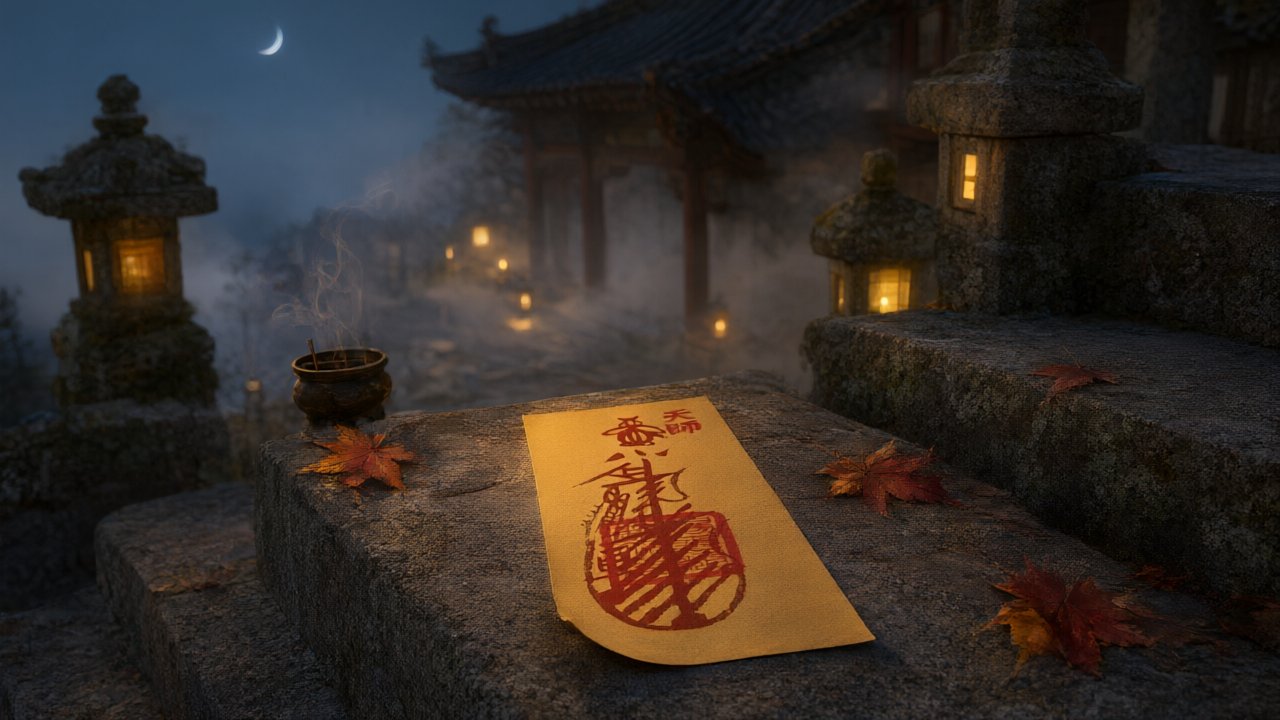
That’s why the most accurate dream readings have never been done in isolation. They were done in temple courtyards, with incense smoke curling upward, while the master observed how the dreamer moved, spoke, and breathed — then cross-referenced it with the home’s layout, the season’s qi, and the lunar calendar.
We can’t replicate that full ritual online — but we can bring you the next best thing.
Your Next Step: A Free, Traditional-Inspired Dream Reading
You don’t need to memorize the Daozang or visit Mt. Longhu to begin working with your water dreams. What you do need is a tool that honors the tradition’s depth — not just its symbols.
That’s why we built the Free Dream Mirror Tool.
It’s not another dictionary. It’s a structured reflection. You enter:
– The exact water imagery you saw (e.g., “deep blue lake, no shore visible”)
– How you felt immediately upon waking (e.g., “calm but disoriented”, “panicked and cold”)
– One concrete detail about your sleeping space (e.g., “mirror on closet door faces my bed”, “bed is under east-facing window”, “no water sources nearby”)
Then, in under two minutes, you receive:
– A concise reading grounded in classical patterns (not psychology)
– One simple, actionable observation — like “This dream aligns with the ‘still lake’ pattern. Consider pausing one decision this week — not to avoid it, but to let clarity arise.”
– A seasonal note — what the current lunar phase (9th month, day 27) suggests about your dream’s timing
It’s free. It takes less than 90 seconds. And it’s designed not to tell you what’s ‘wrong’, but to help you recognize what your spirit-mind is already trying to say.
Run your water dream through the Free Dream Mirror Tool — and listen closely to what comes back.
In Closing: Water Is Not the Problem — It’s the Messenger
Recurring water dreams do not mean your life is flooded. They mean your inner landscape is alive, responsive, and speaking in the language of ancient resonance. In the Zhengyi Daoist lineage of Mt. Longhu, water has never been feared — it has been studied, honored, and trusted as the first teacher of flow, reflection, and renewal.
You don’t need to fix the dream. You need to understand its grammar.
The next time you wake from water — whether serene or stormy — pause before reaching for your phone. Sit quietly. Feel your breath. Notice the weight in your chest, the coolness on your skin, the echo of waves in your ears. Then ask: What is my inner water trying to show me right now?
That question — simple, direct, rooted in 1,800 years of observation — is where understanding begins.
Taoist dream practice is a sacred spiritual tool rooted in 1,800 years of Zhengyi Daoist tradition. Its insights come from cultural heritage and classical texts like the Qingjing Jing and Yangzhai Sanyao, not medical diagnosis. Approach with respectful curiosity — not expectation of outcome.
Further Reading & Cultural Context
- Taoism on Wikipedia — Overview of Taoist philosophy, history, and practices
- Talismans in world cultures — Cross-cultural overview of talismanic traditions
FAQ
Q: Can water dreams predict the future?
A: Classical Taoist dream practice does not treat dreams as fortune-telling. They are reflections of present energetic conditions — like a weather vane showing wind direction, not a forecast. Understanding them helps you align with natural cycles, not control them.
Q: I had a water dream after drinking too much before bed — does that count?
A: Yes — and it’s meaningful. Physical states directly influence qi and shen. A dream triggered by hydration or fatigue is still a valid reflection of your current energetic threshold. The tradition values honesty with the body above symbolic purity.
Q: Are nightmares about water dangerous?
A: In Taoist custom, no dream is inherently ‘dangerous’. Even disturbing dreams serve a purpose — to draw attention to imbalances needing gentle adjustment. They are invitations to care, not warnings of doom.
Q: Does this apply to everyone — even non-Chinese people?
A: Qi, shen, and jing are universal human experiences — not cultural concepts. The framework is rooted in Mt. Longhu, but the phenomena it describes — stillness, flow, overwhelm, suffocation — are shared across humanity. The language is different; the experience is the same.
Q: How often should I consult dream wisdom?
A: There’s no rule — but tradition suggests observing patterns over time, not isolated events. If a water dream repeats more than three times in a lunar cycle (29.5 days), it’s worth gentle inquiry. Not panic. Not analysis. Just presence.
Comment Trigger:
Has this ever happened to you? Tell us your story.
We’d love to hear: What water dream keeps returning — and what changed, however subtly, the last time it appeared? Share your experience below. No interpretation needed — just the image, the feeling, and the echo.
Go Deeper
- Dream Interpretation — free, takes about two minutes: see what your recurring dream points to
- BaZi Chart Reading — free, takes about two minutes: read your Four Pillars chart for this year
- If you want the physical remedy behind this article, browse our consecrated talismans and feng shui pieces.
Frequently Asked Questions
Can water dreams predict the future?
Classical Taoist dream practice does not treat dreams as fortune-telling. They are reflections of present energetic conditions — like a weather vane showing wind direction, not a forecast.
I had a water dream after drinking too much before bed — does that count?
Yes — and it’s meaningful. Physical states directly influence qi and shen. A dream triggered by hydration or fatigue is still a valid reflection of your current energetic threshold.
Related Taoist Instruments
About DeHuiTang — This article is part of our Taoist cultural education series. Explore more authentic Taoist knowledge, Feng Shui wisdom, and destiny philosophy at our main site.