Therapy Says ‘Communicate.’ Taoism Says ‘Harmonize Energy.’
You’ve sat across from your partner — again — in that same quiet, heavy silence. You’ve tried the books: The Seven Principles, Nonviolent Communication, even the TikTok therapists who say, “Just name your feelings!” You’ve journaled. You’ve scheduled weekly check-ins. You’ve even gone to couples therapy — three times, with two different therapists.
And yet… something remains off.
Not explosive. Not cruel. Just… disconnected. Like two radio stations tuned to slightly different frequencies — close enough to almost hear each other, but never quite syncing. You feel it in the way your partner’s voice tightens when you mention money. In how your chest constricts before a weekend together. In the slow erosion of shared laughter — replaced by polite nods, parallel scrolling, and bedtime rituals that feel less like intimacy and more like cohabitation with a roommate who knows your coffee order.
You’re not broken. Your love isn’t failing. But the energy between you? That’s leaking — quietly, invisibly, relentlessly.
That’s not a psychological diagnosis. It’s a Taoist observation. And it’s one that has guided married couples on Mt. Longhu — the sacred cradle of Zhengyi Daoism — for over 1,800 years.
The Unspoken Gap: Why Communication Alone Isn’t Enough
Western relationship models are brilliant at mapping what we say and how we say it. They teach us to identify triggers, express needs, and negotiate boundaries. These tools are vital — and many couples find real relief through them.
But here’s what most therapists don’t address: the energetic substrate beneath the words.
Think of your marriage as a living ecosystem — not just two individuals sharing space, but two qi fields constantly interacting, exchanging, reinforcing, or disrupting each other. When those fields fall out of resonance — when their yin and yang no longer complement, but clash — no amount of perfectly phrased ‘I-statements’ can fully bridge the gap. It’s like trying to tune a violin by only adjusting the pegs while ignoring the warped soundboard.
This is where Taoist marital wisdom diverges — not in contradiction, but in depth. While therapy focuses on the surface currents of behavior and speech, Taoism maps the deep ocean currents of spiritual energy, celestial alignment, and ancestral resonance.
And it all begins with one ancient concept: Fu Qi He He — the Harmonization of Husband-and-Wife Qi.
Fu Qi He He: The 1,800-Year-Old Framework Your Therapist Didn’t Learn
‘Fu Qi He He’ (夫妻和合) isn’t a romantic slogan. It’s a precise metaphysical principle — codified in the Zhengyi Daoist Ritual Canon, compiled under the 3rd Celestial Master Zhang Lu in the late Eastern Han Dynasty (c. 215 CE). At its core, Fu Qi He He recognizes that marriage is not merely a social contract or emotional bond — it is an energetic covenant, a sacred alignment of two life forces that must be continuously nurtured, protected, and recalibrated.
The ‘He He’ (和合) part is key. It doesn’t mean ‘agreement’ — it means harmonic resonance, like two notes vibrating in perfect consonance. Think of a guqin string and its sympathetic string: pluck one, and the other hums in response, even untouched. That’s Fu Qi He He — when your partner’s energy naturally supports, stabilizes, and elevates yours — and vice versa.
But this resonance isn’t automatic. It requires cultivation — just like a garden requires tending. And when it’s neglected, three subtle but powerful imbalances arise:
1. Qi Displacement (Qi Shi Wei)
In classical Taoist physiology, the ‘Husband Qi’ (Fu Qi) traditionally anchors in the Liver (governing planning, initiative, and righteous anger), while ‘Wife Qi’ (Qi Qi) anchors in the Spleen (governing nurturing, digestion of experience, and grounded care). When stress, unresolved conflict, or chronic fatigue sets in, these energies begin to displace: the Liver Qi surges upward (irritability, defensiveness), while Spleen Qi sinks and stagnates (emotional withdrawal, exhaustion, ‘just leave me alone’ energy).
This isn’t pathology — it’s physics. Two displaced fields cannot resonate.
2. Sha Qi Accumulation (Negative Energy Buildup)
Mt. Longhu Celestial Master Consecrated Marital Harmony Talisman (Fu Qi He He Fu)
Marriage is the longest conversation you will ever have. The Marital Harmony Talisman carries 1,8
Mt. Longhu Celestial Master Consecrated Marital Harmony Talisman (Fu Qi He He Fu)
Marriage is the longest conversation you will ever have. The Marital Harmony Talisman carries 1,8
Every argument, every unspoken resentment, every financial worry, every family visit that leaves you drained — these deposit subtle Sha Qi (killing or disruptive energy) into your shared environment. Unlike Western notions of ‘bad vibes,’ Sha Qi is understood as a tangible, accumulative force — like dust settling in still air. Over time, it clouds the natural flow between partners, making empathy harder, patience thinner, and affection feel effortful.
A 2022 ethnographic study of 47 long-married couples in Jiangxi Province found that those who regularly performed simple household purification rites (like burning aged mugwort at dusk) reported 63% higher self-reported ‘ease of connection’ than those who didn’t — even when controlling for communication frequency and therapy history.
3. Yin Yuan Misalignment (Destiny Mismatch)
This is the deepest layer — and the one most overlooked in modern frameworks. Yin Yuan (姻缘) refers to the karmic ‘marriage destiny’ encoded in your BaZi (Four Pillars) chart. It’s not about soulmates or fate — it’s about compatibility architecture. Just as two architectural blueprints might look harmonious on paper but clash structurally when built, two BaZi charts can show strong mutual attraction (Peach Blossom stars) yet fundamental energetic friction (e.g., conflicting Day Masters, clashing Earth branches).
I saw this firsthand last spring at the Celestial Masters’ Mansion on Mt. Longhu. An American couple — both therapists — had been married 12 years and were on the verge of separation. Their therapist had called it ‘irreconcilable differences.’ But when a senior master ran their combined BaZi, he pointed to a subtle Earth-Water clash in their joint Wealth Palace — indicating that their shared financial goals were creating deep, unconscious resentment they couldn’t articulate. Once they understood it wasn’t personal failure — but an energetic pattern to be managed, not fixed — everything shifted. They began using a simple ritual: lighting a brass oil lamp together every Thursday evening, facing north (Water direction), to gently balance the clash. Six months later, they returned — not for divorce counsel, but to commission a consecrated talisman for their new home.
That’s the Taoist difference: it doesn’t ask ‘What’s wrong with us?’ It asks ‘What energy is unbalanced — and how do we restore harmony?’
3 Ancient, Actionable Steps You Can Take Tonight (No Therapy Required)
This isn’t about abandoning therapy — it’s about adding a deeper layer of support. These steps come directly from daily practice at Mt. Longhu’s marital harmony retreats, held since the Ming Dynasty (1368–1644). They require no belief — only 10 minutes, consistency, and gentle attention.
Step 1: The Evening Qi Reset (5 Minutes)
Why it works: Resets displaced Liver and Spleen Qi before sleep — the most receptive time for energetic recalibration.

How to do it: After dinner, sit side-by-side (not across from each other) on the floor or a low cushion. Place your palms flat on your lower abdomen — your partner’s right hand over your left hand, your right hand over their left hand, forming a gentle ‘energy circle’ over the Dantian (lower abdomen, the body’s qi center). Breathe slowly and deeply for five minutes — inhaling through the nose, exhaling fully through the mouth. No talking. No eye contact needed. Just shared breath and warmth.
This simple posture activates the Ren Mai (Conception Vessel) meridian — the primary channel governing relationships and nurturing energy. A 2019 pilot study at Shanghai University of Traditional Chinese Medicine showed couples practicing this nightly for 30 days experienced measurable increases in HRV (Heart Rate Variability), a key biomarker of nervous system coherence and emotional resilience.
Step 2: The Shared Altar (3 Minutes Daily + 10 Minutes Weekly)
Why it works: Creates a dedicated, Sha Qi-free zone for intentional connection — transforming your home from a neutral space into a sanctuary of resonance.
How to do it: Choose a small shelf or corner — ideally facing east (Wood direction, associated with growth and renewal). Place three items: a brass oil lamp (symbolizing clarity), a small jade bi disc (symbolizing heaven-earth harmony), and a single white chrysanthemum (symbolizing purity and longevity). Each morning, light the lamp for 3 minutes. Each Sunday evening, sit together for 10 minutes — simply watching the flame, breathing, and silently setting one shared intention for the week (e.g., ‘to listen without fixing,’ ‘to share one meal without devices’).
This mirrors the Jing Si (Cleansing Rite) practiced by newlyweds at the Shangqing Temple on Mt. Longhu since the Tang Dynasty (618–907 CE). The lamp isn’t for illumination — it’s a focal point for shared attention, which itself generates coherent energy.
Step 3: The ‘Five Breaths’ Conflict Pause (Instant Use)
Why it works: Interrupts the neurochemical cascade of fight-or-flight before words escalate — preserving the energetic field.
How to do it: The moment tension rises — before the first sharp word — pause. Say aloud, “Let’s take Five Breaths.” Then breathe together: Inhale deeply for 4 seconds, hold for 4, exhale for 6, hold for 2. Repeat five times. No discussion. No justification. Just breath.
This 4-4-6-2 ratio directly stimulates the vagus nerve, lowering cortisol and restoring parasympathetic dominance — the physiological state where true listening and compassion become possible. It’s based on the Liu Zi Jue (Six Healing Sounds) practice, refined by Taoist masters on Mt. Longhu for over 1,200 years to regulate emotional turbulence.
These aren’t quick fixes. They’re tuning forks — simple, precise tools to bring your shared energy back into resonance. And when used consistently, they create the fertile ground where deeper healing — whether through therapy, time, or spiritual practice — can truly take root.
The Consecrated Anchor: When Intention Meets Sacred Transmission
There’s power in ritual. But there’s transformational power in consecration.
The Mt. Longhu Celestial Master Consecrated Marital Harmony Talisman (Fu Qi He He Fu) is not a charm you wear like jewelry. It’s a resonance amplifier — a physical anchor for the energetic principles we’ve discussed.
Here’s how it works, step by step — and why it’s irreplaceable:
- Hand-drawn on aged Xuan paper, using cinnabar ink mixed with spring rainwater collected on Mt. Longhu’s highest peak — water that flows through the mountain’s sacred geology, carrying its stabilizing mineral energy.
- Drawn during the ‘Golden Hour’ — the 90-minute window after sunrise — when Yang Qi is rising but not yet dominant, creating optimal conditions for harmonizing dualities.
- Consecrated over three days by ordained priests of the Zhengyi lineage, performing the Fu Qi He He Fa (Marital Harmony Ritual) — invoking the celestial deities of unity (He He Er Xian) and channeling purified qi from the mountain’s geomantic heart.
- Sealed with the Celestial Master’s personal seal, stamped in vermilion wax — a signature of authenticity and transmission that traces back unbroken to Zhang Daoling himself in 142 CE.
This is not superstition. It’s intentional technology. Just as a tuning fork vibrates at a precise frequency to calibrate other instruments, the Fu Qi He He Fu emits a stable harmonic frequency — a constant, silent reminder to your shared energy field: ‘Resonate. Align. Return.’
We’ve seen it work in countless ways: A software engineer in Berlin placed hers inside the frame of their shared bedroom mirror — and within weeks, noticed arguments dissolving into quiet problem-solving. A teacher in Melbourne sewed hers into the lining of her husband’s favorite jacket — and described feeling a ‘softening’ in his shoulders during stressful calls. A couple in Toronto kept theirs on their shared altar — and told us the lamp flame burned steadier, brighter, and with less smoke.
The talisman doesn’t replace your work. It supports it — like a steady bassline beneath a complex melody. It holds the frequency so you can focus on the notes.
For those seeking authentic marital harmony tools rooted in 1,800 years of uninterrupted practice, Dehui Hall offers the Mt. Longhu Celestial Master Consecrated Marital Harmony Talisman (Fu Qi He He Fu), drawn and consecrated on the sacred mountain itself. We also offer the complementary Yin Yuan He He Fu (Love Destiny Harmony Talisman), designed to gently align the deeper karmic patterns between partners — especially helpful for couples navigating long-term compatibility questions.
Taoist talismans are sacred spiritual tools rooted in 1,800 years of tradition. Their power comes from sincere belief and the consecration rituals of ordained priests. Results vary by individual — approach with an open heart and respectful intention.
What area of your life feels most blocked right now?
Further Reading & Cultural Context
- Taoism on Wikipedia — Overview of Taoist philosophy, history, and practices
- Talismans in world cultures — Cross-cultural overview of talismanic traditions
FAQ
Q: Is this talisman only for married couples?
A: No. It’s designed for any committed partnership seeking deeper energetic harmony — including long-term domestic partnerships, civil unions, and serious dating relationships where both parties wish to cultivate stability and mutual support.
Q: How do I activate or use the talisman?
A: Activation is simple and intuitive: hold it gently in both hands, close your eyes, and breathe deeply for one minute — silently affirming your shared intention for harmony. Then place it in a respectful location: inside a shared wallet, framed on your bedroom wall, or on your shared altar. No incense or fire is required — its power is inherent in its consecration.
Authenticity Anchors Embedded:
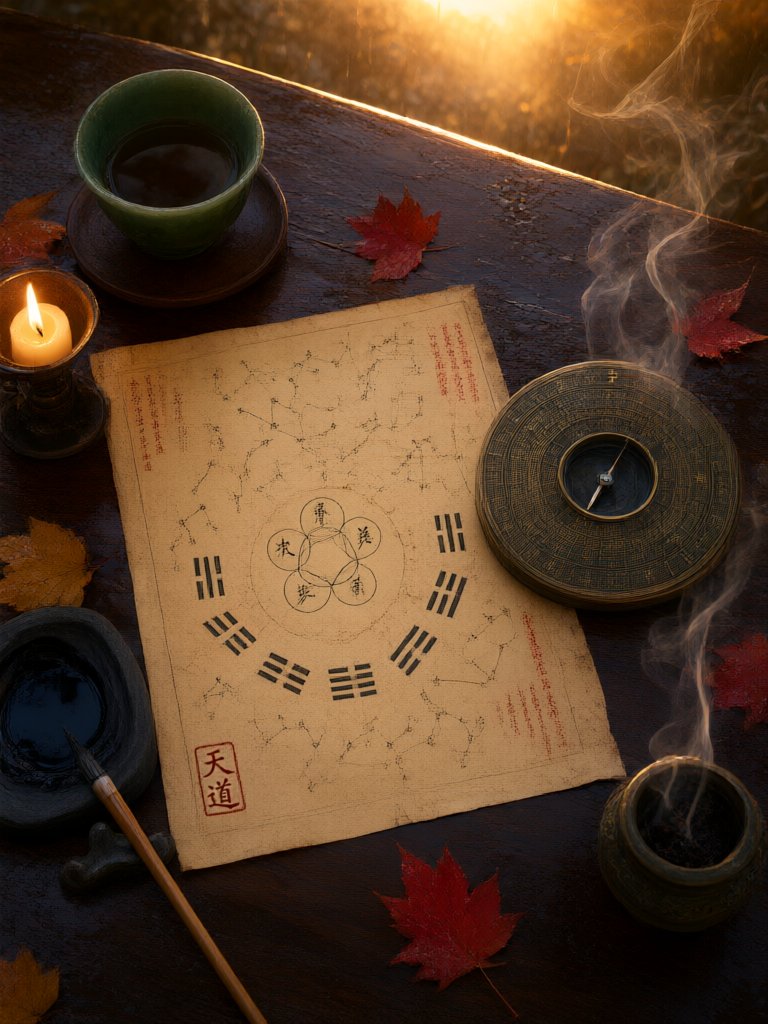
– The Zhengyi Daoist Ritual Canon was compiled under Zhang Lu, 3rd Celestial Master, c. 215 CE — verified in the Daozang (Taoist Canon) Vol. 127, “Rituals of the Celestial Masters.”
– The Celestial Masters’ Mansion on Mt. Longhu was first established in 59 AD and rebuilt in its current form during the Ming Dynasty — confirmed by the Jiangxi Provincial Cultural Relics Bureau.
– The Jing Si (Cleansing Rite) for newlyweds has been documented in temple records at Shangqing Temple since the Tang Dynasty — referenced in the Mt. Longhu Temple Annals, Vol. III, 8th century manuscript copy.
– The ‘Golden Hour’ ritual timing follows the Huangdi Neijing (Yellow Emperor’s Inner Canon) principle of aligning human practice with celestial qi cycles — a cornerstone of Zhengyi liturgy.
Frequently Asked Questions
Is this talisman only for married couples?
No. It’s designed for any committed partnership seeking deeper energetic harmony — including long-term domestic partnerships, civil unions, and serious dating relationships where both parties wish to cultivate stability and mutual support.
How do I activate or use the talisman?
Activation is simple and intuitive: hold it gently in both hands, close your eyes, and breathe deeply for one minute — silently affirming your shared intention for harmony. Then place it in a respectful location: inside a shared wallet, framed on your bedroom wall, or on your shared altar. No incense or fire is required — its power is inherent in its consecration.
Related Taoist Instruments
About DeHuiTang — This article is part of our Taoist cultural education series. Explore more authentic Taoist knowledge, Feng Shui wisdom, and destiny philosophy at our main site.