# Taoist Bedtime Practices for Nighttime Spiritual Protection: A Respectful Guide to Traditional Zhengyi Daoist Customs
In traditional Chinese spiritual culture, the hours between dusk and dawn hold special significance—not as a time of passive rest, but as a sacred threshold where awareness, intention, and ritual converge. *Nighttime spiritual protection* is not a concept rooted in fear, but in reverence: a gentle, time-honored way of aligning oneself with cosmic harmony before sleep. For over 1,800 years, practitioners of Zhengyi Daoism (正一道), centered at the sacred Mt. Longhu (龙虎山) in Jiangxi Province, have cultivated quiet, intentional bedtime customs grounded in cosmology, ethics, and consecrated practice. These are not superstitions or magical incantations—they are embodied expressions of *de* (virtue), *qi* (vital resonance), and *jing* (mental clarity), passed down through unbroken priestly lineages.
This article offers a respectful, culturally grounded introduction to Taoist nighttime spiritual protection—explaining its philosophical foundations, historical roots in Mt. Longhu’s Zhengyi tradition, and practical, accessible customs that modern practitioners can integrate with sincerity and care. We explore how bedtime rituals function within the broader framework of Taoist self-cultivation, clarify common misconceptions, and highlight how consecrated items—when approached with understanding and reverence—can serve as meaningful supports within this tradition. As with all spiritual heritage, these practices invite reflection, consistency, and humility—not guarantees, but companionship on the path of mindful living.
—
## What Does “Nighttime Spiritual Protection” Mean in Taoist Tradition?
The phrase *nighttime spiritual protection* may evoke dramatic imagery in popular media—but in authentic Taoist thought, especially within the Zhengyi school, it carries a far subtler, more holistic meaning. Rather than invoking defensive force against external threats, it refers to cultivating inner stability, ethical alignment, and environmental harmony to support undisturbed rest and balanced *shen* (spirit).
Classical Taoist texts such as the *Huangting Jing* (Yellow Court Scripture) and the *Zhen Gao* (Declarations of the Perfected) emphasize that sleep is not unconsciousness, but a transitional state where the *shen* becomes more diffuse and sensitive. During this time, the boundary between internal cultivation and external resonance softens. Thus, traditional bedtime practices aim to:
– Settle the *shen* through breath, posture, and quiet contemplation;
– Reinforce moral grounding (*de*) through reflection on daily conduct;
– Harmonize the sleeping environment with natural principles (e.g., orientation, cleanliness, stillness);
– Acknowledge ancestral and celestial support—not as petition, but as gratitude and continuity.
Importantly, nighttime spiritual protection is never divorced from daytime virtue. As the 30th Celestial Master Zhang Jixian (12th c.) wrote in his commentary on the *Wu Lu Cai Shen Jing*, “A single talisman cannot steady a restless heart; but a steady heart makes every night a sanctuary.” This interdependence—between inner discipline and outer ritual—is central to Zhengyi Daoist understanding.
It is also essential to distinguish *qugui* (驱鬼), often translated loosely as “dispelling spirits,” from Western notions of exorcism or ghost-banishing. In classical usage, *gui* refers not to malevolent entities, but to *unresolved energies*—lingering emotional imprints, environmental disharmonies, or disruptions in the flow of *qi*. *Qugui* practices, therefore, are less about confrontation and more about restoration: returning balance so that rest may unfold naturally.
—
## Historical Roots: Mt. Longhu and the Zhengyi Lineage
The spiritual customs surrounding nighttime protection find their most authoritative expression in the Zhengyi Daoist tradition, whose seat has been Mt. Longhu (Dragon-Tiger Mountain) since the Eastern Han Dynasty (c. 2nd century CE). Recognized by imperial decree as the center of ordained Taoist priesthood, Mt. Longhu is home to the hereditary office of the Celestial Masters (*Tianshi*), who continue to oversee ordination, scripture transmission, and ritual authorization today.
Unlike monastic schools emphasizing seclusion, Zhengyi Daoism historically integrated spiritual practice into daily life—including marriage, work, and domestic routines. Bedtime observances were thus designed to be practicable for laypeople: brief, repeatable, and deeply symbolic. The *Zhengyi Fawen* (Canon of Zhengyi Rituals), compiled over centuries and formally codified during the Song and Yuan dynasties, includes detailed instructions for *ye jiao* (night instruction)—a set of evening rites performed by householders and priests alike.
One foundational text preserved in the Mt. Longhu archives is the *Yehou Yujian Lu* (Records of Evening Observances), attributed to the 26th Celestial Master Zhang Jianshang (11th c.). It outlines three core elements of nightly practice:
1. **Xin Xiu** (Heart Cultivation): A five-minute reflection on the day’s intentions and actions, guided by the *Tai Shang Gan Ying Pian* (Treatise on Response and Retribution);
2. **Qi Ding** (Qi Settling): Gentle abdominal breathing synchronized with visualization of warm light descending from the *Baihui* point (crown) to the *Dantian* (lower abdomen);
3. **Jing An** (Environmental Calming): Ensuring the bedroom is clean, uncluttered, and oriented favorably (traditionally south- or east-facing), with minimal artificial light after dusk.
These customs were never secret or esoteric—they were taught openly in village temples and family altars, reinforcing the idea that spiritual protection begins not with extraordinary measures, but with ordinary, consistent care.
—
## Core Taoist Bedtime Practices You Can Begin Tonight
You do not need special tools, initiations, or extensive study to begin honoring these traditions. What matters most is sincerity, regularity, and gentle attention. Below are four foundational practices drawn directly from Mt. Longhu’s transmitted teachings—adapted respectfully for contemporary life.
### 1. The Threefold Evening Reflection (San Si)
Before turning off the lights, sit quietly for 3–5 minutes. Gently ask yourself three questions—known collectively as *San Si*, or “Three Reflections”:
– *Did my words today nourish or disturb harmony?*
– *Did my actions reflect integrity toward others—and myself?*
– *Did I allow space for stillness, even briefly?*
No judgment is required—only honest noticing. This practice echoes the *Tai Shang Gan Ying Pian*’s teaching: “The gods observe not your offerings, but your heart’s direction.” Writing brief notes in a journal (or even mentally acknowledging them) deepens integration. Over time, this cultivates *xing* (innate nature) and stabilizes the *shen*, supporting restful sleep.
### 2. The Nine-Breath Settling Method (Jiu Xi Fa)
Developed by Zhengyi priests for use before sleep, this method harmonizes *qi* and calms mental chatter. Sit or lie comfortably, spine gently aligned. With eyes softly closed:
– Inhale slowly through the nose for a count of four;
– Hold gently for a count of two;
– Exhale fully through the mouth for a count of six;
– Pause softly for two.
Repeat nine full cycles. With each exhale, imagine tension dissolving like mist at dawn. Visualize warm golden light gathering in your lower *Dantian*, then spreading outward like gentle ripples. This is not visualization-as-willpower, but invitation—as if reminding your body of its own capacity for ease.
### 3. Bedroom Sanctification: Simplicity as Sacred Space
In Zhengyi tradition, the bedroom is considered a microcosm of the Daoist altar—small, intimate, and deeply personal. Rather than elaborate setups, emphasis falls on *intentional simplicity*:
– Keep surfaces clear: Remove electronics at least 30 minutes before bed; store work materials elsewhere.
– Choose natural fabrics and muted tones—soft cotton, linen, or silk—to support tactile calm.
– Position your bed so your head points south or east (aligned with Earth’s magnetic field and solar orientation, per classical *feng shui* principles rooted in *Yin-Yang* theory).
– If using incense, select mild, natural varieties (e.g., sandalwood or aged mugwort) and burn only for 5–10 minutes before retiring—never while asleep.
These choices are not rigid prescriptions, but invitations to embody reverence in the details of daily life.
### 4. The Quiet Invocation of the Three Pure Ones
For those comfortable with devotional practice, a simple, spoken invocation may accompany bedtime. Recited slowly—once or three times—with hands lightly clasped over the lower *Dantian*:
> *“I return to the Dao, source of all stillness.\nI honor the De, virtue that guides my steps.\nI trust the Shen, spirit that rests in peace.”*
This is not a petition for intervention, but an affirmation of belonging—a conscious return to foundational Taoist principles. No deity is summoned; rather, awareness is gently reoriented toward what is already present: stillness, virtue, and inner peace.
—
## Consecrated Items in Context: Meaningful Supports, Not Magical Fixes
Within the Zhengyi tradition, consecrated items—including talismans (*fu*), peach wood charms, and ritual textiles—have long served as tangible anchors for intention. When properly consecrated by ordained priests at Mt. Longhu, these objects carry the resonance of collective practice, scriptural recitation, and ritual focus. However, their role is always supportive—not causal.
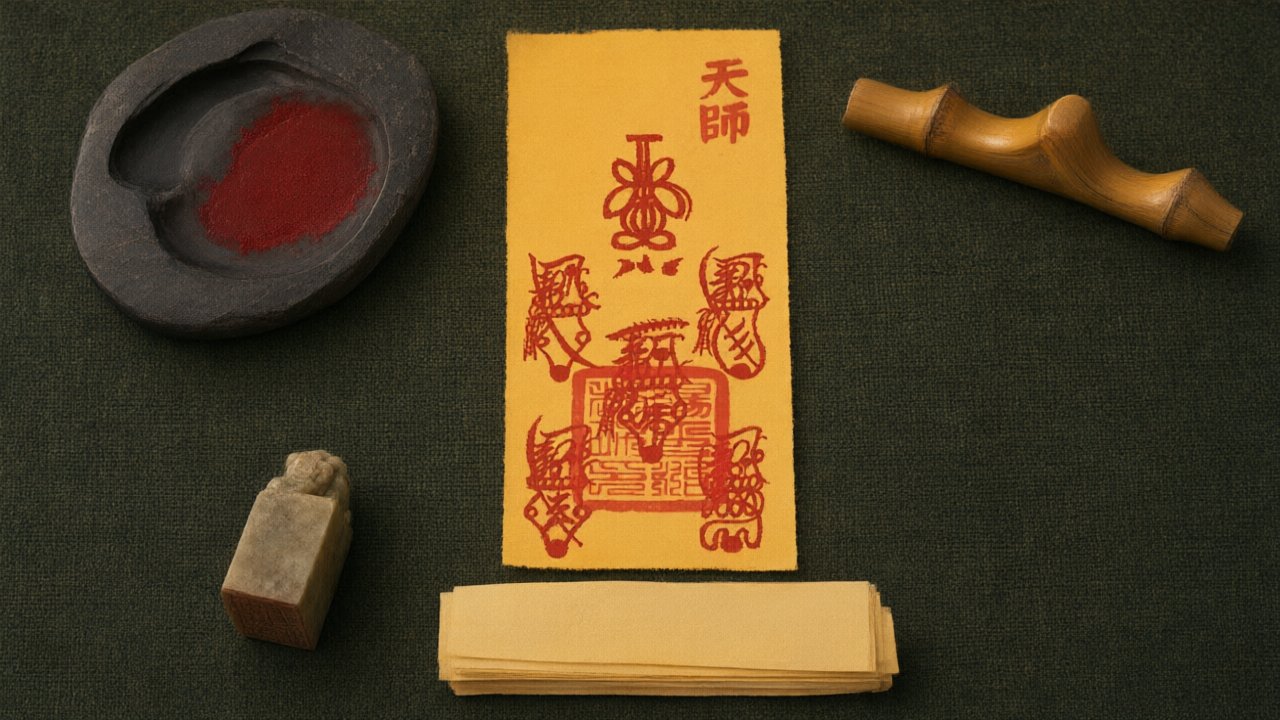
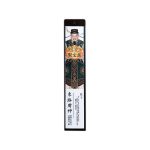
A *Qu Xie Fu* (Dispelling Disharmony Talisman), for example, is not a shield against unseen forces, but a visual and energetic reminder of one’s commitment to clarity and balance. Its power lies not in intrinsic properties, but in how it inspires mindfulness: the act of placing it near the bedside invites pause, reflection, and gentle re-centering. Similarly, a small *Wu Lei Fu* (Five Thunder Talisman) — traditionally inscribed with characters representing the five elemental forces — serves as a symbolic affirmation of cosmic order, encouraging the bearer to align their inner weather with natural rhythms.
For those seeking authentic *qugui* protection items rooted in the Mt. Longhu lineage, DeHuiTang offers talismans consecrated by Zhengyi priests following classical protocols—including ink preparation, lunar timing, and mantra recitation. Each piece is handled with reverence and documented for lineage transparency. [Qu Xie Fu (Dispelling Disharmony Talisman)](https://shop.reversefate.com/product/qu-xie-fu-dispelling-disharmony-talisman) is available in both traditional paper and durable silk formats, intended for respectful display—not passive reliance.
It bears repeating: these items are cultural artifacts, not substitutes for ethical living or self-awareness. As the *Zhengyi Fawen* cautions, “A talisman without virtue is like a lantern without oil—it holds shape, but gives no light.”
—
## Common Misconceptions—and Why Context Matters
Because Taoist practices have traveled across languages and cultures, certain ideas have become detached from their original frameworks. Clarifying these helps deepen appreciation—and avoid appropriation or misunderstanding.
**Misconception #1: “Taoist talismans are like magic spells.”**
No. Talismans (*fu*) are ritual documents—sacred calligraphy combining scriptural phrases, stellar diagrams, and symbolic seals. Their efficacy arises from the priest’s cultivated *de*, the precision of ritual timing, and the recipient’s receptive mindset—not from formulaic “power.” They belong to a continuum of practice—not isolated acts.
**Misconception #2: “Nighttime protection is only for people who feel vulnerable.”**
Not at all. Just as brushing teeth is routine—not reactive—so too are bedtime practices. They are part of lifelong cultivation, like tending a garden: done not because weeds threaten, but because nurturing health is its own purpose.
**Misconception #3: “You must believe in spirits to benefit.”**
Belief is not the entry point—attention is. Whether one interprets *gui* as psychological residue, environmental stressors, or subtle energetic patterns, the practices remain effective: slowing breath regulates the nervous system; reflection builds emotional intelligence; simplicity reduces sensory load. The tradition meets seekers where they are.
Understanding these distinctions honors the depth of Taoist thought—and protects the practice from reduction to spectacle.
—
## Conclusion: Rest as Ritual, Sleep as Return
Nighttime spiritual protection, in its authentic Taoist expression, is ultimately an act of profound trust—in the body’s wisdom, in the rhythm of day and night, and in the quiet continuity of tradition. It asks nothing more than that we meet the end of day with presence, kindness, and gentle intention. There is no urgency, no drama—only the steady pulse of breath, the soft settling of mind, and the quiet dignity of returning inward.
Whether you begin with three minutes of reflection, adjust your pillow’s orientation, or simply pause to notice the quality of your exhale—you are engaging with a living heritage stretching back nearly two millennia. And when you choose to incorporate consecrated items from trusted sources—like talismans prepared with integrity at Mt. Longhu—you do so not as a transaction, but as a gesture of continuity: linking your quiet moment tonight to generations of seekers who, in candlelight and stillness, chose harmony over haste.
If you wish to explore authentic, lineage-grounded items—consecrated by Zhengyi Daoist priests at Mt. Longhu—we invite you to browse our curated collection at [DeHuiTang](https://shop.reversefate.com). Each piece is offered with transparency, respect, and deep regard for the tradition it represents.
—
## Frequently Asked Questions (FAQ)
**Q: Can Taoist bedtime practices help with insomnia or anxiety?**
A: These practices are part of a holistic tradition focused on cultivating inner balance and environmental harmony. While many report improved restfulness through consistent application, they are cultural and spiritual practices—not medical treatments. Anyone experiencing persistent sleep challenges should consult qualified healthcare professionals.
**Q: Do I need to be Taoist to practice these customs?**
A: No. These customs are offered as accessible, non-dogmatic tools for mindful living—rooted in Taoist philosophy but compatible with diverse worldviews. What matters is respectful engagement, not formal affiliation.
**Q: Are DeHuiTang’s talismans mass-produced?**
A: No. Every talisman offered by DeHuiTang is individually inscribed and consecrated by ordained Zhengyi Daoist priests at Mt. Longhu, following seasonal timing, ritual purity protocols, and scriptural fidelity. Documentation of consecration date and priestly lineage is provided upon request.
—
These items are sold as cultural artifacts. Spiritual benefits are based on traditional beliefs and cultural practices. DeHuiTang does not guarantee specific outcomes.
Related Taoist Instruments
About DeHuiTang — This article is part of our Taoist cultural education series. Explore more authentic Taoist knowledge, Feng Shui wisdom, and destiny philosophy at our main site.