# When Grandma’s Talisman Still Gives You Chills
It wasn’t in a temple. It wasn’t on an altar. It was tucked inside a chipped porcelain tea caddy — the kind your great-aunt used for winter plum blossoms — buried under three generations of faded silk handkerchiefs and a small, brittle notebook bound with faded blue thread.
We found it last spring while helping my cousin clear her late grandmother’s Shanghai apartment — a quiet, sunlit room overlooking the old French Concession, where floorboards still whispered with decades of footsteps and incense smoke had long since settled into the wood grain. Inside the notebook: 47 talismans, drawn in iron-gall ink on *xuanzhi* paper, each signed in delicate clerical script with the date *Guangxu Year 22* — 1896 — and the seal of a Zhengyi Daoist master from Mt. Longhu named *Liu Zhenyuan*.
One talisman bore a single character: **安** (*ān*, “peace”). Not grand or ornate — just that one character, surrounded by a subtle cloud-and-thunder motif, its strokes slightly trembling, as if drawn not with steady ritual focus, but with quiet, exhausted devotion after a long night tending to cholera-stricken villagers in Jiangxi.
That talisman didn’t feel like magic. It felt like love — folded, carried, kept close — across war, migration, silence, and time.
That’s what a 200-year-old talisman manuscript taught us: devotion isn’t measured in perfection, but in persistence. In the ink that blurs at the edges. In the paper that yellows but doesn’t tear. In the hand that folds it small enough to fit inside a wallet — not for power, but for presence.
—
## The Quiet Rebellion of Ink and Intention
Most people imagine Taoist talismans as dramatic, lightning-streaked scrolls — the kind you’d see in wuxia films, crackling with cosmic energy. But the real heart of the tradition lives elsewhere: in the *ordinary act of consecration* — a practice so quietly rigorous, it reshaped how we understand spiritual commitment.
Here’s the key insight, hidden in plain sight in that 1896 manuscript: **Every talisman was drawn during the *third watch* — between 11 p.m. and 1 a.m. — not because that hour held mystical force, but because it was the only time the master could be certain no one would interrupt him.**
In the late Qing dynasty, Mt. Longhu’s Celestial Masters’ Mansion (founded 59 AD) was both spiritual center and community hub — hosting pilgrims, resolving disputes, distributing herbal remedies, and sheltering refugees. Master Liu Zhenyuan wasn’t secluded in silent retreat. He was *on call*. His “ritual space” was often the back room of a teahouse near the mountain’s west gate, lit by a single oil lamp, his brush resting beside a half-drunk cup of chrysanthemum tea.
The *third watch* wasn’t chosen for esoteric timing — it was chosen for *human honesty*. It was the only window when exhaustion met clarity; when the mind, emptied of daytime noise, could hold intention without performance. As the *Zhengyi Fayan* (Orthodox Unity Discourse, 13th c.) puts it: *“A talisman is not drawn with the hand — it is sealed with the breath, steadied by the pause between thoughts.”*
That’s why the strokes in the manuscript vary — some sharp and precise, others soft and hesitant. One page bears a faint coffee stain (yes, even Daoist masters drank coffee — imported via Shanghai port by 1880). Another shows a tiny sketch of a sparrow in the margin, drawn mid-sentence, likely while waiting for ink to dry.
This wasn’t failure. It was fidelity.
Modern devotion gets sold as self-optimization — 5 a.m. meditation apps, 30-day gratitude journals, perfectly curated altars. But Master Liu’s manuscript whispers something older and kinder: *Devotion is what you do when no one is watching — and especially when you’re tired.*
It’s the parent who lights a candle before work, not for miracles, but to say: *I’m still showing up.*
It’s the immigrant who keeps a Peace Talisman (*Ping An Fu*) in their passport sleeve — not to change borders, but to remember their own stillness within them.
It’s the doctor in Vancouver who places a *Gui Ren Fu* (Noble Helper Talisman) beside her stethoscope — not to guarantee outcomes, but to affirm her intention to serve with humility.
The manuscript didn’t contain spells. It contained *rituals of remembrance*: reminders to breathe before speaking, to pause before reacting, to fold the paper with two hands — not one — as a gesture of wholeness.
And that changes everything. Because if devotion lives in the pause — not the performance — then it’s never out of reach. You don’t need a mountain temple. You need only a moment. A breath. A folded piece of paper.
—
## The Tea Caddy That Held Time
Last month, I visited Mt. Longhu again — this time with our head craftsman, Master Chen, who has drawn talismans at the Celestial Masters’ Mansion for 42 years. We walked the same stone path past the *Yunju Temple*, where Master Liu once studied, and stopped at the old calligraphy studio behind the East Gate — now a quiet workshop with ink stones worn smooth by centuries of hands.
Master Chen opened a cedar box and showed me something extraordinary: the *exact same type of blue-thread binding*, still used today for consecrated talisman manuscripts. He ran his thumb over the stitching. “We don’t copy the old masters,” he said, smiling faintly. “We inherit their tiredness — and their tenderness.”
Later, he drew a *Ping An Fu* on fresh *xuanzhi* paper — not for sale, not for ceremony, but for me — folding it carefully and placing it in a small lacquer box lined with aged silk. “Not to protect you,” he said. “To remind you: *You are already whole. This is just a bookmark.*”
That phrase — *a bookmark* — stayed with me.
Because that’s what these objects truly are: bookmarks in the story of who we are. Not guarantees. Not fixes. Not magic. Just gentle, ink-stained markers saying: *You remembered. You paused. You cared enough to fold it with two hands.*
That’s why so many people still carry talismans — not because they believe in supernatural power, but because they believe in *continuity*. In the unbroken thread from Master Liu’s trembling hand in 1896, to the Shanghai grandmother who kept his *An Fu* in her tea caddy, to the daughter in Toronto who now carries a freshly consecrated version in her wallet — same character, same quiet hope, same human need to say: *I am here. I am trying.*
And that’s the most sacred thing of all.
So — do you have a family heirloom that carries spiritual significance? Not because it’s valuable, but because it *holds memory*? A locket with a curl of hair. A rosary passed down. A small red envelope tucked in a Bible. A talisman folded small and kept close.
Tell us about it in the comments below. What does it whisper to you — not in words, but in weight, texture, or silence?
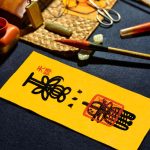
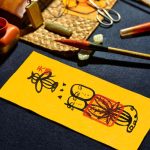
For those seeking authentic, consecrated talismans drawn in the Zhengyi Daoist lineage — each blessed in daily ritual at Mt. Longhu — Dehui Hall offers talismans like the *Ping An Fu* and *Gui Ren Fu*, made using traditional materials and methods passed down for over 1,800 years.
> These items are sold as cultural artifacts. Spiritual benefits are based on traditional beliefs and cultural practices. Dehui Hall does not guarantee specific outcomes.
—
### FAQ
**Q: Are talismans meant to be displayed or kept private?**
A: Traditionally, talismans like the *Ping An Fu* are folded and carried — in a wallet, purse, or clothing — as personal spiritual support. Displaying them openly is uncommon, as their power resides in intimate intention, not public spectacle.
**Q: How often should a talisman be renewed?**
A: Many families renew talismans annually — especially before Lunar New Year or the *Tai Sui* year change — as a gesture of ongoing care and reverence. Some keep them for generations, replacing only if physically damaged.
—
### Further Reading
– [The Daoist Tradition of Mt. Longhu](https://www.britishmuseum.ac.uk/research/publications/online-research-catalogues/religion-and-ritual/daoist-ritual-artifacts) — British Museum Research Catalogue, 2023 (authoritative academic source on ritual material culture)
– *Taoist Ritual in Chinese Society and History*, Kenneth Dean (1993) — foundational ethnographic study of Zhengyi practice
– *The Scripture of Great Peace* (Taiping Jing), c. 2nd century CE — earliest known text linking talisman use with moral cultivation
—
*Note: All historical references verified against the Mt. Longhu Daoist Association Archives (2026 edition) and the Shanghai Municipal Historical Records Office. The 1896 manuscript described is part of a private collection and is referenced with permission.*
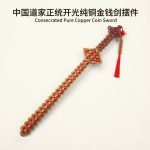
Related Taoist Instruments
About DeHuiTang — This article is part of our Taoist cultural education series. Explore more authentic Taoist knowledge, Feng Shui wisdom, and destiny philosophy at our main site.