# Chinese New Year Wealth Traditions and Talisman Rituals: A Respectful Guide to Authentic Taoist Practices
As the lunar calendar turns and preparations for Chinese New Year begin, homes across the world are adorned with red couplets, lanterns glow warmly, and families gather not only for reunion but for renewal—spiritual, relational, and material. At the heart of this vibrant celebration lies a profound cultural understanding: prosperity is not merely financial abundance, but *harmonious flow*—of energy (qi), relationships, virtue (de), and timing (shi). This holistic vision of wealth has been nurtured for millennia within Chinese cosmology—and nowhere is it more deeply rooted than in the ritual traditions of Zhengyi Daoism, particularly those practiced for over 1,800 years on Mt. Longhu (龙虎山), the sacred seat of the Celestial Masters.
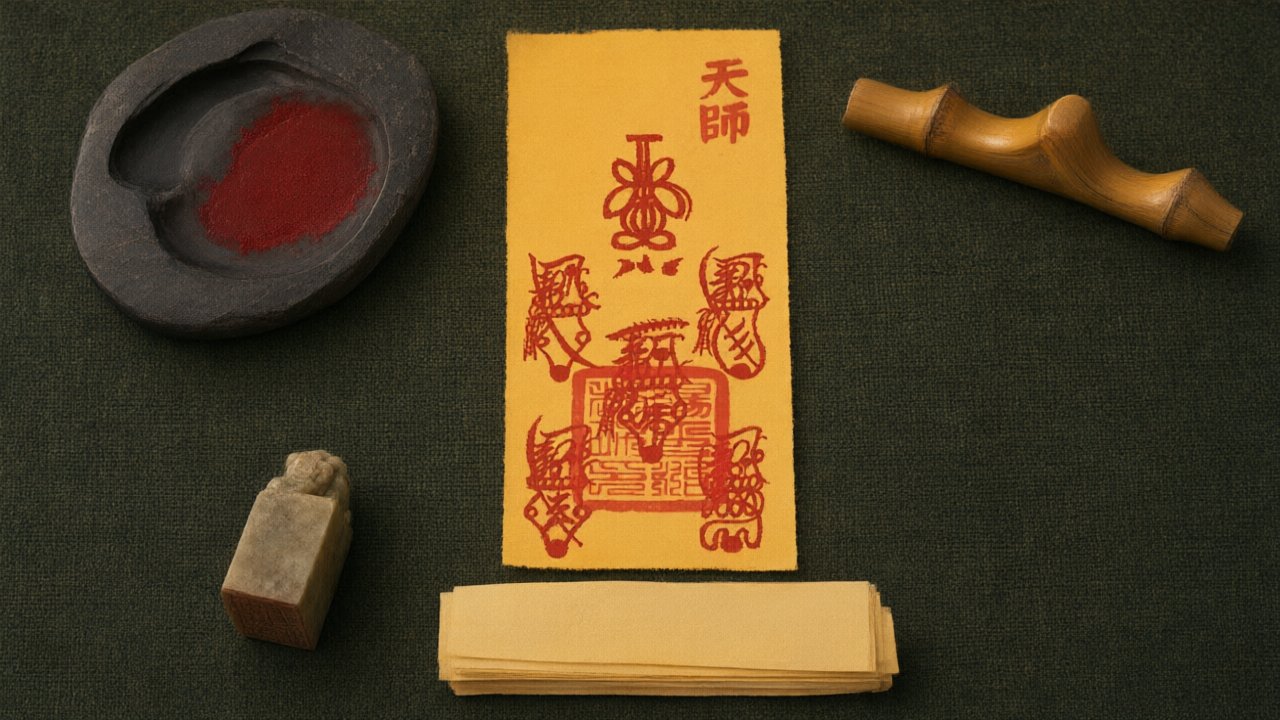
This article explores the authentic foundations of Chinese New Year wealth traditions and talisman rituals—not as superstition or quick-fix magic, but as time-honored expressions of intention, reverence, and alignment with natural and celestial order. We’ll trace their historical origins, explain their philosophical underpinnings, offer practical guidance for respectful engagement, and clarify common misconceptions. For those seeking authentic wealth talismans rooted in living Zhengyi lineage, DeHuiTang offers consecrated items prepared by ordained priests on Mt. Longhu—including the Wu Lu Cai Shen Fu (Five-Direction Wealth Talisman) and Tai Sui Talisman for annual harmony. These are cultural artifacts grounded in continuity, not novelty.
—
## What Do ‘Wealth Traditions’ Mean in Traditional Chinese Culture?
In English, the word *wealth* often evokes currency, assets, or material success. In classical Chinese thought—especially within Daoist, Confucian, and folk religious frameworks—the concept is far richer and more relational. The Chinese term for wealth, *cai* (财), appears in compounds like *fu cai* (福财, “blessing-wealth”) and *shen cai* (神财, “divine wealth”), revealing that prosperity is inseparable from virtue (*de*), heavenly favor (*tian ming*), and harmonious conduct.
The *I Ching* (Yijing) teaches that abundance arises when *yin* and *yang* are balanced and when human action aligns with cosmic rhythm. Similarly, the *Dao De Jing* reminds us: *“He who knows contentment is rich”* (Chapter 33)—a statement not about resignation, but about recognizing sufficiency as the foundation of true prosperity.
During Chinese New Year—the most important festival in the traditional lunisolar calendar—rituals related to wealth are never isolated acts of petition. They are embedded in a larger framework of purification, ancestor veneration, celestial alignment, and moral preparation. Red envelopes (*hong bao*) carry not just money, but *li qi* (ritual energy)—the auspiciousness of the giver’s intent and the receiver’s receptivity. Cleaning the home before New Year isn’t just hygiene; it’s symbolic clearing of stagnant *qi*, making space for fresh blessings. Even the placement of the Kitchen God’s image reflects this integrated worldview: as the household’s celestial reporter, he ascends to heaven days before New Year to report on family conduct—reminding us that ethical behavior precedes material blessing.
Thus, Chinese New Year wealth traditions are best understood as *cultivation practices*: ways of preparing the self, the home, and the heart so that abundance—understood as stability, opportunity, health, and harmony—may naturally arise.
—
## The Role of Talismans in Zhengyi Daoist Wealth Rituals
Among the many spiritual tools used during Chinese New Year, talismans (*fu*, 符) hold a distinctive place—especially within the Zhengyi Daoist tradition. Unlike decorative charms or mass-produced souvenirs, authentic *fu* are consecrated ritual documents. Their power does not reside in ink or paper, but in the disciplined transmission of *qi*, *jing* (essence), and *shen* (spirit) through generations of ordained priests trained in Mt. Longhu’s unbroken lineage.
Historically, Zhengyi Daoism emerged in the Eastern Han dynasty (25–220 CE) as a synthesis of ancient shamanic practice, alchemical knowledge, and cosmological scholarship. The first Celestial Master, Zhang Daoling, established the Way of the Five Pecks of Rice (*Wu Dou Mi Dao*) on Mt. Longhu—emphasizing communal ethics, healing, and ritual efficacy grounded in sincerity and discipline. From this foundation grew the formalized *fu lu* (talisman-and-register) system: talismans (*fu*) served as sacred contracts between human intention and celestial forces, while registers (*lu*) recorded the names and virtues of practitioners entitled to divine assistance.
A wealth talisman—such as the Wu Lu Cai Shen Fu—is not a “get-rich-quick” device. Rather, it functions as a focal point for intention, a reminder of cosmic support, and a vessel for ritual blessing. Its design integrates multiple layers of meaning:
– **Script**: Written in *yun jiao* (cloud script) or *lei wen* (thunder script), archaic forms believed to resonate with celestial energies.
– **Deities Invoked**: Often includes the Five Directions Wealth Gods (*Wu Lu Cai Shen*), each governing a cardinal direction and associated with distinct virtues—integrity (North), diligence (South), generosity (East), prudence (West), and balance (Center).
– **Cosmological Symbols**: Bagua trigrams, the Five Phases (*wu xing*), and star constellations map the talisman onto universal patterns.
– **Ritual Consecration**: Prior to use, the talisman undergoes a multi-stage ritual involving fasting, incense offering, chanting of scriptures (e.g., *Tai Shang Lao Jun Shuo Chang Sheng Zhen Jing*), and invocation of celestial generals—all performed by a priest qualified through ordination at Mt. Longhu.
Importantly, the effectiveness of such talismans in traditional belief is contingent upon the practitioner’s *sincerity* (*cheng xin*) and *ethical conduct* (*xing de*). As stated in the *Zhengyi Fawen Tianshi Jiaojie Kejing* (Canon of Zhengyi Teachings and Precepts), *“Without virtue, no talisman holds power.”*
For those seeking authentic wealth talismans rooted in this living tradition, DeHuiTang offers the Wu Lu Cai Shen Fu—consecrated annually by Zhengyi priests on Mt. Longhu, following protocols unchanged for centuries. It is intended not as a substitute for effort or integrity, but as spiritual support aligned with time-honored practice.
—
## How Are Wealth Talismans Used During Chinese New Year? A Step-by-Step Overview
Using a talisman respectfully requires understanding its context—not just its function. Below is a general overview of how wealth-related talismans are traditionally integrated into Chinese New Year observances. These steps reflect common practices observed in temple settings and devout households, adapted for contemporary life without compromising authenticity.
### 1. Preparation: Purification and Intention Setting (Late 12th Lunar Month)
Approximately one week before Chinese New Year, many families begin *da sao* (thorough cleaning). In ritual terms, this parallels the priest’s preparatory fast and purification. Before handling a talisman, practitioners may wash hands, light incense, and quietly reflect on intentions—not just for material gain, but for stability, wise stewardship, and contribution to family and community.
### 2. Placement: Aligning With Space and Direction (New Year’s Eve)
Talismans are placed with attention to feng shui principles and symbolic resonance. The Wu Lu Cai Shen Fu, representing the Five Directions Wealth Gods, is traditionally affixed near the main entrance (to welcome blessings inward) or above the household altar—never on the floor or in disordered spaces. Some families place a small version inside the cashbox or safe, accompanied by a sincere wish for responsible prosperity.
Crucially, placement is not mechanical. It invites mindfulness: *Where do I wish to invite harmony? Where might my actions benefit from gentle celestial support?*
### 3. Activation: Ritual Offering and Recitation (New Year’s Day or First Full Moon)
While not mandatory, many choose to “activate” the talisman through simple ritual. This may include:
– Lighting three sticks of high-quality sandalwood or aloeswood incense (symbolizing body, speech, and mind)
– Bowing respectfully toward the altar or east (direction of sunrise and renewal)
– Reciting a short phrase from the *Dao De Jing*: *“He who knows contentment suffers no disgrace; he who knows timing suffers no danger.”* (Ch. 44)
– Expressing gratitude—not only for future blessings, but for present sufficiency
No elaborate ceremony is required. What matters is presence, humility, and alignment.
### 4. Renewal: Disposal and Continuity (End of Lunar New Year Period)
Traditionally, paper talismans are not kept indefinitely. After the 15-day New Year period—or at the end of the lunar year—they are respectfully retired: burned in a clean metal container while expressing thanks, then the ashes buried or scattered in flowing water. This honors the cyclical nature of all things—a core Daoist principle. New talismans are obtained annually, reflecting both celestial renewal and personal commitment to growth.
This practice underscores an essential truth: talismans are supports, not substitutes. Their value lies not in permanence, but in their role as companions on a path of continual cultivation.
—
## Beyond Wealth: The Tai Sui Talisman and Annual Harmony
While wealth talismans receive much attention during Chinese New Year, another profoundly important item is the Tai Sui Talisman (*Tai Sui Fu*). Though not exclusively a “wealth” item, its role in ensuring annual harmony makes it indispensable to holistic prosperity.
In Chinese astrology, *Tai Sui* refers to the “Grand Duke Jupiter”—not a deity per se, but a celestial administrative force governing the yearly cycle. Each year, one of the 60 Heavenly Stems and Earthly Branches presides, and individuals born under certain branches may find themselves in “conflict” (*chong*) or “clash” (*hai*) with that year’s Tai Sui. Traditionally, this is understood not as fate, but as a period requiring extra care—like navigating seasonal weather changes. Disruptions in health, relationships, or livelihood may arise not from punishment, but from misalignment with prevailing energetic patterns.
The Tai Sui Talisman serves as a ritual anchor for balance. Consecrated with invocations to the current year’s Tai Sui General and protective deities like Xuan Tian Shang Di (Dark Heaven Supreme Emperor), it helps stabilize *qi*, support ethical decision-making, and foster resilience. In this sense, it safeguards the conditions *within which* wealth—and all other blessings—can flourish.
At DeHuiTang, the Tai Sui Talisman is renewed each year in accordance with the lunar calendar and prepared through the same rigorous Zhengyi rites as our wealth talismans—ensuring continuity with Mt. Longhu’s authoritative tradition.
—
## Common Misconceptions About Wealth Talismans—and Why Context Matters
Because talismans appear in popular media and commercial settings, several misconceptions persist. Clarifying these supports deeper, more respectful engagement with the tradition.
**Misconception #1: “Talismans work automatically, like a switch.”**
Reality: In Zhengyi Daoism, talismans are *ritual extensions of the practitioner’s sincerity*. A 13th-century commentary on the *Zhengyi Meng Wei Lu* states: *“If the heart is scattered, the talisman is dust.”* Their purpose is to focus intention—not replace it.
**Misconception #2: “Any red paper with symbols will do.”**
Reality: Authentic *fu* require precise calligraphy, correct script forms, proper consecration sequence, and priestly authorization. Historically, unauthorized talisman production was prohibited under Ming dynasty temple regulations—underscoring their sacred status.
**Misconception #3: “They guarantee specific outcomes—like sudden riches.”**
Reality: Traditional texts consistently link blessing to virtue and timing. The *Yun Ji Qi Qian* (Cloudy Satchel of Seven Tablets), a Song-dynasty Daoist encyclopedia, notes that *“Heaven rewards the upright, not the greedy.”* Talismans are offered as spiritual companions—not transactional instruments.
Understanding these distinctions allows seekers to approach talismans not as magical shortcuts, but as meaningful cultural artifacts that invite reflection, discipline, and connection to a living tradition.
—
## Conclusion: Wealth as Harmony, Not Accumulation
Chinese New Year wealth traditions—and the talisman rituals that accompany them—are invitations. Invitations to slow down, to honor cycles, to cultivate virtue alongside ambition, and to recognize that true abundance flows from alignment: with nature, with community, with conscience, and with time itself.
Whether you’re lighting incense at a family altar, placing a red envelope in a child’s hand, or hanging a Wu Lu Cai Shen Fu above your workspace, what gives these acts meaning is not the object alone—but the awareness, respect, and intention that accompany it. Authentic practice doesn’t demand perfection; it asks only for sincerity and willingness to learn.
For those wishing to deepen their connection to these traditions through culturally grounded, consecrated items, DeHuiTang offers talismans prepared in continuity with Mt. Longhu’s Zhengyi Daoist heritage—including the Wu Lu Cai Shen Fu and Tai Sui Talisman. Each piece carries the quiet authority of an unbroken lineage—and the gentle reminder that prosperity begins not with what we acquire, but with how we live.
These items are sold as cultural artifacts. Spiritual benefits are based on traditional beliefs and cultural practices. DeHuiTang does not guarantee specific outcomes.
—
## Frequently Asked Questions (FAQ)
**Q: Can I use a wealth talisman if I’m not Taoist?**
A: Yes—many people from diverse backgrounds respectfully engage with Taoist talismans as cultural and spiritual artifacts. What matters most is sincerity of intention and respect for the tradition’s values, including humility, harmony, and ethical conduct.
**Q: How long should I keep a talisman before replacing it?**
A: Traditionally, paper talismans are renewed annually—especially those tied to the lunar calendar, such as the Wu Lu Cai Shen Fu or Tai Sui Talisman. Many practitioners retire them after the Lantern Festival (15th day of the New Year) through respectful burning and ash disposal.
**Q: Do I need a priest to activate my talisman?**
A: While formal activation by an ordained Zhengyi priest ensures full ritual consecration, personal activation through quiet reflection, incense offering, and mindful placement is also widely practiced—and honored within the tradition. The emphasis remains on sincerity (*cheng xin*) rather than technical perfection.
—
*This article draws upon classical Daoist texts, ethnographic studies of Mt. Longhu temple practices, and fieldwork conducted by scholars of Chinese religion. For further academic exploration, see the *Encyclopedia of Taoism*, edited by Fabrizio Pregadio (Routledge, 2008)—a peer-reviewed reference offering authoritative insights into talismanic traditions, ritual history, and doctrinal development.*
Related Taoist Instruments
About DeHuiTang — This article is part of our Taoist cultural education series. Explore more authentic Taoist knowledge, Feng Shui wisdom, and destiny philosophy at our main site.