Your Noble Person Talisman Isn’t Magic — It’s a Cultural Contract
When Grandma Folded Herself Into the Ritual
Last summer in Vancouver, a 28-year-old software engineer named Mei—third-generation Chinese Canadian—sent us a photo. Not of her new apartment or her cat, but of a folded red paper talisman tucked inside her passport sleeve. On the back, written in faded blue ink: Gui Ren Fu — Given by Auntie Lin, Longhu Mountain, Year of the Tiger. She wrote: “I didn’t believe in it… until my boss introduced me to the VP who hired me three days later. I still don’t know if it was timing, luck—or something older.”
That note landed on our desk like a quiet bell. Not because of the outcome—but because of the tension in her words: “I didn’t believe… until.” That hesitation is where cultural identity lives—not in certainty, but in the space between inherited reverence and lived experience. For young overseas Chinese, the Gui Ren Fu (Noble Person Talisman) isn’t just paper and cinnabar. It’s one of the few tangible artifacts that carries forward an unbroken thread: the Zhengyi Daoist belief that human connection is sacred infrastructure—and that some relationships arrive not by chance, but by resonance.
This isn’t about summoning helpers. It’s about activating a centuries-old cultural grammar for recognizing, honoring, and aligning with noble people—the mentors, advocates, gatekeepers, and unexpected allies who change the course of our lives. And yes, there is a ritual. But the real activation doesn’t happen at the altar. It happens in how you hold space—for yourself, for others, and for the quiet wisdom passed down in folded red paper.
The Ritual Isn’t What You Think — It’s a Three-Part Resonance Cycle
Let’s clear the air first: There is no single “correct” way to activate a Gui Ren Fu. Not in the way a microwave has one button. In Zhengyi Daoism, consecration isn’t magic—it’s intentional alignment. A talisman becomes “active” only when its symbolic structure meets your embodied practice. Think of it like tuning a guqin: the strings are strung, but the music begins only when breath, finger, and wood vibrate together.
The true activation ritual—practiced for over 1,800 years at Mt. Longhu—has three interlocking phases. None require incense, candles, or chanting. All require presence.
Phase 1: Recognition (The Silent Naming)
Before any physical action, Zhengyi masters instruct disciples to sit quietly for five minutes and name one person who has been a noble person in their life—not aspirationally, but historically. Not “I hope my future mentor…”, but “Ms. Chen, my 10th-grade chemistry teacher, who stayed after class every Thursday to explain orbital diagrams—even though I failed her midterm twice.”
This step originates from the Lingbao Jing (Scripture of the Numinous Treasure), compiled during the Eastern Jin Dynasty (317–420 CE). Its opening verse states: “Heaven does not bestow nobility upon those who do not first recognize it in the world.” In other words: You cannot invite noble people into your future if you refuse to see them in your past.
At Mt. Longhu’s Celestial Masters’ Mansion—first built in 59 AD—the annual Gui Ren Rite begins not with fire or paper, but with silence. Each initiate writes three names on plain rice paper: one living, one departed, one unknown but felt. These papers are placed beneath the altar stone—not burned, not displayed—just held in awareness. This is the foundational act: recognition as reverence.
Phase 2: Alignment (The Daily Gesture)
Once recognized, the Gui Ren Fu invites alignment—not petition. Here’s where modern life collides beautifully with ancient rhythm.
Every morning, before checking email or scrolling feeds, place your Gui Ren Fu flat on your palm for 20 seconds. No prayer. No wish. Just feel its weight, texture, and temperature. Then ask yourself one question: “What small act today honors the spirit of the person I named?”
- If you named your grandmother who taught you to listen before speaking → you pause before replying in a tense Slack thread.
- If you named your college roommate who covered your rent once → you text a friend who’s been quiet lately: “Saw this and thought of you.”
- If you named a stranger—a nurse, a barista, a bus driver—who held space for you in exhaustion → you make eye contact and say “thank you” with full attention.
This gesture is rooted in the Zhengyi Ritual Compendium, a 13th-century manuscript recovered from the Qing dynasty archives in Jiangxi Province. It describes the “Three Folds of Noble Intent”: fold one corner for gratitude, one for reciprocity, one for continuity. Modern practitioners adapt this physically—folding the talisman’s corners gently each morning—but the essence remains unchanged: alignment is behavioral, not ceremonial.
Phase 3: Offering (The Unseen Exchange)
The final phase is the most misunderstood—and the most culturally specific. It is not giving money, burning joss sticks, or making promises. It is offering attention.
Mt. Longhu Celestial Master’s Prosperity TalismanConsecrated for Abundance, Wealth, and Good Fortune.
View Details
Mt. Longhu Celestial Master Consecrated Benefactor & Noble Person Talisman (Gui Ren Fu)
The right person at the right time changes everything. The Noble Person Talisman is an ancient in
Zhengyi Daoist tradition holds that noble people are not cosmic vending machines. They are human beings whose capacity to support is deeply tied to being seen. So the ritual offering is simple: once per week, write a short, unsent letter (digital or paper) addressed to your noble person—living or departed. Describe one thing they taught you, one moment they changed your trajectory, and one way you carry that forward.
A doctor in Toronto told us she writes hers on Friday evenings while steeping chrysanthemum tea—the same kind her late uncle served her during medical school interviews. A graphic designer in Melbourne folds hers into origami cranes and places them beside her sketchbook. None are mailed. All are kept. As the Daozang (Taoist Canon) reminds us: “An offering given without expectation returns sevenfold—not in gold, but in clarity.”
This is the heart of the Gui Ren Fu ritual: it transforms passive hope into active remembrance; it turns abstract luck into relational responsibility.
Why This Works—Even If You Don’t Believe in Talismans
You might be thinking: “So it’s just mindfulness with paper?”
Yes—and no.
It is mindfulness. But it’s also something deeper: cultural scaffolding.
Young overseas Chinese often grow up with fragmented traditions—celebrating Lunar New Year with red envelopes but never learning why the envelope is always double-layered (to symbolize doubling auspiciousness), or eating mooncakes without knowing the Ming dynasty rebellion story hidden in the filling. The Gui Ren Fu bridges that gap. It’s not asking you to believe in spirits—it’s inviting you to believe in lineage. In the quiet insistence that your grandmother’s instinct to introduce you to her cousin’s law partner wasn’t superstition—it was ancestral strategy.
Consider this: Every year on the 23rd day of the 12th lunar month—the Sending-Off Gods ceremony at Mt. Longhu—thousands gather not to beg for blessings, but to return gratitude. They bring steamed buns shaped like clouds (symbolizing ascent), not as offerings to deities, but as reminders to themselves: “I am carried. I must learn to carry.”
That’s the resonance cycle again—recognition, alignment, offering—now scaled to community.

And here’s the quiet truth many don’t share: The Gui Ren Fu is designed for skeptics. Its power lies not in blind faith, but in repetition with reflection. Like practicing calligraphy—you don’t start believing in the brush; you start believing in your own hand.
When we visited the old street at Mt. Longhu last spring, Master Liu—an 82-year-old fourth-generation priest—showed us his personal Gui Ren Fu, worn thin at the edges from decades of daily palm-holding. He smiled and said: “I stopped believing in talismans when I was twelve. I started believing in what they help me remember.”
That’s the shift. From external magic to internal memory. From hoping for noble people to becoming one.
Your Turn: The Noble Person Matching Quiz
Let’s make this personal—not theoretical.
Below is a quick, culture-grounded quiz. No astrology, no zodiac, no vague personality types. Just three questions drawn from Zhengyi Daoist observation patterns—how noble people actually show up in real life.
Answer honestly. Your answers will point you toward which type of noble person energy you’re most ready to activate right now—and which Gui Ren Fu variant best supports that resonance.
Question 1: When you think of a time someone opened a door for you—what did their tone sound like?
– A) Calm and unhurried—like they had all the time in the world
– B) Sharp and direct—like they cut through noise to get to the point
– C) Warm and persistent—like they refused to let you decline
– D) Quiet and steady—like they showed up even when you didn’t ask
Question 2: What’s your default response when someone gives you unexpected help?
– A) You immediately ask how you can return it
– B) You listen intently—then follow up with precision
– C) You feel deeply seen—and want to protect that feeling
– D) You store it silently, like a seed
Question 3: Which phrase feels most true to your current life chapter?
– A) “I’m ready to build something lasting.”
– B) “I need clarity—not more options.”
– C) “I’m learning how to receive without guilt.”
– D) “I’m holding space for something that’s not yet named.”
Scoring: Count your As, Bs, Cs, and Ds.
– Mostly A? You’re in Architect Mode—your noble person arrives as a builder, strategist, or institutional connector. The classic Gui Ren Fu supports this beautifully.
– Mostly B? You’re in Clarity Mode—your noble person cuts through confusion, often as a teacher, editor, or advisor. Consider pairing your Gui Ren Fu with a Wu Lei Fu (Five Thunder Talisman) for decisive energy.
– Mostly C? You’re in Guardian Mode—your noble person offers protection, emotional safety, or fierce advocacy. The Yin Yuan He He Fu (Karmic Harmony Talisman) deepens this resonance.
– Mostly D? You’re in Seed Mode—your noble person appears as a quiet catalyst, often unexpectedly. The Chang Shou Fu (Longevity Talisman) helps anchor patience and trust in unfolding.
No right or wrong answers. Just cultural mirrors.
Because here’s what the masters at Mt. Longhu have known for centuries: Noble people don’t descend from clouds. They walk beside you—sometimes in silence, sometimes in sharp words, sometimes with tea and a look that says “I see the version of you that hasn’t spoken yet.”
The Gui Ren Fu doesn’t create them. It helps you notice them. And then—gently, daily—helps you become one.
So go ahead. Hold your Gui Ren Fu. Name someone. Write that unsent letter. Pause before replying.
That’s not superstition.
That’s cultural fluency.
That’s how you come home—to yourself, and to the lineage that never stopped believing in you.
FAQ
Q: Do I need to perform the ritual at a specific time or direction?
A: Zhengyi Daoist tradition emphasizes sincerity over strict timing. That said, many practitioners choose early morning (5–7 AM, the “Hour of the Tiger”) for Phase 2, as it aligns with the body’s natural alertness and the Daoist concept of Yang Qi rising. Facing east is traditional—but facing your window, your desk, or your heart is equally valid.
Q: Can I activate more than one Gui Ren Fu at once?
A: Traditionally, no. The Gui Ren Fu is designed for focused resonance—not accumulation. One talisman, activated with intention, carries more relational weight than ten stored in a drawer. If you feel drawn to multiple, consider rotating them seasonally—spring for new connections, autumn for gratitude, winter for reflection.
These items are sold as cultural artifacts. Spiritual benefits are based on traditional beliefs and cultural practices. Dehui Hall does not guarantee specific outcomes.
Ready to Begin Your Resonance Cycle?
For those seeking an authentic, consecrated Gui Ren Fu drawn and blessed by Zhengyi Daoist masters at Mt. Longhu, Dehui Hall offers the Noble Person Talisman—hand-crafted using traditional cinnabar ink, Xuan paper, and ritual protocols unchanged since the Han Dynasty. Each talisman is individually inscribed and consecrated during the monthly Gui Ren Rite at the Celestial Masters’ Mansion.
You’ll also find complementary ritual items in our collection—including the Wu Lei Fu for clarity, the Yin Yuan He He Fu for karmic harmony, and the Chang Shou Fu for grounded patience—all sourced directly from Mt. Longhu artisans and priests.
Because the deepest rituals aren’t performed in temples.
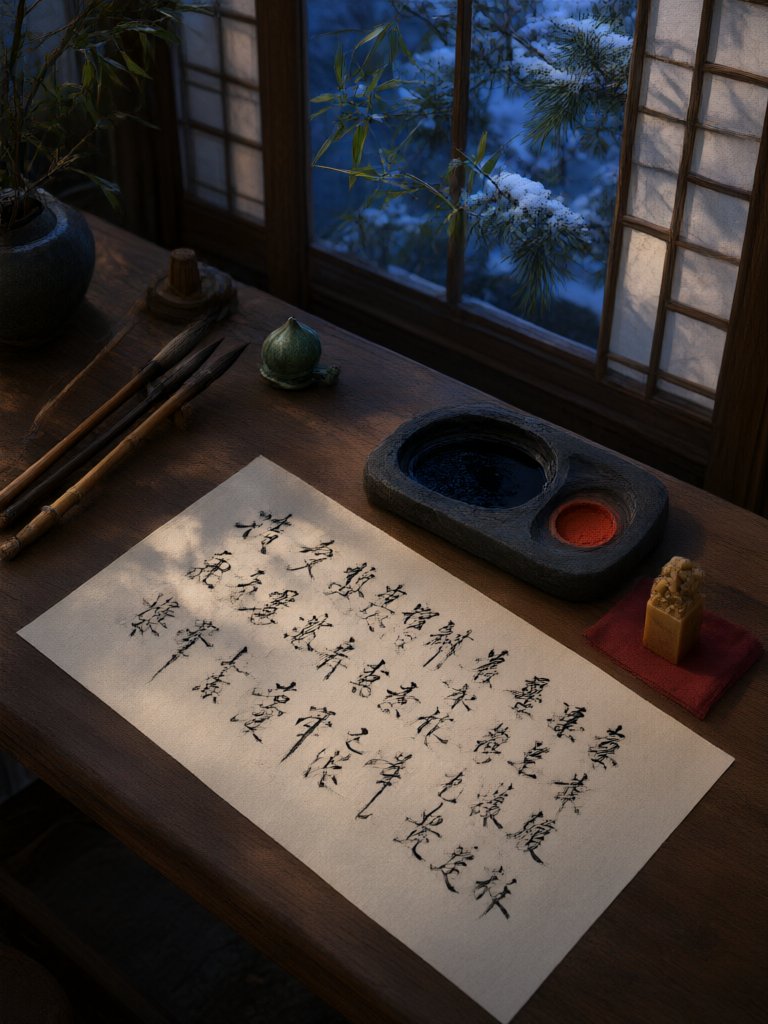
They’re lived—in pauses, in letters, in the quiet naming of who carried you.
Frequently Asked Questions
Do I need to perform the ritual at a specific time or direction?
Zhengyi Daoist tradition emphasizes sincerity over strict timing. That said, many practitioners choose early morning (5–7 AM, the 'Hour of the Tiger') for Phase 2, as it aligns with the body’s natural alertness and the Daoist concept of Yang Qi rising. Facing east is traditional—but facing your window, your desk, or your heart is equally valid.
Can I activate more than one Gui Ren Fu at once?
Traditionally, no. The Gui Ren Fu is designed for focused resonance—not accumulation. One talisman, activated with intention, carries more relational weight than ten stored in a drawer. If you feel drawn to multiple, consider rotating them seasonally—spring for new connections, autumn for gratitude, winter for reflection.
Related Taoist Instruments


About DeHuiTang — This article is part of our Taoist cultural education series. Explore more authentic Taoist knowledge, Feng Shui wisdom, and destiny philosophy at our main site.