# Movies Lie About Taoist Magic — Here’s What They Miss
### When Grandma’s Talisman Wasn’t a Special Effect
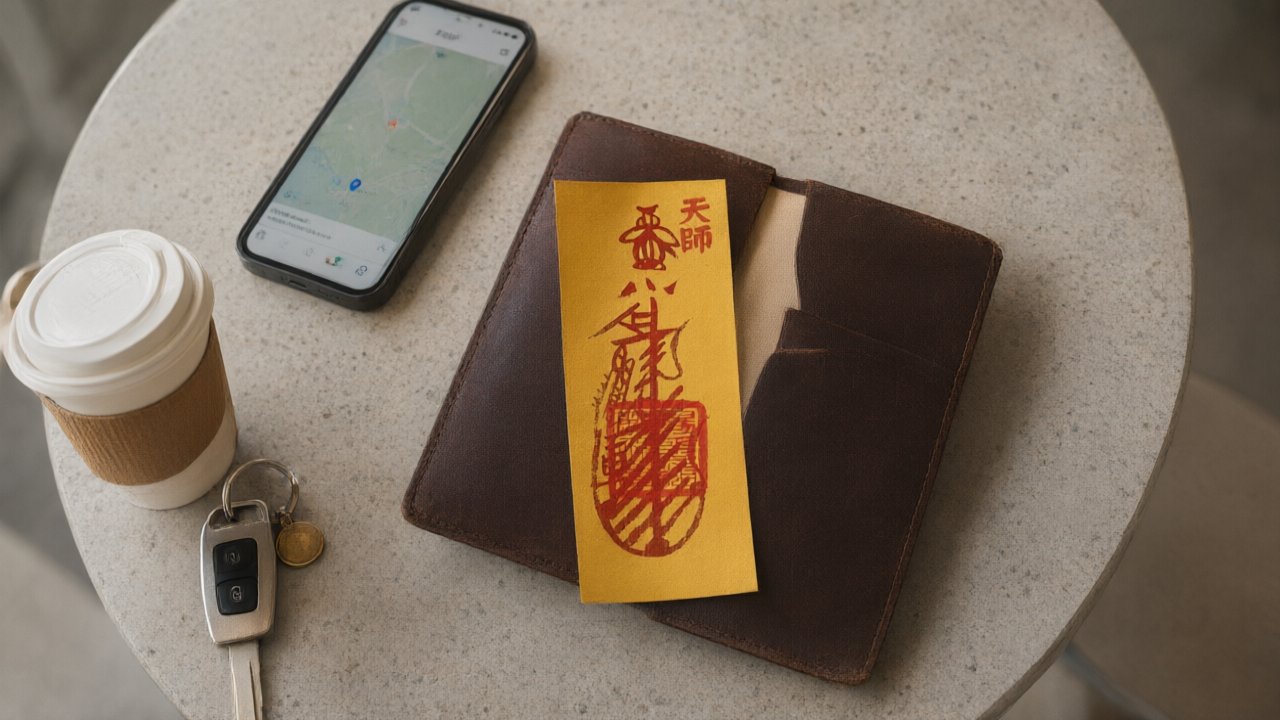
The first time I saw *Crouching Tiger, Hidden Dragon*, I was twelve — and utterly convinced Taoist masters could leap across rooftops while reciting incantations backward. My grandmother, watching beside me in her quiet Shanghai apartment, didn’t laugh. She just reached into the lacquered red box on her altar, pulled out a folded square of yellow paper stamped with vermilion script, and said softly: *“This is real magic. But it doesn’t fly.”*
That talisman — worn thin at the edges from decades tucked inside her purse — wasn’t drawn to summon lightning or freeze time. It was drawn on the 23rd day of the 12th lunar month, during the grand *Sending-Off Gods* ceremony at Mt. Longhu (龙虎山), the sacred seat of Zhengyi Daoism since 59 AD. It carried no spells. Just sincerity. A quiet vow — written in ink, sealed in ritual, held in memory.
That moment stayed with me. Not because it was mystical — but because it was *human*. And that’s the first thing Hollywood gets wrong.
—
## The Real Heartbeat of Taoist Ritual: Sincerity, Not Sorcery
Let’s be clear: Taoist tradition has *never* been about “magic” in the cinematic sense — no wands, no incantations that rewrite physics, no battle cries that split mountains. What it *has* been for 1,800 years — since Zhang Daoling founded the Way of the Celestial Masters on Mt. Longhu in 142 CE — is a deeply human practice of alignment: with nature, with virtue (*de*), and with the quiet rhythm of *qi*.
The most misunderstood artifact? The talisman (*fu*, 符).
In films, talismans are often animated — flaring with light, bursting into flame, or flying like shuriken. In reality? A consecrated talisman is more like a handwritten letter between a person and their deepest intention — composed in ritual stillness, not dramatic tension.
Here’s how it actually works:
– **It begins with preparation**, not power: Priests at Mt. Longhu fast for three days, bathe in mountain spring water, and meditate at dawn before even touching the brush. Why? Because the ink isn’t what holds meaning — the *mindset* does. As the *Zhengyi Fajiao Yilun* (《正一法教仪论》, *Treatise on Zhengyi Ritual Practice*, c. 12th century) states: *“If the heart is scattered, the fu is empty — though drawn a thousand times.”*
– **It’s drawn once — with one breath**: No retakes. No edits. The master writes the entire character sequence — often combining celestial scripts, star maps, and divine names — in a single, uninterrupted motion. Hesitation breaks the flow. So does distraction. This isn’t calligraphy; it’s embodied focus made visible.
– **Consecration happens *after* the drawing**: The paper isn’t “charged” by waving hands over it. Instead, it’s placed before the altar of the Celestial Masters’ Mansion — built in 59 AD and continuously occupied for over 2,000 years — then offered with incense, silent prayer, and the recitation of the *Lingbao Jing* (Scripture of the Sacred Jewel). Only then does it become *consecrated*, not “magical.”
Think of it like this: A movie director might spend months editing a single scene to make it *feel* real. A Taoist priest spends days preparing *to feel real* — so the talisman becomes a vessel for that authenticity.
That’s why, when you hold a Wu Lu Cai Shen Fu (Five Roads Wealth Talisman) or a Ping An Fu (Peace Talisman) from DeHuiTang, you’re not holding a prop — you’re holding a cultural artifact shaped by unbroken lineage, daily discipline, and intergenerational care.
And yes — people still carry them in wallets, tuck them behind rearview mirrors, and place them beside newborns’ cribs. Not because they expect fireworks — but because they trust the weight of continuity.
—
## Why We Keep Watching the Lies — And Why That’s Okay
Funny thing about cultural storytelling: We don’t *need* movies to be accurate to love them. We just need them to make us *feel* something true.
I still love *The Matrix*. I know Neo doesn’t really bend spoons — but when he says *“There is no spoon,”* he echoes a core Taoist insight: much of our suffering comes from mistaking illusion for reality. That resonance matters more than physics.
Same with *Kung Fu Panda*: Po doesn’t find power in ancient scrolls — he finds it in showing up, again and again, with kindness and clumsy sincerity. That’s *exactly* how many modern practitioners approach Taoist practice today — not as sorcerers, but as students of balance.
Which brings us back to my grandmother’s talisman.
She never claimed it brought her wealth — though she did open her first tea shop the year after receiving it. She never said it kept her safe — though she walked alone through Shanghai’s narrow *longtang* alleys every night for thirty years. What she *did* say, holding it gently between thumb and forefinger: *“It reminds me who I am — when the world forgets.”*
That’s the quiet truth no blockbuster can dramatize: Taoist ritual artifacts aren’t tools for changing the world. They’re anchors — for remembering your values, honoring your roots, and carrying forward something tender, persistent, and deeply human.
A Chinese-American doctor in San Francisco told us recently she keeps her grandmother’s Peace Talisman folded inside her stethoscope case. Not for luck — but because *“every time I touch it, I remember why I became a healer.”*
That’s the magic Hollywood can’t film — because it doesn’t happen in slow motion. It happens in the ordinary, sacred seconds between breaths.
So next time you watch a Taoist priest levitate in a film? Smile. Appreciate the artistry. Then pause — and ask yourself: *What small, sincere practice helps you remember who you are?*
That’s where the real tradition lives.
—
### A Note on Cultural Respect
These items are sold as cultural artifacts. Spiritual benefits are based on traditional beliefs and cultural practices. DeHuiTang does not guarantee specific outcomes.
If you’re drawn to authentic, consecrated talismans drawn and blessed by Zhengyi Daoist masters at Mt. Longhu — including the Wu Lu Cai Shen Fu, Ping An Fu, and Gui Ren Fu — we invite you to explore our collection. Each piece carries the quiet discipline of a lineage that began long before cinema existed — and will continue long after.
—
### FAQ
**Q: Are Taoist talismans religious objects?**
A: They are ritual artifacts rooted in Zhengyi Daoist tradition — a living religious and cultural practice centered at Mt. Longhu since the Han Dynasty. Many use them devotionally; others appreciate them as cultural heirlooms or expressions of philosophical alignment.
**Q: Can I keep a talisman in my wallet or phone case?**
A: Yes — many do. Traditionally, talismans are kept clean, dry, and treated with respect (e.g., not placed directly on the floor or in pockets with coins). Modern practitioners often carry them discreetly — a quiet gesture of continuity.
—
### Further Reading
– [The Taoist Canon Project — University of Cambridge]( — A scholarly digital archive of classical Taoist texts, including ritual manuals from the Song and Ming dynasties.
– *Taoist Ritual in Chinese Society and History* by Kenneth Dean (1993) — A foundational ethnographic study of Zhengyi Daoist practice in Fujian and Jiangxi provinces, with fieldwork near Mt. Longhu.
– *The Scripture of the Yellow Court* (Huangting Jing) — One of the oldest meditation texts in Taoism, emphasizing inner cultivation over external ritual — a beautiful counterpoint to cinematic spectacle.
Frequently Asked Questions
Do Taoist talismans actually work for things like wealth or protection?
Taoist talismans are cultural and spiritual artifacts rooted in centuries of Zhengyi Daoist practice—not tools for guaranteed outcomes. Traditionally, they serve as focal points for sincerity, intention, and continuity—like a handwritten vow made visible through ritual. Their significance lies in the disciplined preparation, lineage-based consecration, and personal meaning carried by the bearer. At DeHuiTang, we honor them as expressions of heritage and mindful alignment, not substitutes for practical action or medical care.
What makes a talisman 'consecrated' in authentic Taoist practice?
Consecration is a solemn, lineage-specific ritual—not a mystical 'charging' moment. At Mt. Longhu, priests prepare for days with fasting, purification, and meditation before drawing a talisman in one breath. Only then is it placed before the Celestial Masters’ altar, offered with incense and scripture recitation (e.g., the *Lingbao Jing*). As classical texts state, sincerity of heart—not technique—makes the talisman meaningful. It’s this unbroken tradition of reverence and discipline that defines true consecration.
Why do people still carry talismans if they don’t ‘do magic’ like in movies?
People carry talismans as quiet anchors—not for supernatural effects, but for cultural connection and personal resonance. Like a family heirloom or a worn prayer book, they embody continuity, memory, and intention. A doctor may keep one beside her stethoscope to remember her healer’s vow; a parent may place a Peace Talisman near a newborn’s crib to honor ancestral care. These acts reflect human values—dignity, remembrance, hope—not cinematic sorcery.
Is there a difference between movie talismans and real ones from places like DeHuiTang?
Yes—fundamentally. Film talismans are visual metaphors: animated, weaponized, plot-driven. Real consecrated talismans—like those from DeHuiTang—are hand-drawn in ritual stillness, prepared over days, and consecrated at sacred sites like Mt. Longhu per Zhengyi Daoist tradition. They’re valued not for spectacle, but for lineage, discipline, and the quiet weight of intergenerational care. What you hold is a cultural artifact shaped by 2,000 years—not special effects.
Related Taoist Instruments
About DeHuiTang — This article is part of our Taoist cultural education series. Explore more authentic Taoist knowledge, Feng Shui wisdom, and destiny philosophy at our main site.