# Taoist Morning Prayers with Your Peace Talisman: A Comprehensive Guide to Daily Spiritual Practice
In the quiet hush before sunrise—when mist still clings to the peaks of Mt. Longhu (龙虎山) and temple bells echo across ancient stone courtyards—Taoist practitioners begin their day not with haste, but with reverence. Taoist morning prayers are more than ritual; they are a gentle reconnection with the Dao—the ever-flowing, unnameable source of harmony, balance, and inner stillness. For many modern seekers, integrating this tradition into daily life begins with intention, simplicity, and a meaningful anchor: a consecrated Peace Talisman.
This guide offers a respectful, historically grounded introduction to Taoist morning prayers—particularly as practiced within the Zhengyi Daoist tradition of Mt. Longhu—and explores how a Peace Talisman can serve as a thoughtful companion in cultivating daily tranquility. We’ll cover the cultural roots of morning devotion, the structure and meaning of core prayers, practical considerations for home practice, and the traditional role of consecrated talismans in supporting spiritual continuity. Whether you’re new to Taoist practice or deepening an existing path, this article honors the lineage while offering accessible, embodied guidance. These items are sold as cultural artifacts. Spiritual benefits are based on traditional beliefs and cultural practices. DeHuiTang does not guarantee specific outcomes.
## What Is a Peace Talisman in Taoist Tradition?
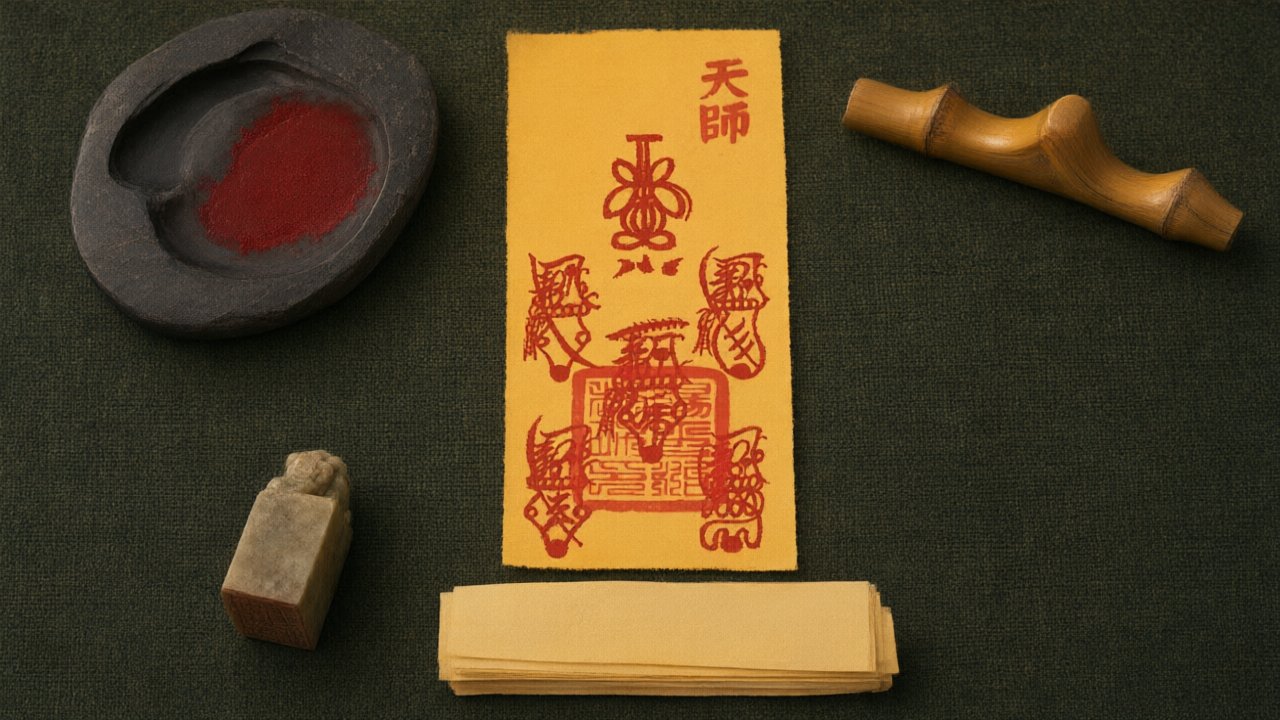
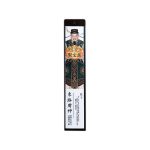
A Peace Talisman—often referred to in Chinese as *Ping An Fu* (平安符)—is a hand-drawn, consecrated inscription created by ordained Zhengyi Daoist priests. Its purpose is not to exert control over external circumstances, but to serve as a focal point for inner alignment: a visual and energetic reminder of *ping an*, the profound Taoist ideal of peace—not merely the absence of disturbance, but the presence of wholeness, safety, and harmonious flow.
Historically, talismans have been central to Zhengyi Daoism since its formal establishment under the First Celestial Master, Zhang Daoling, on Mt. Longhu in 142 CE. Unlike decorative motifs or symbolic art, authentic talismans undergo a multi-stage consecration process (*lian fu*, “refining the talisman”) involving purification, meditation, breath regulation, calligraphic invocation, and ritual sealing—all performed during auspicious astrological alignments. The characters, celestial diagrams, and esoteric scripts inscribed are not arbitrary; they encode cosmological principles drawn from the *Yijing* (I Ching), the *Daode Jing*, and classical Daoist liturgical texts.
Importantly, the talisman itself is not inherently powerful—it becomes a vessel of resonance through the priest’s cultivated virtue (*de*), disciplined practice, and transmission within an unbroken lineage. As scholar Livia Kohn notes in *Daoism and Chinese Culture*, “The efficacy of a talisman rests not in magic, but in the integrity of the ritual context and the sincerity of the practitioner’s heart.” This understanding grounds our approach: reverence over ritualism, cultivation over convenience.
For those seeking authentic Peace Talismans rooted in the Zhengyi tradition, DeHuiTang offers talismans consecrated by ordained priests from Mt. Longhu—each one individually prepared and ritually sealed in accordance with centuries-old protocols.
## Why Morning? The Taoist Rationale for Dawn Devotion
Taoist practice is deeply attuned to natural cycles. The *Huangting Jing* (Yellow Court Classic) teaches that the body is a microcosm mirroring the macrocosm—and just as the heavens rotate and seasons shift, so too do our internal energies wax and wane. Dawn holds special significance: it is the moment when *yin* (receptive, restful energy) recedes and *yang* (active, expansive energy) begins its gentle ascent. In Daoist cosmology, this transitional juncture—called *shao yang* (lesser yang)—is considered especially potent for setting intention and aligning with clarity.
Morning prayer in the Zhengyi tradition is thus less about petitioning deities and more about *attunement*: tuning the mind like a qin string, settling the breath like still water, and reaffirming one’s place within the greater rhythm of the Dao. It is a daily renewal of *zhi*, or “will”—not as forceful desire, but as steady, compassionate resolve.
This practice echoes the ancient monastic schedule of Mt. Longhu’s Celestial Master Mansion (*Tianshi Fu*), where dawn rites have been observed continuously for over 1,800 years. Priests rise before first light, wash with purified water, don ritual robes, and gather in the Hall of the Three Pure Ones to chant the *Xiao Xiang Zan* (Hymn of the Auspicious Clouds) and the *San Qing Bao Hao* (Precious Invocations of the Three Pure Ones). While lay practitioners need not replicate monastic rigor, the underlying principle remains accessible: beginning the day with stillness creates continuity between inner peace and outer action.
Modern science supports this intuition. Circadian research confirms that early-morning mindfulness practices—especially those incorporating breath awareness and gentle movement—support neural coherence and emotional regulation. But Taoism approaches this not as neurology, but as *wu wei*: effortless action arising from alignment. Your Peace Talisman, placed thoughtfully on a small altar or beside your meditation cushion, becomes a quiet anchor in this transition—neither demanding attention nor fading into background, but holding space for presence.
## Core Elements of a Gentle Taoist Morning Practice
You do not need incense burners, ritual bells, or elaborate altars to begin. Authentic Taoist practice values sincerity over spectacle. That said, understanding the traditional components helps you adapt them meaningfully to your life. Here’s a simplified yet culturally grounded framework—designed for home practice, lasting 10–20 minutes:
### 1. Purification & Intention-Setting (2–3 minutes)
Begin seated comfortably, spine upright but relaxed. Gently close your eyes and take three slow, deep breaths—inhaling through the nose, exhaling fully through the mouth. With each exhale, release mental clutter: plans, worries, judgments. Then silently affirm your intention—not as a wish, but as an orientation. For example: *“Today, I walk in harmony. I meet what comes with stillness and kindness.”*
Traditionally, purification involves washing the hands and face with clean water, symbolizing the cleansing of *zhi* (intention) and *xin* (heart-mind). If possible, keep a small bowl of fresh water nearby and rinse your hands mindfully before beginning.
### 2. Recitation of the Three Treasures Invocation (3–5 minutes)
The *San Bao*—the Three Treasures of Daoism—are the Dao (the Way), the Jing (the Teachings), and the Shi (the Masters). Reciting their names is both homage and grounding. You may say aloud or silently:
> *I take refuge in the Dao—the eternal, formless source.*
> *I take refuge in the Jing—the living wisdom preserved in sacred texts.*
> *I take refuge in the Shi—the lineage-holders who transmit this path with integrity.*
This is not worship in a theistic sense, but a conscious realignment with foundational principles. Some practitioners follow this with the *Jing Ye Zhen Yan* (True Words for Reverent Night and Morning), a short verse from the *Zhengyi Wufu Jing* (Zhengyi Five Talismans Scripture):
> *“At dawn I awaken with reverence,*
> *My breath follows Heaven’s rhythm.*
> *My heart rests in stillness,*
> *My steps honor the Way.”*
Recite slowly, pausing after each line to feel its resonance in the body.
### 3. Silent Contemplation with Your Peace Talisman (5–7 minutes)
Place your Peace Talisman where it is visible but not distracting—a shelf, a windowsill, or a simple cloth. Gaze softly at its form—not analyzing the script, but noticing its presence as you would notice sunlight falling across a wall. Let your breathing settle into natural rhythm. If thoughts arise, acknowledge them without resistance, then gently return attention to the sensation of breath and the quiet steadiness of the talisman.
This is not passive staring—it is *guan*, or contemplative observation: a practice described in the *Zuowang Lun* (Essay on Sitting in Forgetfulness) as “forgetting the self in order to remember the Dao.” The talisman here functions not as an object of power, but as a *focal node*—a cultural and spiritual landmark reminding you of your commitment to peace as an ongoing practice, not a destination.
### 4. Closing Gesture: Gratitude & Grounding (1–2 minutes)
Place your palms together at chest level (a gesture known as *he shi*, signifying unity of yin and yang). Bow slightly—not to the talisman, but in gratitude for the opportunity to begin again. Then place one hand over your heart, the other over your lower abdomen (*dantian*), and breathe deeply three times. This seals the practice, bringing awareness back into the body and the day ahead.
No incense is required—but if you choose to use it, select natural sandalwood or aloeswood, lit mindfully and allowed to burn quietly, its fragrance serving as a subtle sensory bridge between ritual and ordinary time.
## Integrating Your Peace Talisman Thoughtfully and Respectfully
A talisman is not a replacement for practice—it is a companion to it. Its value unfolds over time, deepening in resonance as your own cultivation grows. To honor its origin and purpose, consider these gentle guidelines:
**Placement**: Traditionally, Peace Talismans are displayed in clean, elevated spaces—not tucked away or used decoratively among unrelated objects. A small wooden stand or folded red cloth provides respectful framing. Avoid placing near electronics, cluttered desks, or high-traffic thresholds.
**Care**: Dust gently with a soft, dry cloth. Should the paper become worn, it is customary—not obligatory—to respectfully retire it by burning it completely in a safe container, allowing the ashes to be scattered in flowing water or fertile soil. This act reflects the Taoist principle of returning all things to their natural cycle.
**Renewal**: Talismans are traditionally renewed annually, often during the Spring Equinox or the Zhong Yuan Festival (Ghost Month), though personal resonance matters most. Renewal is not about expiration, but about reaffirming intention and receiving freshly consecrated support.
For those wishing to deepen their connection with the tradition, DeHuiTang also offers the *Qu Xie Fu* (Negative Energy Dispelling Talisman), which complements the Peace Talisman by supporting clarity and boundary-setting—both essential dimensions of sustainable inner peace.
## Common Questions About Taoist Morning Practice and Peace Talismans
### FAQ: Is Taoist morning prayer religious—or can it be part of a secular mindfulness routine?
Yes—it can be both. Taoist morning practice predates organized religion as we understand it today; it emerged from meditative, cosmological, and health-oriented traditions rooted in ancient China. Many contemporary practitioners engage with it as a philosophical and somatic discipline—valuing its emphasis on breath, rhythm, and non-attachment—without adopting theological frameworks. The language can be adapted (e.g., “I align with balance” instead of “I take refuge in the Dao”), preserving its structural wisdom while honoring personal worldview.
### FAQ: Do I need to believe in deities or spirits for this practice to be meaningful?
No. While deity veneration exists within certain Taoist lineages—particularly in liturgical contexts—the core of morning practice centers on self-cultivation, energetic awareness, and ethical orientation. The *Daode Jing* states: *“Those who know do not speak; those who speak do not know.”* The deepest truths are felt, not declared. Your sincerity, consistency, and openness matter far more than doctrinal adherence.
### FAQ: Can children or elders participate in this practice?
Absolutely—and with beautiful adaptability. Children may enjoy lighting a candle (with supervision), drawing their own “peace symbol,” or joining in breath-counting games. Elders may practice seated or lying down, focusing on gentler invocations or tactile elements—like holding a smooth stone while reciting intention. Taoism has always honored *ziran*, or “naturalness”: meeting each person where they are, without imposition.
## Conclusion: Peace as Practice, Not Possession
Taoist morning prayers with a Peace Talisman invite us into a different relationship with time, self, and safety. In a world that often equates peace with silence, escape, or perfection, the Daoist view is refreshingly grounded: peace is the quality of attention we bring to the present moment—even amid uncertainty, even amid change. It is the steadiness of breath before speech, the pause before reaction, the quiet recognition that harmony is already here—waiting only for our return.
Your Peace Talisman, consecrated on Mt. Longhu within the Zhengyi lineage, is not a shield against life’s currents. It is a compass pointing inward—to the still center that remains unmoved, no matter how the surface ripples. When practiced with humility and consistency, morning devotion becomes less about achieving peace and more about remembering it—again and again—as the natural condition of being.
If you feel called to begin—or deepen—this gentle, time-honored practice, we invite you to explore authentic, lineage-rooted items at DeHuiTang. Each piece is offered not as commodity, but as cultural bridge: a tangible connection to 1,800 years of quiet wisdom, carefully carried forward.
These items are sold as cultural artifacts. Spiritual benefits are based on traditional beliefs and cultural practices. DeHuiTang does not guarantee specific outcomes.
—
**External Reference**
Kohn, Livia. *Daoism and Chinese Culture*. University of Hawaii Press, 2001.
This authoritative academic work provides rigorous historical and philosophical context for Daoist ritual, talismanic practice, and cosmology—grounding contemporary practice in scholarly understanding. [https://uhpress.hawaii.edu/title/daoism-and-chinese-culture/](https://uhpress.hawaii.edu/title/daoism-and-chinese-culture/)
Frequently Asked Questions
What is the purpose of a Taoist Peace Talisman, and how should I use it in my morning practice?
In Zhengyi Daoist tradition, a Peace Talisman (*Ping An Fu*) is a consecrated cultural artifact—not a magical object—intended as a focal point for inner alignment with harmony and stillness. Placed respectfully on a simple altar or beside your meditation cushion during morning prayer, it serves as a gentle reminder of *ping an*: wholeness and balanced flow. Its value arises from sincere intention and continuity of practice, not passive reception. Always handle it with clean hands and quiet reverence, honoring the lineage and ritual care invested by the ordained priest.
Do I need to be Taoist or follow specific beliefs to incorporate morning prayers and a Peace Talisman into my routine?
No. Taoist morning practice is rooted in universal principles—mindful presence, breath awareness, and attunement to natural rhythms—that many find accessible regardless of spiritual background. The Peace Talisman is offered as a cultural artifact grounded in centuries-old Zhengyi tradition, not a requirement for belief. Many practitioners use it simply as a meaningful anchor for calm intention-setting at dawn. Respect for the tradition’s integrity matters more than doctrinal adherence.
How does a consecrated talisman differ from printed or decorative versions sold online?
Authentic Zhengyi Peace Talismans undergo a multi-stage consecration (*lian fu*) by ordained priests—including purification, meditative invocation, precise calligraphy, and ritual sealing during auspicious times. Printed or mass-produced versions lack this lineage-based process and intentional cultivation. At DeHuiTang, each talisman is individually prepared by Mt. Longhu priests, reflecting historical protocols. As scholar Livia Kohn notes, efficacy rests in ritual integrity and sincerity—not inherent power—making provenance and transmission essential.
Can I place my Peace Talisman anywhere, or are there traditional guidelines for its placement?
Traditionally, Peace Talismans are placed respectfully—never on the floor, in cluttered spaces, or where they might be casually handled or discarded. A clean, elevated surface like a small shelf, altar, or cushion corner is appropriate. Some practitioners face it eastward (toward sunrise) to honor dawn practice. Avoid bathrooms or high-traffic areas. Placement reflects attitude: not superstition, but mindful acknowledgment of its role as a cultural and contemplative companion in daily life.
Related Taoist Instruments
About DeHuiTang — This article is part of our Taoist cultural education series. Explore more authentic Taoist knowledge, Feng Shui wisdom, and destiny philosophy at our main site.