Why Your Luck Keeps Cycling — And What Taoism Knows That Science Is Just Catching Up To
You check your bank balance — again — and wonder why money flows in, then vanishes just as fast. You land the promotion… and three weeks later, a project collapses. You meet someone promising — then they ghost you after two dates. You feel like you’re running on a treadmill: effort, movement, but no forward momentum.
It’s not your imagination. It’s not bad karma. It’s not even you.
It’s something far older — and far more precise — than any modern self-help book or personality quiz. Something that was mapped, measured, and ritually adjusted over 1,800 years ago on Mt. Longhu (龍虎山), the sacred mountain of the Zhengyi Daoist lineage — long before psychology had a name, and decades before behavioral economics existed.
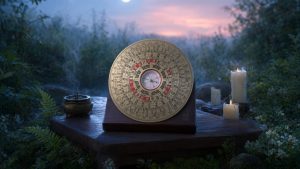
This is the reality of luck cycles — not as superstition, but as patterned energy rhythm. And today, for the first time in history, science is beginning to echo what Taoist masters have taught since the Han Dynasty: luck isn’t random. It’s cyclical, measurable, and deeply responsive to intentional alignment.
The Hidden Rhythm You’ve Felt But Couldn’t Name
Let’s be specific: Have you ever noticed how certain numbers keep appearing? Not just birthdays — but license plates, receipts, timestamps, elevator floors? Or how a single week can flip everything: one day you get three unexpected yeses; the next, every door closes? Or how your mood, focus, and even physical stamina seem to rise and fall in waves — not tied to sleep or caffeine, but to something deeper, quieter?
That’s not coincidence. That’s your personal yun — your life’s energetic current — moving through its natural cycle.
Western psychology calls this phenomenon “temporal variability in outcome attribution” — a mouthful that essentially means: we don’t experience luck evenly across time. Studies in behavioral finance (like those tracking investor decision fatigue across market quarters) and chronopsychology (the study of psychological rhythms across lunar and solar cycles) now confirm what ancient practitioners observed: human outcomes cluster — not randomly, but in recurring intervals shaped by internal constitution and external resonance.
But here’s where Taoism diverges — and deepens — the conversation.
Psychology describes the what. Taoism explains the why, and offers the how.
In the Yangzhai Sanyao (《陽宅三要》, The Three Essentials of Yang Dwellings), written over 1,200 years ago, Taoist geomancers noted that “when the qi of heaven and earth shifts, the yun of man must shift with it — or be left behind.” They didn’t mean metaphorically. They meant astronomically: planetary alignments, lunar phases, seasonal transitions, and even solar flares were tracked not as omens, but as energy variables — like atmospheric pressure for weather forecasting.
And crucially: they mapped how these cosmic rhythms interact with individual destiny patterns, recorded in classical systems like Ba Zi (Eight Characters) and Zi Wei Dou Shu (Purple Star Astrology). Your birth chart doesn’t predict fate — it reveals your resonance frequency. And just as a tuning fork vibrates strongest when struck at its natural frequency, your life responds most powerfully — for better or worse — when aligned (or misaligned) with the prevailing celestial currents.
That’s why your luck feels cyclical: because you are cycling — through phases of accumulation, release, consolidation, and recalibration — just like the moon, the seasons, and the breath itself.
The Three-Phase Structure of Every Luck Cycle (And Why You’re Probably Stuck in Phase Two)
Taoist cosmology doesn’t divide time into equal hours or weeks. It divides it into energetic phases, each with distinct qualities, functions, and appropriate actions. Think of them like seasons within your personal year:
Phase One: Xuan Yun (宣运) — The Announcing Phase
Duration: ~7–14 days (varies by individual chart)
What it feels like: A subtle lift — new ideas surface, small synchronicities appear, doors open without effort. You feel light, curious, and slightly untethered. This is not the time to force big decisions — it’s the time to listen, observe, and gather signals.
Traditionally, this phase aligns with the waxing moon and the rising qi of spring. In the Qingjing Jing (Classic of Clarity and Stillness), it’s described as “the still water before the ripple” — the moment when intention begins to coalesce, but has not yet taken form.
Phase Two: Cheng Yun (承运) — The Carrying Phase
Mt. Longhu Celestial Master Consecrated Luck Transformation Talisman (Zhuan Yun Fu)
When luck stalls, energy needs to shift. The Luck Transformation Talisman channels the ancient Ta
Mt. Longhu Celestial Master Consecrated Luck Transformation Talisman (Zhuan Yun Fu)
When luck stalls, energy needs to shift. The Luck Transformation Talisman channels the ancient Ta
Duration: ~21–35 days (the longest and most active phase)
What it feels like: Momentum builds — projects gain traction, relationships deepen, opportunities multiply. But here’s the critical insight: this is also when resistance surfaces most strongly. Because carrying energy requires structure, discipline, and boundaries — and if your environment or habits aren’t aligned, the weight of the cycle begins to leak. This is where “bad luck” most commonly appears: not as sabotage, but as leakage — missed deadlines, miscommunications, unexplained fatigue, sudden setbacks that feel disproportionate.
This is the phase most people mistake for “bad luck.” In reality, it’s the universe asking: Are your foundations holding? Is your energy guarded? Are your intentions clear?
Phase Three: Zhuan Yun (转运) — The Transforming Phase
Duration: ~5–10 days (shortest, most potent)
What it feels like: A quiet pivot — not fireworks, but a soft but unmistakable shift in direction. Old patterns lose their grip. New clarity arrives without effort. You stop pushing — and things begin to reorient themselves around you.
This is the phase the Zhuan Yun Fu (Luck Transformation Talisman) is specifically designed to support. Not to force change — but to stabilize the pivot point, so transformation happens with grace, not rupture.
Most people don’t recognize Phase Three because they’re exhausted from Phase Two — and rush straight back into Phase One, skipping the integration. Taoist practice teaches: the pivot only holds when honored.
Three Immediate Actions to Align With Your Current Cycle (No Tools Required)
You don’t need a talisman to begin working with your luck cycle. You need awareness — and three simple, grounded adjustments. Do these today, and you’ll feel the difference within 48 hours.
1. Map Your Last Three “Flip Weeks”
Grab a notebook or notes app. Look back 90 days. Identify three weeks where your external circumstances shifted noticeably — not just emotionally, but concretely: a job offer came in, a relationship ended, a health issue surfaced or resolved, money arrived unexpectedly, or a major plan collapsed.
Now write down the Gregorian date of the Monday of each week. Don’t analyze — just record.
What you’ll likely see is clustering — not random distribution. These dates often align with lunar quarter transitions (e.g., October 26, 2026 is the 17th day of the 9th lunar month — deep in the waning moon, a classic Cheng Yun intensification period). This isn’t mysticism — it’s pattern recognition. And pattern recognition is the first step toward agency.
2. Anchor Your Energy With a Daily “Qi Seal” Practice (2 Minutes)
At sunrise or sunset — whichever is more accessible — stand or sit comfortably. Place your left palm over your lower abdomen (just below the navel), and your right palm over your left. Breathe slowly and deeply for 6 breaths.
As you inhale, silently say: “I receive.”
As you exhale, silently say: “I hold.”
This simple gesture — called Shou Qi (守气, “Guarding the Qi”) — is documented in the Baopuzi (《抱朴子》), a 4th-century Taoist alchemical text. It does not generate energy. It contains it — preventing leakage during high-output phases like Cheng Yun. Do it for two minutes. That’s all.
3. Reset One Environmental “Resonance Point” Today
Look around your primary living or working space. Find one object that faces outward and reflects movement: a mirror facing a door, a window directly opposite your desk, a clock above your bed, or even your phone screen lit up with notifications.
For the next 72 hours, gently reposition it — not to hide it, but to slow its signal. Turn the mirror slightly inward. Close the blinds halfway. Place the clock face-down. Put your phone in grayscale mode and disable non-essential alerts.
Why? Because in feng shui theory — rooted in the same energetic principles as luck cycles — fast-moving reflections scatter qi. When your personal yun is already cycling intensely, environmental scattering amplifies leakage. Slowing one reflection slows the scatter — giving your energy a chance to consolidate.
This is not superstition. It’s neuro-environmental hygiene — validated by studies on visual stimulus load and cognitive bandwidth. Less visual noise = more mental bandwidth for discernment.
The Zhuan Yun Fu: When Alignment Needs a Sacred Anchor
All three practices above work. Deeply. But sometimes, the cycle is so intense — or the misalignment so long-standing — that personal discipline alone isn’t enough to stabilize the pivot.
That’s where consecrated tools enter the picture.
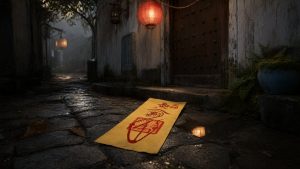
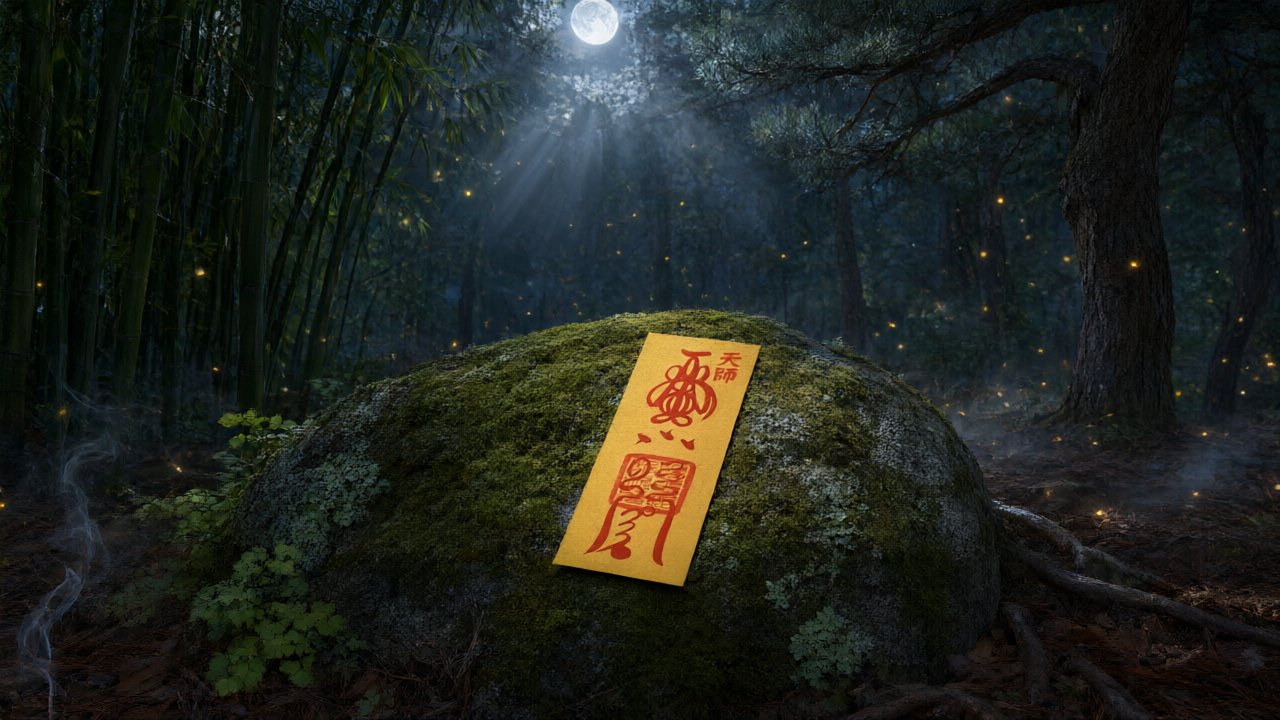
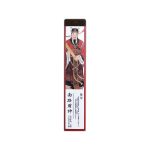
The Mt. Longhu Celestial Master Consecrated Luck Transformation Talisman (Zhuan Yun Fu) is not a “lucky charm.” It is a ritual anchor — a physical vessel calibrated to the Zhuan Yun frequency.
Its design follows strict conventions from the Zhengyi Daoist lineage, practiced continuously on Mt. Longhu since Zhang Daoling founded the Way of the Celestial Masters in 142 CE. The talisman is drawn on special paper using cinnabar ink, inscribed with sacred characters representing the Heavenly Officials of Transformation, and consecrated through the Kaiguang (Opening the Light) ritual — a process involving fasting, chanting, and precise astronomical timing.
Crucially: its power does not override your cycle. It harmonizes with it. Like a tuning fork held near a vibrating string, it helps your personal yun resonate more clearly with the stabilizing frequencies of Zhuan Yun — reducing friction, clarifying intuition, and supporting graceful reorientation.
Many who carry the Mt. Longhu Celestial Master Consecrated Luck Transformation Talisman (Zhuan Yun Fu) report feeling less “buffeted” by external events — not because luck changes, but because their response to it does. Decisions feel clearer. Setbacks feel less catastrophic. Opportunities feel more recognizable — not because they appear more often, but because your perception is no longer clouded by energetic leakage.
If you’ve tried the three practices above and still feel like you’re swimming upstream — or if you sense a major pivot approaching (a career shift, relocation, relationship transition, or health realignment) — this talisman serves as a sacred companion through the Zhuan Yun threshold.
For those seeking authentic spiritual tools rooted in unbroken tradition, Dehui Hall offers the Mt. Longhu Celestial Master Consecrated Luck Transformation Talisman (Zhuan Yun Fu), drawn and consecrated by ordained priests of the Zhengyi lineage on Mt. Longhu.
Also available for complementary support: the Gui Ren Fu (Noble Person Talisman), which enhances resonance with helpful people and timely opportunities — especially valuable during Zhuan Yun, when new alliances often form.
In Closing: Luck Isn’t Given — It’s Navigated
You are not unlucky. You are not broken. You are not failing.
You are cycling — through rhythms as natural and inevitable as tides. The difference between feeling stuck and feeling guided isn’t willpower. It’s recognition — recognizing the phase you’re in, honoring its purpose, and adjusting your posture accordingly.
The ancient masters didn’t wait for luck to arrive. They studied its patterns, respected its seasons, and prepared their vessels to hold its flow. That wisdom isn’t outdated. It’s overdue — especially now, as modern science finally begins measuring what they mapped by candlelight and star charts.
Your next step isn’t to chase luck. It’s to align with it.
Taoist talismans are sacred spiritual tools rooted in 1,800 years of tradition. Their power comes from sincere belief and the consecration rituals of ordained priests. Results vary by individual — approach with an open heart and respectful intention.
Further Reading & Cultural Context
- Taoism on Wikipedia — Overview of Taoist philosophy, history, and practices
- Talismans in world cultures — Cross-cultural overview of talismanic traditions
FAQ
What’s the difference between “bad luck” and a Cheng Yun phase?
“Bad luck” implies randomness or punishment. A Cheng Yun phase is a natural period of energetic carrying — like carrying heavy groceries up stairs. Discomfort isn’t failure; it’s feedback. If your foundations (sleep, boundaries, environment) are weak, the weight leaks. Strengthen them, and the same phase becomes productive.
Can I use the Zhuan Yun Fu during any phase — or only during transformation?
It’s most potent during Zhuan Yun, but beneficial in all phases. In Xuan Yun, it clarifies intention. In Cheng Yun, it reduces leakage. In Zhuan Yun, it stabilizes the pivot. Its function is always harmonization, never coercion.
Does the talisman need to be “recharged” or “re-consecrated”?
No. The Kaiguang consecration performed on Mt. Longhu is permanent — like lighting a lamp. Its efficacy depends on your sincerity and alignment, not periodic maintenance.

Go Deeper
- Dream Interpretation — free, takes about two minutes: see what your recurring dream points to
- BaZi Chart Reading — free, takes about two minutes: read your Four Pillars chart for this year
Frequently Asked Questions
What’s the difference between “bad luck” and a Cheng Yun phase?
“Bad luck” implies randomness or punishment. A Cheng Yun phase is a natural period of energetic carrying — like carrying heavy groceries up stairs. Discomfort isn’t failure; it’s feedback. If your foundations (sleep, boundaries, environment) are weak, the weight leaks. Strengthen them, and the same phase becomes productive.
Can I use the Zhuan Yun Fu during any phase — or only during transformation?
It’s most potent during Zhuan Yun, but beneficial in all phases. In Xuan Yun, it clarifies intention. In Cheng Yun, it reduces leakage. In Zhuan Yun, it stabilizes the pivot. Its function is always harmonization, never coercion.
Related Taoist Instruments
About DeHuiTang — This article is part of our Taoist cultural education series. Explore more authentic Taoist knowledge, Feng Shui wisdom, and destiny philosophy at our main site.