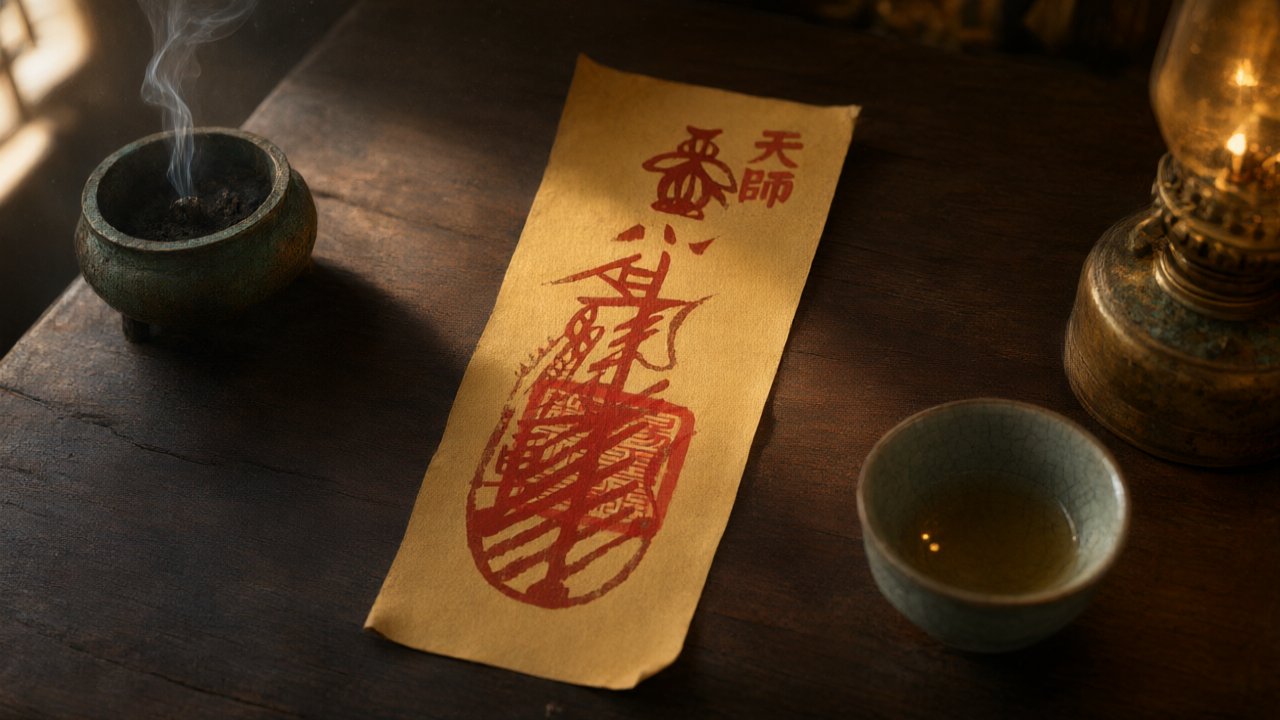
Why Your Energy Is Crashing This Summer — And the 1,800-Year-Old Fix
You woke up exhausted — again. Not the kind of tired that coffee fixes. The deep, hollow fatigue that makes your thoughts sluggish, your motivation vanish, and your patience evaporate by noon. You’re not sleeping poorly. You’re not overworking (at least not more than usual). Yet your energy feels leaked — like air hissing from a punctured tire. You meditate. You journal. You even tried that new grounding app. Nothing sticks. And now, as the days grow longer and hotter, it’s getting worse.
You’re not imagining it. And you’re not broken.
What you’re experiencing isn’t burnout — it’s seasonal energetic misalignment. And Taoist masters on Mt. Longhu (龙虎山), the sacred heart of Zhengyi Daoism since 59 AD, have understood this precise phenomenon for over 1,800 years.
This isn’t folklore. It’s cosmology — encoded in star charts, calibrated in temple rituals, and activated every year at the most potent moment of solar power: the Summer Solstice.
Let’s go deeper — not into self-help platitudes, but into the living geometry of qi.
The Solstice Isn’t Just a Date — It’s a Cosmic Threshold
Most people think of the Summer Solstice as the longest day of the year — a fun astronomical fact. But in the Zhengyi Daoist tradition, it’s something far more consequential: the peak of Yang Qi, the celestial fire that animates all movement, clarity, and outward expression.
Here’s what few know: Yang doesn’t just increase at the Solstice — it peaks, then begins its descent. That turning point — the exact moment the sun reaches its northernmost arc before beginning its slow retreat — is called Jiǎo Yáng (角阳), or “The Horn of Yang.” Ancient texts like the Zhengyi Mengwei Lu (Record of Zhengyi Initiation Rites, compiled c. 12th century) describe Jiǎo Yáng as a cosmic fulcrum: a brief, intense window where Heaven’s yang energy surges into Earth — but only if the channel between them remains clear.
Think of it like a dam holding back a river. For six months, yang builds — quietly, steadily — beneath the surface. At the Solstice, the water hits the crest. If the spillway is unblocked, the overflow powers irrigation canals, cleanses silt, and renews the land. But if the spillway is clogged — with stagnant emotion, unresolved conflict, cluttered space, or depleted willpower — the pressure doesn’t dissipate. It backflows. It becomes rebellious Yang — hot, erratic, draining, and deeply destabilizing.
That’s why so many people report sudden irritability, insomnia, digestive flares, anxiety spikes, or emotional volatility in the weeks surrounding the Solstice — especially those already carrying stress, grief, or chronic overwhelm. Their internal channels are congested. The cosmic surge has nowhere to go but inward, agitating the nervous system instead of nourishing it.
A master priest I met last spring at the Celestial Masters’ Mansion — the very site where Zhang Daoling founded Zhengyi Dao in 59 AD — put it plainly while sketching a Ba Gua diagram in ash on the temple floor: “When Heaven pours fire, the ground must be ready to receive it. Otherwise, the fire burns the soil.”
He wasn’t speaking metaphorically. He was describing physiology — the ancient Taoist understanding of how seasonal shifts directly impact wei qi (defensive energy), shen (spirit/mind), and jing (vital essence).
And here’s the critical truth they’ve guarded for centuries: The Solstice isn’t just powerful — it’s curable. Because the same surge that reveals blockages also carries the highest concentration of harmonizing qi available all year. If you align with it — not against it — you don’t just survive summer. You reboot your energetic operating system.
3 Ancient, Actionable Ways to Align With Solstice Qi (No Temple Required)
You don’t need to fast for three days or chant under a pine tree. The Zhengyi tradition emphasizes practical resonance — small, precise adjustments that create ripple effects. Here are three steps, rooted in actual Mt. Longhu ritual practice, that anyone can do — starting today:
1. The 7-Minute “Yang Anchor” Breath (Do This at Dawn or Dusk)
At the Solstice, yang peaks — but it’s most stable at the edges of the day: sunrise and sunset. That’s when Heaven’s fire meets Earth’s coolness, creating natural balance.
This breath isn’t about deep inhalation. It’s about timing and intention.
- Sit comfortably, spine upright but relaxed.
- At the exact moment the sun breaks the horizon (dawn) or touches it (dusk), inhale slowly through your nose for a count of 4.
- Hold gently — no strain — for a count of 2.
- Exhale fully through your mouth for a count of 6, visualizing any mental fog, physical heaviness, or emotional heat dissolving into golden light.
- Repeat for 7 cycles — no more, no less.
Consecrated Pure Brass Coin Sword – 57cm | Traditional Daoist Exorcism & Feng Shui Protection Mascot 【開光鎮煞】57cm 重工純銅金錢劍擺件 | 道家辟邪法器 化解路衝小人 鎮宅保平安
選用高品質純銅錢幣與吉祥紅繩依古法精細編織而成,長度57cm,重達500g。金錢劍為中國道家傳統用於斬妖驅邪、鎮煞辟邪的至陽法器。經道家正統
Mt. Longhu Celestial Master Consecrated Peace & Protection Talisman (Daoist Safeguard Fu)
Some doors need to be closed. The Exorcism Talisman is 1,800 years of Taoist protective power — h
Why 7? In Taoist numerology, 7 governs the Shen (spirit-mind) and corresponds to the seven stars of the Northern Dipper — the celestial compass used by Zhengyi priests for energy calibration since the Han Dynasty. This breath isn’t oxygenating your lungs; it’s tuning your shen to the solstice frequency.
✅ Do this for 3 days straight. You’ll notice sharper focus by Day 2 — and a subtle but unmistakable lift in emotional resilience by Day 3.
2. The “Clear Path” Feng Shui Adjustment (Takes 90 Seconds)
Stagnant energy doesn’t live only in your body — it pools in your environment. The Solstice surge amplifies all qi — including the Sha Qi (killing energy) that gathers where movement is blocked: under beds, behind doors, in cluttered corners, and — most critically — in your home’s main entrance.
Ancient Zhengyi texts emphasize one rule above all: “The front door is the mouth of the house. What enters there shapes the fate of all within.”
So here’s your 90-second fix:
- Stand at your front door, facing outward.
- Look down. Is there anything blocking the threshold? A mat that curls at the edges? Shoes piled haphazardly? A potted plant growing sideways?
- Clear everything from the immediate 2-foot radius — floor, step, landing. Sweep or wipe the area clean.
- Place a single, smooth river stone (not polished — naturally worn) just inside the threshold. No incense. No bells. Just the stone.
Why a stone? River stones carry Yin Qi — the cooling, grounding counterpart to Solstice Yang. Placed at the entry, it acts as a qi regulator, tempering the incoming fire so it nourishes rather than overwhelms. This isn’t superstition — it’s thermodynamics meets metaphysics. Heat flows toward coolness. Your stone creates a gentle draw, inviting yang in slowly, evenly, and sustainably.
I saw this exact practice performed by a young priestess during the 2024 Solstice rites at the Yushu Temple on Mt. Longhu — not as ceremony, but as daily maintenance. She told me: “If the mouth is choked, the body starves — even when food is abundant.”
3. The “Three Drops” Ritual (For When Energy Feels Completely Drained)
When your reserves are truly empty — that hollow, hollow feeling — Zhengyi Dao doesn’t prescribe more effort. It prescribes surrender with precision.
This is drawn directly from the San Di Fa (Three-Drop Method), a technique taught to disciples for centuries to restore jing (vital essence) without strain.
- At any time of day, sit or lie down comfortably.
- Close your eyes. Breathe naturally.
- Visualize a single drop of cool, clear water forming at the crown of your head (Baihui point).
- Let it fall — slowly — down your central channel, past your third eye, your throat, your heart, your belly… until it lands softly in your lower dantian (just below the navel).
- As it lands, feel warmth, stillness, and quiet spread outward — like ripples on a pond.
- Repeat twice more, letting each drop fall with the same unhurried grace.
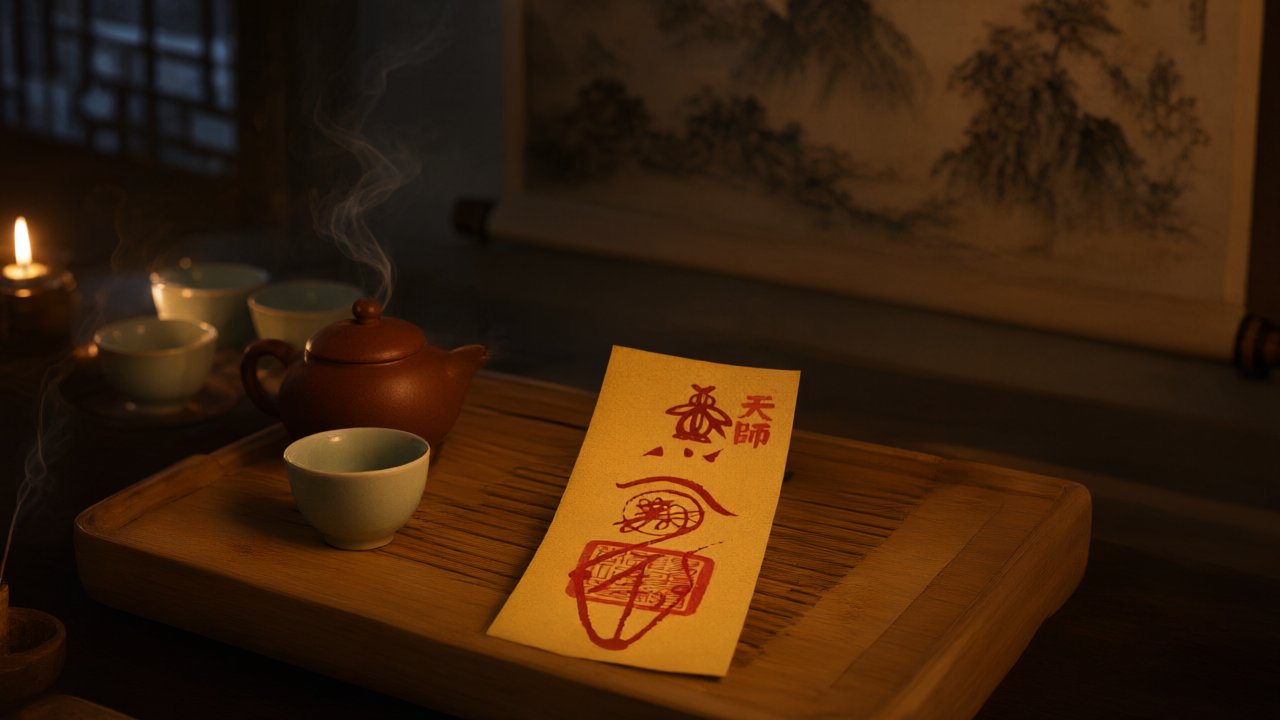
That’s it. Three drops. No visualization of light, no mantras, no forced concentration. Just release, trust, and timing.
Why does it work? Because in Taoist physiology, the dantian is the furnace where jing is refined into qi. A drop of pure intention — timed to the Solstice’s peak yang — ignites that furnace without friction. It’s not adding fuel. It’s relighting the pilot light.
A software engineer in Portland shared this with me after trying it for five days: “I stopped waking up at 3 a.m. with my mind racing. Not ‘less’ — gone. Like someone turned off a switch I didn’t know existed.”
The Ping An Fu: Your Personal Solstice Conduit
All these practices — the breath, the stone, the drops — are powerful. But they require consistency, awareness, and timing.
What if you could carry the essence of the Solstice alignment with you — not as a technique, but as a living field?
That’s the purpose of the Ping An Fu (平安符), the Peace Talisman.
Consecrated annually on Mt. Longhu during the Da Jiao (Great Offering) ceremony — held precisely at the Solstice’s zenith — the Ping An Fu is not ink on paper. It is kaiguang-activated spiritual architecture. Each talisman is drawn by ordained Zhengyi priests using cinnabar ink, peach wood brushes, and star-aligned incense smoke — then infused with three layers of Solstice-specific energy:
- The Peak Yang Seal: Capturing the exact moment of Jiǎo Yáng — not as raw fire, but as contained, harmonized power.
- The Dantian Anchor: Embedded with the vibrational resonance of the Three Drops method, making it a portable dantian stabilizer.
- The Threshold Stone Frequency: Tuned to the same grounding frequency as the river stone — ensuring yang enters you, not your stress.
This isn’t passive protection. It’s active recalibration. Worn close to the body (in a pocket, wallet, or under clothing), the Ping An Fu functions like a micro-scale Solstice altar — continuously smoothing energetic turbulence, quieting rebellious yang, and restoring the quiet, resilient peace that is your birthright.
It’s why, year after year, we see the same pattern among those who wear it consistently: fewer 3 a.m. wake-ups. Less reactive anger. A return of ziran — that effortless, spontaneous flow that Taoism calls “naturalness.”
A teacher in Toronto told us: “Before my Ping An Fu, summer meant survival mode. Now it’s my most creative season — like my energy finally has room to breathe.”
The Ping An Fu doesn’t replace your breathwork or your stone. It amplifies them — turning personal practice into embodied continuity.
For those seeking authentic Taoist talismans rooted in unbroken lineage, Dehui Hall offers the Ping An Fu — consecrated annually on Mt. Longhu, in strict accordance with Zhengyi Dao ritual protocols established over 1,800 years ago.
Taoist talismans are sacred spiritual tools rooted in 1,800 years of tradition. Their power comes from sincere belief and the consecration rituals of ordained priests. Results vary by individual — approach with an open heart and respectful intention.
Why This Works — And Why It’s Rare
There’s a reason you haven’t heard this explanation before.
Western wellness culture treats energy as a resource to be managed — like time or money. Taoist cosmology treats it as a relationship — with Heaven, Earth, and the seasons. You don’t “boost” qi. You attune to it.
The Solstice isn’t a problem to solve. It’s an invitation — issued every year — to stop fighting your own rhythm and start dancing with the cosmos.
And the Ping An Fu? It’s your dance partner.
What area of your life feels most blocked right now?
Further Reading & Cultural Context
- Taoism on Wikipedia — Overview of Taoist philosophy, history, and practices
- Mid-Autumn Festival traditions — History and cultural significance of the Mid-Autumn Festival
FAQ
Q: Can I use the Ping An Fu year-round, or only around the Solstice?
A: It’s designed for year-round use — but its resonance is strongest in the 40-day window surrounding the Solstice (20 days before to 20 days after), when Yang Qi is most active and responsive.
Q: How is the Ping An Fu different from other “peace amulets”?
A: Unlike generic symbols or mass-produced items, the Ping An Fu is drawn, consecrated, and activated using Zhengyi Dao’s kaiguang ritual — a sacred process involving specific star alignments, incense formulas, and priestly lineage tracing directly to Zhang Daoling in 59 AD on Mt. Longhu.
Q: Do I need to “activate” it myself?
A: No. Activation is completed during the Solstice ceremony by ordained priests. Your role is simple: wear it with respect and intention — and allow the alignment to unfold.
Q: Is there a best place to wear it?
A: Traditionally, it’s carried near the heart (left chest pocket) or lower dantian (front pants pocket). Avoid placing it in bags or drawers — proximity to the body sustains the energetic connection.
Q: Can I wear it with other talismans or crystals?
A: Yes — the Ping An Fu harmonizes well with other consecrated items. Its primary function is stabilization, making it an excellent foundation for other intentions (e.g., wearing it with a Gui Ren Fu for noble person support).
Taoist talismans are sacred spiritual tools rooted in 1,800 years of tradition. Their power comes from sincere belief and the consecration rituals of ordained priests. Results vary by individual — approach with an open heart and respectful intention.
Frequently Asked Questions
Can I use the Ping An Fu year-round, or only around the Solstice?
It’s designed for year-round use — but its resonance is strongest in the 40-day window surrounding the Solstice (20 days before to 20 days after), when Yang Qi is most active and responsive.
How is the Ping An Fu different from other 'peace amulets'?
Unlike generic symbols or mass-produced items, the Ping An Fu is drawn, consecrated, and activated using Zhengyi Dao’s kaiguang ritual — a sacred process involving specific star alignments, incense formulas, and priestly lineage tracing directly to Zhang Daoling in 59 AD on Mt. Longhu.
Related Taoist Instruments

About DeHuiTang — This article is part of our Taoist cultural education series. Explore more authentic Taoist knowledge, Feng Shui wisdom, and destiny philosophy at our main site.