# When Grandma’s Goat Year Talisman Still Feels Like Home
It was tucked inside a faded red envelope—folded three times, sealed with a dab of dried ink, and slipped into the back pocket of my mother’s old leather journal. I found it last spring while clearing out her study in Vancouver: a small, rice-paper talisman, its vermilion strokes slightly blurred at the edges, drawn in the unmistakable hand of a Mt. Longhu priest. At the bottom, in careful clerical script: *Yi Wei Nian Ping An Fu* — “Peace Talisman for the Year of the Goat.” Not dated 2026. Dated *1979*.
My grandmother was born in the Year of the Goat — 1919 — and every Goat Year after that, she received one. Not as a lucky charm. Not as insurance. But as a quiet act of continuity — like lighting the same incense stick at Qingming, or placing fresh peaches on the altar during Mid-Autumn. She never explained why she kept them. She just did. And when I held that 47-year-old talisman — its paper brittle but its presence warm — I didn’t feel superstition. I felt lineage.
That’s the heart of Taoist astrology: not prediction, but resonance. Not fate written in stone — but rhythm written in breath.
—
## The Goat Isn’t a Sign. It’s a Seasonal Mirror.
Western astrology asks, *What am I?* — then assigns you a constellation and a personality profile. Taoist astrology, rooted in the *Heavenly Stems and Earthly Branches* system (first codified in the Han Dynasty, over 2,000 years ago), asks something quieter: *How do I move with the year?*
The Year of the Goat — officially the *Yi Wei* year (乙未) — arrives on February 1, 2026, and lasts until January 28, 2027. But in Zhengyi Daoist tradition, the true start isn’t the calendar date. It’s the *Lichun* solar term — the “Beginning of Spring” — which falls on February 3 or 4 each year. That’s when the energy shifts. That’s when the priests at Mt. Longhu begin consecrating talismans anew — not because the old ones expire, but because the *qi* of the year changes, like water shifting from still pond to gentle current.
Here’s what makes the Goat Year special: it’s governed by *Yin Wood* (乙) and *Yin Earth* (未). Yin Wood isn’t the rigid oak of Yang Wood — it’s the willow: flexible, reflective, deeply rooted in quiet observation. Yin Earth isn’t the mountain — it’s the loam: nourishing, patient, holding space without demanding attention. Together, they form an energy that doesn’t shout — it listens. Doesn’t rush — it waits. Doesn’t conquer — it harmonizes.
Think of it like this: if the Dragon Year is the sound of thunder rolling across Mt. Longhu — sudden, commanding, full of momentum — the Goat Year is the mist rising off the Yu River at dawn. Soft. Present. Unhurried. And just as essential.
This isn’t about being “lucky” or “unlucky.” In fact, the *Dao De Jing* reminds us: *“Fortune and misfortune share the same root.”* What feels like delay may be protection. What feels like softness may be strategic stillness. The Goat Year doesn’t reward speed — it rewards sincerity, craftsmanship, and care. Which is why, for centuries, artisans in Longhu’s ancient alleyways have taken this year to refine their peach-wood sword carvings, and why families reweave their ancestral altars with extra care — not to change fate, but to align with its gentle frequency.
—
## The Real Ritual Isn’t in the Talisman — It’s in the Remembering
A few months ago, we visited the Celestial Masters’ Mansion at Mt. Longhu — the spiritual center of Zhengyi Daoism since 59 AD. While walking the moss-covered courtyard, Master Chen, a 72nd-generation priest, showed us a ledger bound in faded blue silk. Inside, page after page recorded talisman requests for the 1979 Goat Year — not just names and dates, but notes like: *“For Li Wen, teacher, Guangdong — seeks calm for classroom; draws Wu Lei Fu with extra cloud motifs.”* Or: *“For Chen Mei-ling, new mother, Shanghai — requests Gui Ren Fu for baby’s first steps.”*
No grand promises. No guarantees. Just intention — witnessed, held, and translated into ink and paper through ritual fasting, meditation, and precise brushwork performed at the hour of the Goat (1–3 p.m.), when Yin Earth energy is strongest.
That’s the authenticity no algorithm can replicate: the human hand, the seasonal timing, the intergenerational witness.
Which brings us back to my grandmother’s talisman — and yours.
If you were born in a Goat Year (1919, 1931, 1943, 1955, 1967, 1979, 1991, 2003, 2015, or 2027), this year carries a special kind of homecoming energy. You may feel a pull toward creativity, restoration, or quiet connection — not because the stars decree it, but because your body remembers a rhythm older than language.
If you weren’t born in a Goat Year — this year invites you to practice *De* (virtue): the Taoist art of effortless action. To pause before reacting. To choose depth over speed. To honor the unseen labor behind beauty — like the calligrapher who spends three hours preparing ink before drawing a single stroke.
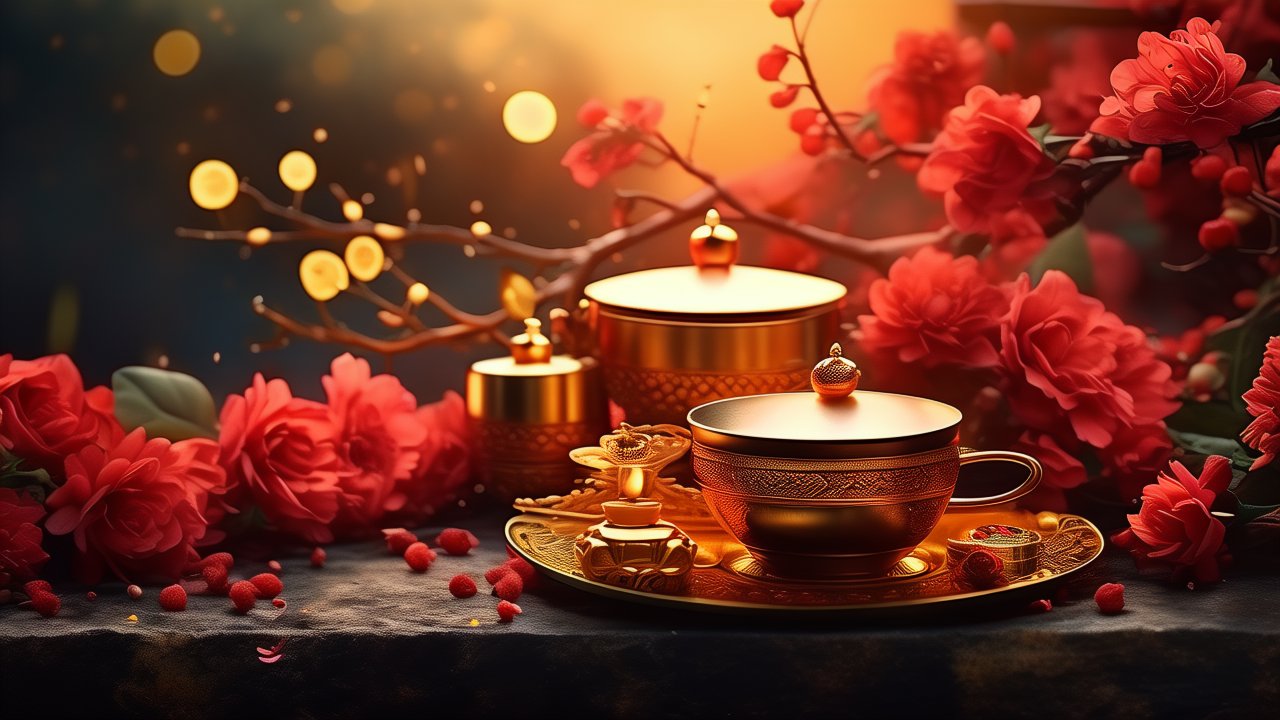
And if you’re holding a talisman from a past Goat Year — don’t discard it. Fold it gently. Place it beside a cup of warm tea. Light a stick of sandalwood. Say your grandmother’s name aloud — or your own name, spoken slowly, as if introducing yourself to someone who’s been waiting.
Because in Taoist culture, time isn’t linear — it’s cyclical, layered, and deeply relational. Every Goat Year echoes the last. Every talisman holds the memory of the hand that drew it — and the heart that received it.
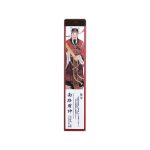
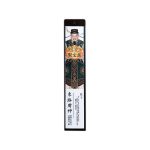
That’s why, at DeHuiTang, our 2026 Goat Year talismans — like the *Yi Wei Ping An Fu* and the *Yi Wei Gui Ren Fu* — are all consecrated on Lichun morning at Mt. Longhu, using ink ground from pine soot and aged deer-hide glue, just as they were in 1979. Not to sell hope — but to honor continuity. Not to replace memory — but to deepen it.
So whether you’re lighting incense in a Toronto apartment, arranging peonies on a Sydney altar, or simply pausing to watch clouds gather over the Alps — know this: the Goat Year isn’t asking you to become something new. It’s inviting you to remember something true.
**Do you have a family talisman — or a ritual passed down through generations? Tell us about it in the comments. Whose hands held it before yours?**
> These items are sold as cultural artifacts. Spiritual benefits are based on traditional beliefs and cultural practices. DeHuiTang does not guarantee specific outcomes.
—
### FAQ
**Q: Is the Year of the Goat considered “unlucky” in Taoist tradition?**
A: No — Taoist cosmology doesn’t assign moral value (“lucky”/“unlucky”) to animal years. The Goat Year’s Yin Wood/Yin Earth energy emphasizes harmony, patience, and nurturing — qualities that may feel undervalued in fast-paced societies, but are deeply honored in Daoist practice.
**Q: Can I use a Goat Year talisman if I wasn’t born in a Goat Year?**
A: Absolutely. Talismans are expressions of intention and alignment — not identity tags. Many people choose talismans based on life circumstances (e.g., seeking peace during transition) rather than birth year. The *Yi Wei Ping An Fu*, for example, is widely used by students, caregivers, and creatives — regardless of zodiac sign.
—
### External Reference
[“The Chinese Calendar: A Comprehensive Guide to Its History and Structure”](https://www.asia.si.edu/exhibitions/chinese-calendar/) — Smithsonian Institution, Freer Gallery of Art. This authoritative resource explains the astronomical basis of the Stem-Branch cycle and its integration into Daoist liturgical practice — including how Lichun, not Lunar New Year, marks the true energetic shift between years.
Frequently Asked Questions
What makes the 2026 Goat Year talismans different from those of other years?
2026 is a Yi Wei (Yin Wood + Yin Earth) year in the traditional Heavenly Stems and Earthly Branches system — a cyclical, not linear, time framework. At DeHuiTang, our Goat Year talismans are consecrated at Lichun (February 3–4), the true energetic start of the year in Zhengyi Daoist practice. They’re hand-drawn by Mt. Longhu priests using pine-soot ink and aged deer-hide glue — materials and timing aligned with Yin Earth’s quiet strength and Yin Wood’s reflective resilience, honoring centuries-old ritual continuity.
Can I still use a Goat Year talisman from 1979 or another past Goat Year?
Yes — in Taoist tradition, talismans aren’t ‘expired’ but remain resonant with their original consecration and intent. Your grandmother’s 1979 talisman carries layered meaning: lineage, seasonal rhythm, and personal history. Rather than discarding it, you may respectfully honor it — folding it gently, placing it beside tea or incense, or keeping it with other ancestral objects. This reflects the Taoist view of time as cyclical and relational, where past and present energies coexist and deepen one another.
Do I need to be born in a Goat Year to benefit from a 2026 Goat Year talisman?
No — while Goat Year natives (e.g., 1919, 1979, 2003) may feel a natural resonance with this year’s Yin Wood/Yin Earth energy — gentle, observant, harmonizing — the talismans serve all who seek alignment with its qualities. Traditionally, they support intentions like calm presence, careful craftsmanship, or respectful remembrance. Their purpose is cultural and spiritual grounding, not exclusivity — inviting anyone to practice De (virtue) through mindful, unhurried action.
Why are DeHuiTang’s talismans consecrated specifically at Mt. Longhu?
Mt. Longhu has been the historic center of Zhengyi Daoism since 59 AD and remains home to the Celestial Masters’ lineage. Consecration there follows strict ritual protocols — including fasting, meditation, precise brushwork at the hour of the Goat (1–3 p.m.), and seasonal timing at Lichun. This ensures authenticity rooted in living tradition, not commercial replication. It honors the same practices recorded in 1979 ledgers — where intention, human presence, and cosmic timing converge in ink and paper.
Related Taoist Instruments
About DeHuiTang — This article is part of our Taoist cultural education series. Explore more authentic Taoist knowledge, Feng Shui wisdom, and destiny philosophy at our main site.