Your Home Mirror Faces the Door — Here’s Why Spring Feels Heavy
You walk into your living room and catch your reflection in the mirror — just as you step through the front door. It’s been there for years. You never thought much about it… until this spring.
Now, no matter how many windows you open or how often you sweep the floors, your home feels stale. Not dirty — but heavy. You wake up tired even after eight hours. Conversations with family spark faster than usual. Small arguments linger like smoke. The new plant you bought last week is already drooping. And when you try to meditate or set intentions for the season ahead, your mind races — not with clarity, but with a low hum of unease.
You’re not imagining it. And you’re not broken. What you’re feeling is spring energy trying to move — and hitting a wall.
This isn’t about clutter or dust. It’s about something far older: the ancient Taoist understanding that a home is not a container — it’s a living field of qi, shaped by placement, timing, and intention. And right now — as the lunar calendar turns toward the 10th month (November 2026), and the energetic pivot before Xiayuan Festival on November 23 — your space may be holding onto what should be released.
Let’s go deeper.
Why Spring Energy Gets Stuck (Even When It’s Not Spring)
Western calendars mark seasons by solstices and equinoxes. Taoist cosmology follows the lunar-solar rhythm — where seasonal shifts are measured not by dates alone, but by qi movement, celestial alignments, and ancestral observances. In the Zhengyi Daoist tradition of Mt. Longhu (龍虎山), spring is not only a time of growth — it is the first major cleansing phase of the year’s energetic cycle.
But here’s what most people miss: spring energy doesn’t wait for March. It begins its subtle rise at the end of winter — and peaks during the first lunar month, then renews again in the tenth lunar month, when the heavens align for deep release.
That’s right: November — specifically the 10th lunar month — is one of two primary qi-renewal windows in the traditional calendar. This is why so many feel a sudden heaviness, restlessness, or emotional fog right now, even though it’s technically late autumn in the Gregorian calendar.
The Yangzhai Sanyao (《陽宅三要》, “Three Essentials of Yang Dwellings”), a foundational feng shui text from the Ming dynasty, explains it plainly: “When yin accumulates without release, yang cannot rise — and the household breathes shallowly.”
In other words: if your home has accumulated stagnant or disruptive energy over the past months — especially from unresolved conflicts, unprocessed emotions, or structural imbalances like mirrors facing doors — spring’s natural upward push meets resistance. The result? A sense of pressure, fatigue, irritability, and even physical lethargy. It’s not depression. It’s blocked qi — and it’s profoundly real within the tradition.
Think of your home’s energy field like a riverbed. During winter, the water slows. Debris settles. If the banks are misaligned — say, a mirror directly reflecting the front door — it creates an energetic eddy. Qi swirls instead of flowing. By the time spring’s current begins to rise, the debris hasn’t cleared. So instead of fresh water surging forward, you get turbulence — visible as tension, fatigue, or repeated small misfortunes.
This is why the ancients didn’t just “clean house” in spring — they cleansed the qi.
The Three Ancient Steps to Refresh Your Home’s Energy (No Incense Required)
You don’t need a full renovation — or even a weekend of scrubbing — to restore flow. The Zhengyi Daoist masters of Mt. Longhu taught simple, precise adjustments rooted in observation, not superstition. These aren’t rituals for believers. They’re energetic hygiene practices — like opening a window to let stale air out.
Here are three concrete, immediately actionable steps — drawn directly from temple practice and documented in classical texts like the Qingjing Jing (《清靜經》, “Scripture of Clarity and Stillness”) — that you can do this week:
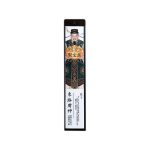
Handcrafted Cupronickel Ten-Thousand Names Tablet Pendant | Wan Shen Hui Daoist Bagua Exorcism Talisman Necklace
万神讳项链,白铜精制,银金双色。吊坠为令牌/碑形,上承金焰拱券、嵌红宝石,中央嵌描金八卦太极,牌面满布阴刻「万神讳」诸神秘讳与符字。「万神讳」总摄万神名讳,为道教著名伏魔驱邪之秘讳,传统上被视为
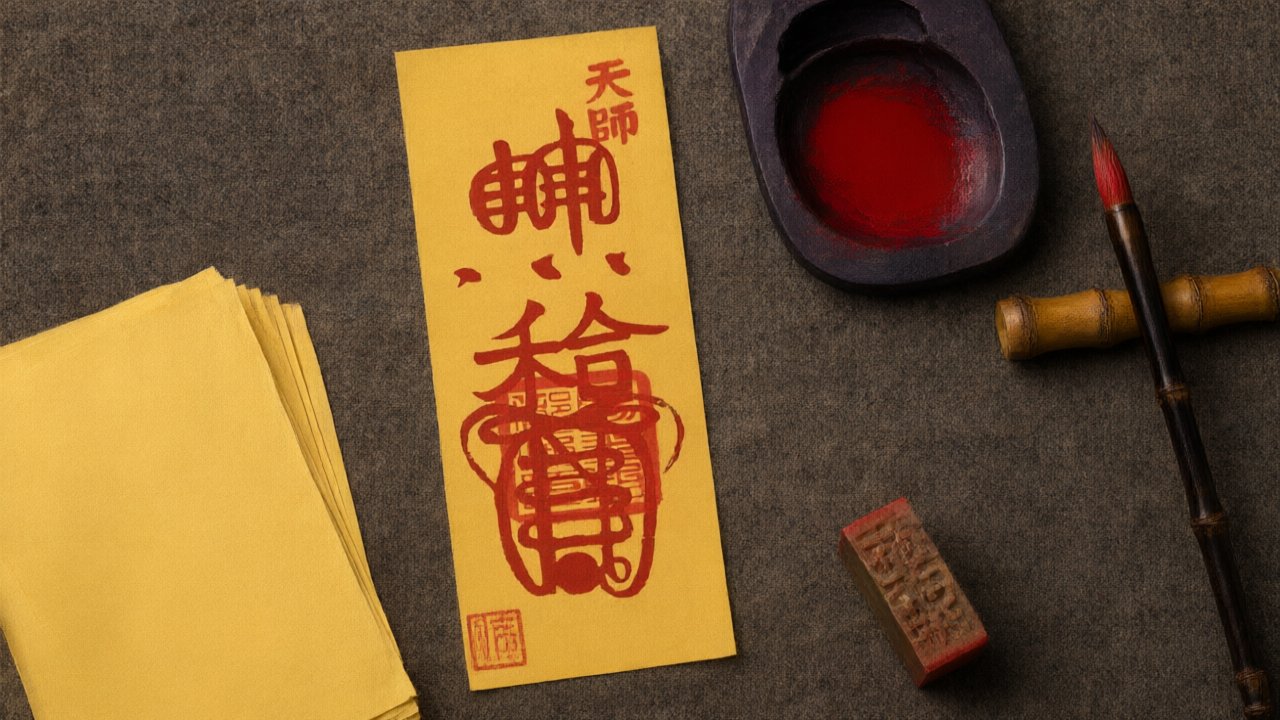
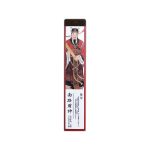
Mt. Longhu Celestial Master Consecrated Exorcism & Evil Rejection Talisman (Qu Gui Fu)
Hand-drawn and consecrated by legitimate masters of the Mt. Longhu Celestial Master lineage. Stam
1. Redirect the Mirror — Before Sundown Tonight
That mirror facing your front door? In feng shui, it’s called “the door’s echo” — a configuration that reflects incoming qi back out before it can settle. It doesn’t “curse” your home. But traditionally, it’s regarded as a barrier to stability and calm reception.
✅ Do this tonight: Turn the mirror so it faces a wall, a plant, or a piece of art — anything that holds energy rather than bounces it. If it must stay near the entrance, drape it lightly with a silk cloth (red or deep blue) between dusk and dawn. This softens the reflection without removing it entirely — honoring both practicality and principle.
Why before sundown? Because in Daoist timing, the hour before sunset (Xu Shi, the “Void Hour”) is when yin begins to gather — and gentle redirection is most effective.
2. Activate the Center — With One Bowl of Water and a Single Candle
Every home has a Zhonggong — the energetic center, usually located near the geometric heart of the floor plan. This spot governs balance, clarity, and household harmony. When blocked or neglected, it manifests as indecision, scattered focus, or unexplained friction among family members.
✅ Do this tomorrow morning: Place a clean, round ceramic bowl (no cracks) filled with fresh spring or filtered water in your Zhonggong. Light a plain white beeswax candle beside it — not for light, but for yang activation. Let it burn for 20 minutes while you sit quietly nearby, breathing slowly. Then extinguish the flame (do not blow). Leave the water undisturbed for 24 hours — then pour it onto soil outside (never down the drain).
This mirrors the “still water reflects heaven” principle in the Qingjing Jing: stillness invites clarity; water receives and calms; fire awakens direction. No chanting needed. Just presence.
3. Seal the Threshold — With Salt, Rice, and Intention
The front door isn’t just wood and hinges — it’s the primary qi gate. Over time, especially during periods of stress or transition, this threshold can accumulate what Daoist texts call “sha qi” — not evil, but sharp, discordant energy that disrupts harmony.

✅ Do this on the 22nd of November (one day before Xiayuan Festival): At sunrise, sprinkle a thin line of unrefined sea salt mixed with raw rice (1:1 ratio) across your front threshold — from left to right, as you face outward. As you do, say aloud (or silently): “What no longer serves peace, may it depart. What supports harmony, may it remain.”
Then sweep the mixture inward gently — not out — and dispose of it in soil or compost. This is not banishment. It’s energetic curation — a practice recorded in Qing-era temple records from Longhu Shan, where priests performed similar rites before the Xiayuan observances to prepare the sacred space.
These three steps take less than 30 minutes total. Yet together, they form a micro-ritual — a way to align your home with the natural pivot happening in the heavens right now.
When Cleansing Isn’t Enough: The Role of Consecrated Protection
Sometimes, despite our best efforts, energy lingers. Not because we failed — but because some layers run deeper than furniture placement or candlelight.
There are moments — after prolonged conflict, illness, or emotional upheaval — when a home holds impressions that resist ordinary clearing. That’s where consecrated tools enter the tradition — not as magic, but as focused resonance.
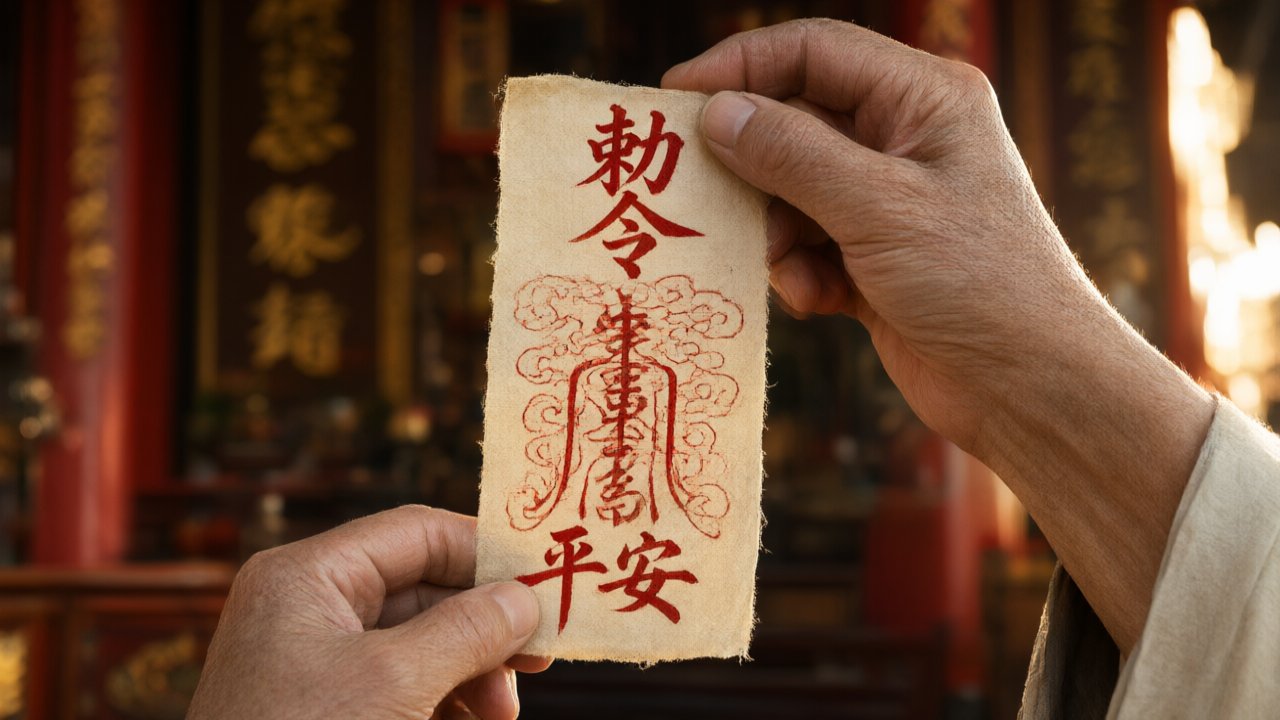
The Mt. Longhu Celestial Master Consecrated Exorcism & Evil Rejection Talisman (Qu Gui Fu) was never designed for dramatic exorcisms. Its documented conventional function — preserved in the Zhengyi lineage since the Han dynasty — is far more grounded: to stabilize the boundary between personal space and ambient energy, helping the home return to its natural state of quiet receptivity.
It does this through kaiguang — the sacred eye-opening ritual performed by ordained priests atop Mt. Longhu, using cinnabar ink, lunar-aligned timing, and decades of lineage transmission. The talisman itself contains no incantation or threat. Instead, its brushwork follows precise cosmological diagrams — echoing the Bagua’s still center and the Five Phases’ balancing logic. It works like a tuning fork: not by overpowering, but by inviting resonance.
Many who place the Qu Gui Fu near their main entrance (inside the door frame, facing outward) report a subtle but distinct shift within days: fewer abrupt arguments, deeper sleep, and a renewed sense of ease when returning home. Not because the talisman “fixes” things — but because it helps restore the field’s baseline frequency, allowing your own efforts — the mirror adjustment, the water bowl, the salt line — to take deeper root.
For those seeking authentic spiritual tools rooted in 1,800 years of uninterrupted practice, Dehui Hall offers the Mt. Longhu Celestial Master Consecrated Exorcism & Evil Rejection Talisman (Qu Gui Fu), drawn and consecrated under the guidance of senior masters from the Longhu Shan temple complex.
If you’ve tried every practical fix and still feel that persistent heaviness — as if your home is holding its breath — this talisman may be the quiet anchor your space has been waiting for.
In Closing: Spring Is Not a Season — It’s a Direction
Spring cleaning, in the Taoist sense, is never about perfection. It’s about permission — permission to release what no longer serves, to redirect what confuses, and to protect what sustains. It’s not about erasing the past, but making space for the next cycle of growth to arrive with clarity.
The mirror facing your door? It’s not a mistake — it’s an invitation. An invitation to notice. To adjust. To honor the intelligence already present in your home’s design — and in your own body’s signals.
If you’d like a free, printable checklist of these three steps — plus a guide to locating your home’s Zhonggong and identifying common qi-blockers — comment “CHECKLIST” below. We’ll send it straight to your inbox.
Taoist talismans are sacred spiritual tools rooted in 1,800 years of tradition. Their power comes from sincere belief and the consecration rituals of ordained priests. Results vary by individual — approach with an open heart and respectful intention.
Further Reading & Cultural Context
- Talismans in world cultures — Cross-cultural overview of talismanic traditions
- Taoism on Wikipedia — Overview of Taoist philosophy, history, and practices
FAQ
Q: Do I need to be Taoist to use these practices?
A: No. These are energetic principles — like airflow or light reflection — observed and refined over centuries. You don’t need to adopt a belief system to benefit from aligned placement or intentional clearing.
Q: Can I use the Qu Gui Fu talisman alongside other spiritual items (crystals, statues, etc.)?
A: Yes — and it’s traditionally placed before other items in the entryway, as it stabilizes the threshold. Just ensure it’s not covered or placed face-down.
Your next step: Try Step 1 tonight — redirect that mirror. Notice how your home feels tomorrow morning. Then come back and tell us what shifted.
Comment “CHECKLIST” and we’ll send you our free Spring Qi Refresh Guide — with diagrams, lunar timing notes, and a printable altar setup sheet.
And if you’d like to deepen your home’s energetic foundation this season, explore the Mt. Longhu Celestial Master Consecrated Exorcism & Evil Rejection Talisman (Qu Gui Fu) — available now at Dehui Hall.
Taoist talismans are sacred spiritual tools rooted in 1,800 years of tradition. Their power comes from sincere belief and the consecration rituals of ordained priests. Results vary by individual — approach with an open heart and respectful intention.
Go Deeper
- Dream Interpretation — free, takes about two minutes: see what your recurring dream points to
- If you want the physical remedy behind this article, browse our consecrated talismans and feng shui pieces.
Frequently Asked Questions
Do I need to be Taoist to use these practices?
No. These are energetic principles — like airflow or light reflection — observed and refined over centuries. You don’t need to adopt a belief system to benefit from aligned placement or intentional clearing.
Can I use the Qu Gui Fu talisman alongside other spiritual items (crystals, statues, etc.)?
Yes — and it’s traditionally placed before other items in the entryway, as it stabilizes the threshold. Just ensure it’s not covered or placed face-down.
Related Taoist Instruments
About DeHuiTang — This article is part of our Taoist cultural education series. Explore more authentic Taoist knowledge, Feng Shui wisdom, and destiny philosophy at our main site.