5 Bed Head Directions That Drain Your Energy (Feng Shui Fix)
You wake up tired — even after eight hours. Your mind feels foggy before noon. You snap at loved ones over small things. Your patience is thin, your focus scattered, and your sense of peace feels like a memory.
You’ve rearranged the bedroom, bought new sheets, tried white noise — but nothing sticks.
Here’s what you can check right now — no app, no consultant, no guesswork. Just five concrete, visible, room-level signs. Tick them off one by one:
- Your bed head points directly at the door — even if the door is closed.
- Your bed sits under a window, especially one that opens or faces a street.
- A mirror reflects your sleeping body, whether on the wall, closet door, or dresser.
- The headboard rests against a shared wall — with a bathroom, kitchen, or utility room on the other side.
- Your bed faces a sharp corner — from furniture, a beam, or an architectural jut in the ceiling.
If any one of these applies to your bedroom, your nightly rest isn’t just interrupted — it’s energetically compromised. And that’s not metaphor. It’s how feng shui has mapped human rest for over 1,800 years.
This isn’t about superstition. It’s about spatial resonance — the way your body settles into stillness, breathes deeply, and regenerates while unconscious. When the environment contradicts that biological need, your wei qi — your protective life-field — stays partially alert. You sleep, but you don’t restore.
That’s why so many people feel chronically fatigued, emotionally reactive, or spiritually ungrounded — even when their calendar is empty and their diet is clean. The problem isn’t inside you. It’s behind you.
Why Your Bed Head Direction Matters More Than You Think
In classical Chinese cosmology, the direction your head faces while sleeping isn’t decorative — it’s architectural. Not of walls or wood, but of qi flow.
The Yangzhai Sanyao (《陽宅三要》), or Three Essentials of Yang Dwellings, written during the Ming Dynasty and still studied by feng shui masters today, names three non-negotiable pillars for residential harmony: the entrance (men), the stove (zao), and the bedroom (chuang). Among these, the chuang — specifically the bed head orientation — carries unique weight because it governs the longest uninterrupted period of vulnerability and receptivity in your day: deep sleep.
Why? Because during sleep, your conscious guard lowers. Your body doesn’t just rest — it receives. It receives ambient energy, seasonal shifts, celestial alignments, and the subtle magnetic signatures of the land beneath you. In the Zhengyi Daoist tradition of Mt. Longhu — where feng shui, astrology, and talismanic practice have co-evolved since the Han Dynasty — this reception is considered sacred, delicate, and profoundly directional.
Ancient priests didn’t draw talismans facing random directions. They aligned their altars to the Xuan Kong (Mysterious Void) compass, calibrated to the Eight Mansions — a system mapping eight cardinal and intercardinal directions to specific life domains: wealth, fame, relationships, health, children, knowledge, career, and helpful people.
Your bed head is, in essence, your sleeping altar. Its direction determines which life domain your subconscious opens itself to each night — and whether that domain is stable or stressed.
Take the Northwest (Qian Palace): traditionally linked to gui ren — noble helpers, mentors, protection, and paternal energy. A bed head pointing Northwest invites supportive guidance — but only if the space is quiet, solid, and free of disturbance. If that same Northwest-facing bed sits under a leaky window or shares a wall with a noisy HVAC unit, the intention is there — but the reception is fractured.
That’s where ancient wisdom diverges sharply from modern interior design. Feng shui doesn’t ask, “Does this look nice?” It asks, “Does this support the body’s nightly surrender?”
And surrender — real, full, cellular surrender — requires three things: safety, stability, and silence. Not silence of sound alone, but silence of spatial conflict. A bed facing South (Li Palace), for example, aligns with fame and recognition — excellent for artists or speakers — but problematic for deep rest, because Li is a Fire element palace: dynamic, outward, luminous. Sleeping with your head to the South can subtly elevate heart rate, delay melatonin onset, and create dream intensity — all documented in classical texts as shen bu an (restless spirit).
The Eight Mansions aren’t arbitrary. They’re derived from the Later Heaven Bagua, a living map of how universal energy expresses itself in time and space. Each mansion pulses with its own rhythm — some expansive, some grounding, some protective, some revealing. Your bed head becomes a tuning fork: pointed toward a resonant direction, it harmonizes; pointed toward a clashing one, it creates static — the kind that shows up as fatigue, irritability, or recurring minor illness.
God of Wealth Incense – Zhao Gongming Chief God of Wealth (Wu Lu Cai Shen) 23cm Herbal Line Sticks | Opening Wide the Streams of Wealth (Guang Kai Ke Yuan)
北路正財神・趙公明 | Zhao Gongming, the Chief God of Wealth (North Road) 趙公明為道教護法正財神,統招財寶
Mt. Longhu Celestial Master Consecrated Peace & Protection Talisman (Daoist Safeguard Fu)
Peace is the highest spiritual frequency. The Peace Talisman carries 1,800 years of Taoist protec
This understanding didn’t emerge from theory. It emerged from observation — centuries of temple masters, village healers, and imperial geomancers noting patterns across thousands of households. Why did families sleeping with heads to the Northeast (Gen Palace) report stronger family bonds but slower career movement? Why did those facing Southwest (Kun) experience deeper emotional calm but occasional lethargy? These weren’t guesses. They were recorded correlations — preserved in lineages like the Celestial Masters of Mt. Longhu, whose records date back to Zhang Daoling’s founding of the Zhengyi school in 142 CE.
So when we say “your bed head direction matters,” we’re not invoking magic. We’re honoring a 1,800-year-old empirical framework — one that treats your bedroom not as neutral space, but as a resonant chamber.
3 Immediate Feng Shui Fixes You Can Do Today
You don’t need to move walls or repaint. You don’t need to consult a master — though doing so deepens precision. What you do need is clarity, agency, and three actionable steps — all doable before bedtime tonight.
✅ Step 1: Identify Your Current Bed Head Direction (2 Minutes)
Grab your phone. Open the Compass app (standard on iOS/Android). Stand at the foot of your bed, facing the headboard. Hold your phone flat and steady. Note the degree reading where the red needle points — that’s where your head lies.
Now match it to the Eight Mansions:
– North: 337.6°–22.5°
– Northeast: 22.6°–67.5°
– East: 67.6°–112.5°
– Southeast: 112.6°–157.5°
– South: 157.6°–202.5°
– Southwest: 202.6°–247.5°
– West: 247.6°–292.5°
– Northwest: 292.6°–337.5°
Don’t worry about perfection. A 15° margin is acceptable. What matters is intention — and knowing where your head currently rests in the energetic field.
✅ Step 2: Apply the “Three Shields” Principle (5 Minutes)
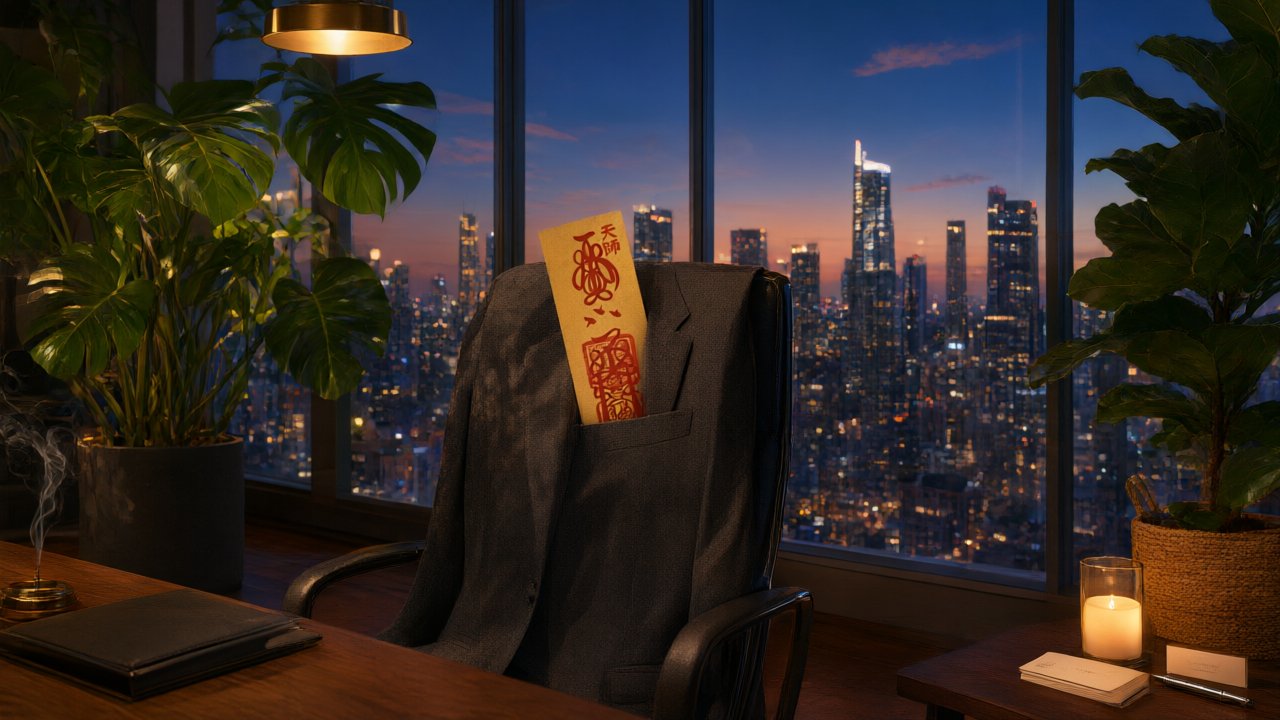
Even if you can’t reposition your bed immediately, you can shield its current orientation using three simple, traditional layers — drawn from the Qingjing Jing (Classic of Clarity and Stillness), a foundational Taoist text on cultivating inner peace through environmental alignment.
Shield 1: The Solid Back
Your head needs something substantial behind it — not air, not glass, not a hollow wall. If your headboard is against drywall with a bathroom on the other side, place a thick, natural-fiber tapestry or a woven bamboo screen against the wall, covering at least the head-height section. This isn’t decoration — it’s qi insulation. In Mt. Longhu ritual practice, a solid backing represents gen (stillness), anchoring the spirit during rest.
Shield 2: The Grounded Base
Place a small, smooth river stone or unglazed ceramic disc (about palm-sized) under the center of your mattress, directly beneath your枕 (pillow point). This grounds the bed’s energy field — a practice rooted in the Baopuzi, Ge Hong’s 4th-century alchemical manual, which describes earth elements as “qi stabilizers” for sleeping spaces.
Shield 3: The Quiet Boundary
If your bed faces a door or window, hang a light, opaque curtain just above the headboard — not over the window, but as a soft visual barrier between your pillow and the opening. Use linen, cotton, or silk. No patterns. Let it fall gently, 6–8 inches below the top of the headboard. This creates a micro-sanctuary — echoing the temple altar cloths used during consecration rituals at Longhu Shan.
Do all three tonight. You’ll feel the difference in how your shoulders release when you lie down.
✅ Step 3: Activate the “Rest Anchor” Ritual (3 Minutes, Weekly)
Once a week — ideally on Thursday (a day associated with Jupiter and expansion in Chinese astrology, making it auspicious for setting intentions) — perform this simple grounding ritual before sleep:
- Sit upright on the edge of your bed, bare feet on the floor.
- Close your eyes. Breathe in for four counts, hold for four, exhale for six.
- Place your left hand over your lower abdomen (dan tian), right hand over your heart.
- Whisper softly: “My body rests. My spirit is held. This space is safe.”
- Light a single beeswax candle (no fragrance) beside the bed for 10 minutes — then extinguish it with your fingers (not breath), sealing the intention.
This isn’t prayer. It’s qi calibration — a way to signal to your nervous system that the environment is trustworthy. Over time, your autonomic response shifts. Your breath deepens earlier. Your thoughts slow without effort.
When Environment Isn’t Enough: The Role of Consecrated Protection
Sometimes, the spatial fix is clear — but the feeling lingers. You’ve moved the bed, added the tapestry, grounded the base… yet that low hum of anxiety remains. You wake startled at 3am. You feel watched. Or you simply can’t shake a sense of unease — like the room holds its breath when you enter.
That’s when environment meets intention. Feng shui arranges space. Taoist ritual consecrates meaning.
At Mt. Longhu, the mountain home of the Celestial Masters since the Eastern Han Dynasty, every talisman begins with alignment — not just to direction, but to purpose. The Mt. Longhu Celestial Master Consecrated Peace & Protection Talisman (Daoist Safeguard Fu) is not a generic charm. It is drawn by ordained priests following protocols unchanged for centuries: fasting, meditation, ink preparation with cinnabar and pine resin, and invocation of the Shenxiao (Divine Thunder) deities who govern atmospheric balance and spiritual boundaries.
Its conventional function — documented across generations of Zhengyi lineage records — is precise: to stabilize the wei qi field around sleeping areas, reinforce the boundary between waking and dreaming consciousness, and gently repel sha qi (scattered, harmful energy) that accumulates near thresholds, windows, and corners.
This is why it pairs so powerfully with feng shui fixes. The spatial adjustment creates the container. The consecrated talisman seals and sanctifies it.
Placed discreetly behind the headboard — not visible, but present — the Daoist Safeguard Fu works silently, like moonlight on still water. It doesn’t force change. It restores equilibrium. Many who use it report deeper REM cycles, fewer nighttime awakenings, and a tangible sense of being held — not by walls or curtains, but by intention made visible through sacred geometry and ritual transmission.
For those seeking authentic feng shui bedroom support, Dehui Hall offers the Mt. Longhu Celestial Master Consecrated Peace & Protection Talisman (Daoist Safeguard Fu), drawn and consecrated on Mt. Longhu according to Zhengyi Daoist rites. We also offer the Zhen Zhai Fu (Home Peace Talisman), designed specifically for whole-residence stabilization — ideal if multiple rooms feel energetically thin or unsettled.
These are sacred spiritual tools rooted in 1,800 years of tradition. Their power comes from sincere belief and the consecration rituals of ordained priests. Results vary by individual — approach with an open heart and respectful intention.
In Closing: Your Bedroom Is Your First Temple
You don’t need a shrine, an altar, or incense to honor the sacredness of rest. You just need to recognize that the space where you surrender — night after night — is the most intimate temple you’ll ever inhabit.
Feng shui isn’t about perfection. It’s about attunement. It’s noticing that your head shouldn’t face chaos — and choosing stillness instead. It’s understanding that a mirror reflecting your sleeping form isn’t neutral — it’s an energetic echo chamber. It’s realizing that your bed isn’t furniture — it’s a vessel for renewal.
Start with the five signs. Check them. Adjust one. Then another. Feel the shift — not in grand transformations, but in quieter mornings, softer words, and deeper breaths.
And if you’d like our free Feng Shui Bedroom Audit Checklist — a printable, step-by-step guide with directional charts, shielding materials list, and weekly ritual template — comment “CHECKLIST” below. We’ll send it straight to you.
May your rest be deep. May your boundaries be clear. May your wei qi flow strong and still.
Taoist talismans are sacred spiritual tools rooted in 1,800 years of tradition. Their power comes from sincere belief and the consecration rituals of ordained priests. Results vary by individual — approach with an open heart and respectful intention.
Further Reading & Cultural Context

- Feng shui principles — Traditional Chinese geomancy and environmental harmony
- Talismans in world cultures — Cross-cultural overview of talismanic traditions
Go Deeper
- Dream Interpretation — free, takes about two minutes: see what your recurring dream points to
- BaZi Chart Reading — free, takes about two minutes: read your Four Pillars chart for this year
- If you want the physical remedy behind this article, browse our consecrated talismans and feng shui pieces.
Frequently Asked Questions
Can I use a compass app on my phone for accurate feng shui readings?
Yes — modern smartphone compass apps are sufficiently accurate for basic Eight Mansions orientation. For best results, calibrate your phone first and take readings away from metal objects or electronics.
What if I can’t move my bed? Are there alternatives?
Absolutely. The 'Three Shields' principle (solid back, grounded base, quiet boundary) is designed for immovable beds. These adjustments work with — not against — your existing layout.
Related Taoist Instruments
About DeHuiTang — This article is part of our Taoist cultural education series. Explore more authentic Taoist knowledge, Feng Shui wisdom, and destiny philosophy at our main site.