3 Signs Your Luck Cycle Is Broken — And How to Reset It
You’ve missed three job interviews in a row — not because you weren’t qualified, but because your train derailed, your laptop crashed mid-Zoom, then your email went to spam. You booked a vacation for months — and the day before departure, your flight was canceled, your hotel overbooked, and your passport renewal arrived one day late. You finally saved enough for a down payment — then your car died, your AC failed, and your dog needed surgery — all in the same week.
This isn’t coincidence. It’s not bad karma. And it’s definitely not you.
It’s something far older — and far more precise — than any modern self-help framework. A pattern recognized, mapped, and ritually adjusted for over 1,800 years by Taoist masters on Mt. Longhu (龍虎山), the sacred cradle of Zhengyi Daoism (正一道).
If you’ve ever thought, “Why does everything keep going wrong?”, this isn’t a cry for reassurance. It’s a diagnostic signal — and the ancient tradition has a name for it: Zhuan Yun (转运), or Luck Transformation.
This article isn’t about wishing harder. It’s about recognizing the three concrete, checkable signs that your personal luck cycle has entered a dissonant phase — and exactly how to realign it using time-tested, consecrated tools and practical feng shui adjustments you can do today.
🔍 Sign #1: You Keep Repeating the Same Type of Disruption
Not just bad things — but the same kind of bad thing.
- You always lose money on real estate — never stocks, never crypto, just property deals.
- Every new relationship collapses around communication breakdowns — misread texts, forgotten plans, sudden silence.
- Career breakthroughs stall at the final interview stage, like an invisible wall.
In Chinese metaphysics, this is called repetition of the same Sha Qi (煞气) signature — negative energy with a distinct frequency. Think of it like a radio stuck on one static-laden station. Feng shui texts such as the Yangzhai Sanyao (《陽宅三要》, “Three Essentials of Yang Dwellings”) describe how environmental imbalances — especially in the Zhai Ming (宅命), or home’s energetic identity — can resonate with your personal Ming (命), amplifying specific vulnerabilities.
It’s not random. It’s resonant.
The Yangzhai Sanyao, compiled during the Qing dynasty but drawing on Han-era principles, teaches that every dwelling has a “life direction” tied to its sitting-facing orientation — and when that direction clashes with your birth year’s elemental pillar, small disruptions compound into recurring patterns. That’s why moving into a new apartment feels like stepping into a loop: your home’s energetic fingerprint is mismatched with yours.
You don’t need a compass to spot this. Just ask yourself: What one category keeps failing — housing, money, relationships, health, travel? If it’s consistent, that’s Sign #1.
🔍 Sign #2: Your Energy Feels “Stuck” — Not Tired, Not Anxious — Just… Thick
You’re not exhausted — you slept eight hours. You’re not panicking — your heart rate is normal. But your limbs feel heavy. Your thoughts move like syrup. You open your laptop and stare at the screen for seven minutes without typing a word. You walk into a room and forget why you entered. You pick up your phone — and put it back down — five times.
This isn’t burnout. This is Wei Qi stagnation, a core concept in classical Taoist physiology described in the Huangdi Neijing (《黃帝內經》, “Yellow Emperor’s Inner Canon”). Wei Qi (衛氣), or “Defensive Qi”, is the subtle energetic field that circulates just beneath the skin — your body’s first line of spiritual and environmental boundary protection. When Wei Qi slows or pools, it creates what Zhengyi priests call Qi Zhi (氣滯) — “Qi stagnation” — a condition where energy doesn’t flow, it settles.
And stagnant Qi doesn’t just affect your body. It clouds perception, delays decisions, and attracts low-frequency events — like misplaced keys, missed connections, and last-minute cancellations.
The Qingjing Jing (《清靜經》, “Scripture of Clarity and Stillness”), recited daily by Mt. Longhu priests since the Tang dynasty, begins with: “The Dao is eternally still — yet from stillness arises movement. When the mind is not clear, movement becomes chaotic.”
That “chaotic movement” is your calendar full of rescheduled calls, your inbox full of “sorry, my mistake”, your wallet full of unexpected fees.
You don’t need a pulse diagnosis to confirm this. Just notice: Do you feel mentally sluggish even when rested? Does time seem to drag in moments that should be light? If yes — that’s Sign #2.
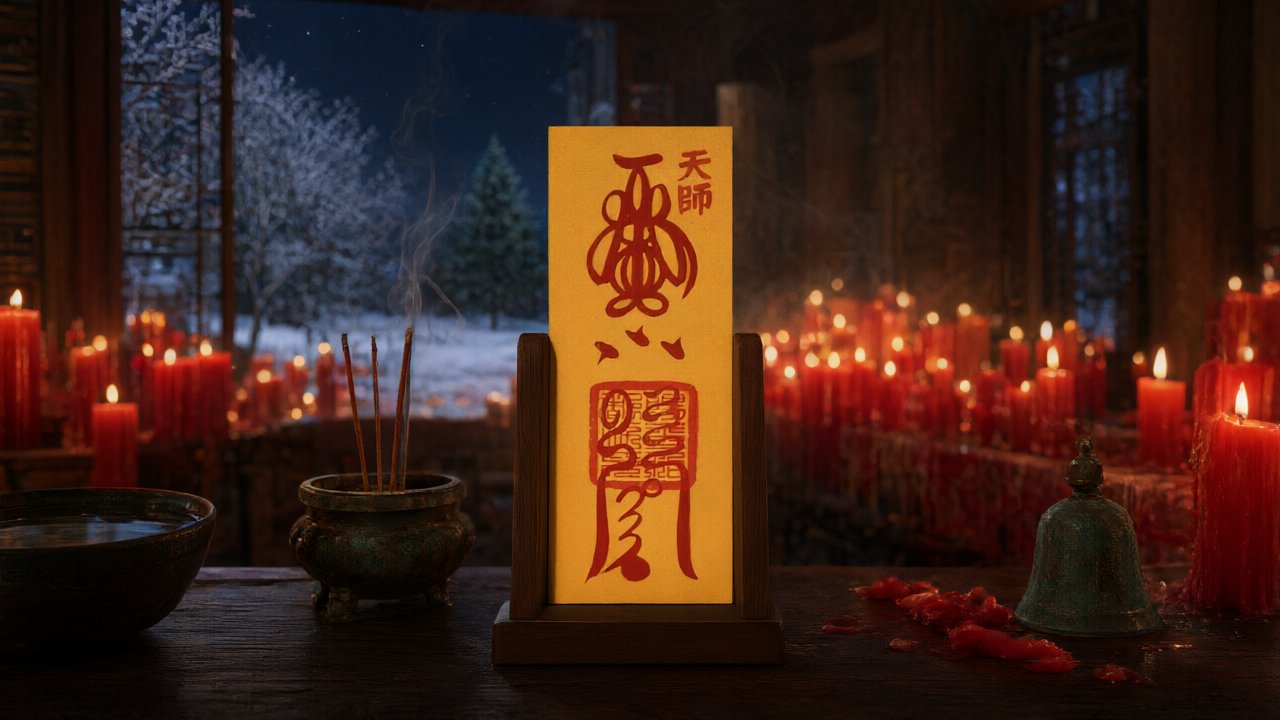
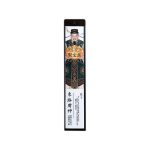
Mt. Longhu Celestial Master Consecrated Luck Transformation Talisman (Zhuan Yun Fu)
When luck stalls, energy needs to shift. The Luck Transformation Talisman channels the ancient Ta
Mt. Longhu Celestial Master Consecrated Luck Transformation Talisman (Zhuan Yun Fu)
When luck stalls, energy needs to shift. The Luck Transformation Talisman channels the ancient Ta
🔍 Sign #3: You Feel “Unseen” — By People, By Systems, By Luck Itself
Your emails vanish. Your applications disappear into black holes. You speak clearly in meetings — and are interrupted, paraphrased incorrectly, or simply ignored. You send a thoughtful gift — and receive no acknowledgment. You post something meaningful online — and it gets zero engagement, while trivial posts go viral.
This isn’t imposter syndrome. It’s a classic sign of weakened Gui Ren Yun (貴人運) — your “Noble Person Luck”, the energetic current that draws helpful people, timely opportunities, and unseen support.
In the Baopuzi (《抱朴子》, “Master Who Embraces Simplicity”) by Ge Hong (c. 283–343 CE), Gui Ren is described not as a person, but as a resonance: “When one’s virtue aligns with Heaven’s timing, helpers appear without summons — like dew forming on grass at dawn.”
When Gui Ren Yun dims, it’s not that people stop being kind. It’s that your energetic signal — your Xin Shen (心神), or Heart-Mind spirit — isn’t broadcasting clearly. You become acoustically invisible to synchronicity.
This is especially pronounced during annual cycles governed by the Tai Sui (太歲), the Grand Duke Jupiter — whose influence shifts each lunar year. In 2026, Tai Sui resides in the Chen (Dragon) sector, affecting those born in the Year of the Dragon, Dog, Rabbit, and Ox most directly. But even if your birth year isn’t clashing, prolonged Wei Qi stagnation mutes your ability to receive Gui Ren’s resonance — making you feel perpetually overlooked.
You don’t need a bazi chart to verify this. Ask: Do I feel like my efforts vanish into silence — even when I know they’re good? If the answer is yes — that’s Sign #3.
🌿 The 3-Step Zhuan Yun Reset (No Priest Required)
Recognizing these signs isn’t about assigning blame — it’s about reclaiming agency. The Zhengyi Daoist tradition doesn’t treat luck as fate. It treats it as flow, and flow can be redirected.
Here are three concrete, actionable steps — drawn from Mt. Longhu ritual practice and documented feng shui custom — that you can begin this afternoon.
Step 1: Clear the “Static” With a Salt-Water Threshold Rinse (5 Minutes)
Salt has long been used in Zhengyi purification rites — not as magic, but as a symbolic conductor to break energetic inertia. This isn’t superstition; it’s functional ritual hygiene.
What to do:
– Mix 1 tablespoon of coarse sea salt (not iodized) into 1 cup of warm water.
– Dip a clean white cloth (cotton or linen) into the solution and wring it out until damp — not dripping.
– Wipe the entire threshold of your front door — top lintel, both side jambs, and the bottom sill — moving from outside to inside. This symbolically clears residual dissonance entering your space.
– Dispose of the cloth and solution outdoors — never down the drain.
Why it works (traditionally held): The threshold is the Qi gateway of your home. In the Yangzhai Sanyao, it’s written that “the mouth of the house breathes first” — meaning all Qi enters through this plane. A salt-water wipe resets its energetic “tuning”, preventing the accumulation of stagnant frequencies that amplify repetitive disruptions.
Do this once a week — especially on the 1st and 15th of each lunar month, days traditionally observed for household cleansing in Zhengyi custom.
Step 2: Activate Your “Gui Ren Corner” With a Brass Gourd (10 Minutes)
Every home has a Gui Ren Fangwei (貴人方位) — the directional zone associated with noble person luck. Its location depends on your birth year, but there’s one universal anchor: the Southwest corner of your main living space (or bedroom, if you work from home). This sector corresponds to the Earth element — the stabilizing force that grounds opportunity and attracts trustworthy allies.
What to do:
– Locate the Southwest corner of your primary room (use a simple phone compass app — face Southwest, then trace the 90° angle inward).
– Place a polished brass gourd (Tong Lu, 銅葫蘆) there — no incense, no candles, no chanting required. Just stillness.
Why it works (documented conventional function): In feng shui symbolism, the gourd represents containment, healing, and protection — but crucially, its hollow shape is believed to “hold space” for Gui Ren energy to gather and resonate. Brass, a metal alloy historically consecrated in Mt. Longhu rituals, enhances clarity and transmission. Unlike mirrors or wind chimes, the gourd doesn’t deflect — it receives.
Leave it undisturbed for 21 days. Observe whether invitations, introductions, or unexpected offers begin arriving — not because the gourd “makes them happen”, but because its presence subtly reorients your energetic field toward receptivity.
Step 3: Wear Your Intention — Not Just Your Talisman (Ongoing Practice)
Talismans aren’t passive amulets. In Zhengyi Daoist practice, their power is activated through intentional embodiment. The Mt. Longhu Celestial Master Consecrated Luck Transformation Talisman (Zhuan Yun Fu) is not a charm you tuck away. It’s a tool designed for ritual wearing — placed where your Qi flows most visibly: over the heart, near the throat, or tucked into your left sleeve (left side being the Yin channel, associated with receiving and transformation).
What to do (starting today):
– Before placing the talisman on your body, hold it in both hands for 30 seconds. Breathe slowly. Whisper once: “I release repetition. I welcome flow.”
– Wear it for at least 4 hours daily — ideally during key activities: commuting, meetings, signing documents, or sending important messages.
– At night, place it on a clean white cloth on your bedside table — never under your pillow or in a drawer.
Why it works (traditional belief): The Zhuan Yun Fu is inscribed with characters invoking the Jade Emperor’s Edict of Renewal, the Lingbao Tianzun’s Seal of Flow, and the Celestial Masters’ Script of Release. These are not spells — they are energetic signatures, consecrated through 49 days of fasting, chanting, and ritual ink preparation by ordained priests of the Zhang family lineage on Mt. Longhu. When worn with conscious intention, the talisman acts as a focal point — a tuning fork that vibrates with your desire to shift, not for you.
This is manifestation grounded in discipline — not wishful thinking.
🏔️ Why Mt. Longhu? Why Now?
The Zhuan Yun Fu isn’t mass-produced. It’s drawn by hand on Xuan paper, using cinnabar ink ground from natural minerals, and consecrated during the Lingbao Jie (Lingbao Festival), a sacred 7-day observance held annually on Mt. Longhu. This year’s Lingbao Jie begins on November 23, 2026 — the Xiayuan Festival (November 23), a time when the veil between earthly and celestial realms is considered especially thin.
But you don’t need to wait. The talismans currently available were consecrated during the last Lingbao Jie — in October 2025 — and remain potent throughout their annual cycle. Their power comes not from expiration dates, but from the unbroken transmission of the Zhengyi lineage — founded by Zhang Daoling in 142 CE on Mt. Longhu, and continuously practiced for 1,884 years.
For those seeking authentic taoist talisman luck, Dehui Hall offers only those drawn and consecrated by ordained priests of this lineage — never printed, never replicated, never rushed.
We also recommend pairing it with the Wu Lu Cai Shen Fu (Five Roads Wealth Talisman), especially if your repeated disruptions involve income, contracts, or financial timing. Its five directional seals harmonize with the Zhuan Yun Fu’s flow-resetting function — turning redirection into abundance.
In closing: Luck Isn’t Given — It’s Reclaimed
You didn’t break your luck cycle. You entered a season of dissonance — and seasons change.
The three signs — repetition, stagnation, invisibility — aren’t punishments. They’re feedback. Like a dashboard warning light, they tell you where your energy is pooling, how your environment is resonating, and when your signal needs retuning.
The Mt. Longhu Celestial Master Consecrated Luck Transformation Talisman (Zhuan Yun Fu) is not a miracle. It’s a companion in the work — a physical anchor for the internal shift you’re already beginning.
If you’d like a free, printable checklist of these three steps — with visual guides for threshold wiping, Southwest corner mapping, and talisman wearing protocol — comment “GUIDE” below. We’ll send it instantly.
Taoist talismans are sacred spiritual tools rooted in 1,800 years of tradition. Their power comes from sincere belief and the consecration rituals of ordained priests. Results vary by individual — approach with an open heart and respectful intention.
Further Reading & Cultural Context
- Taoism on Wikipedia — Overview of Taoist philosophy, history, and practices
- Talismans in world cultures — Cross-cultural overview of talismanic traditions
FAQ
Q: How long does it take to notice a shift after starting the Zhuan Yun Reset?
A: Traditionally, practitioners observe subtle changes within 7–21 days — often beginning with improved sleep, clearer decision-making, or unexpected small openings (e.g., a delayed reply arriving, a forgotten contact reaching out). Major life shifts follow sustained practice.
Q: Can I use the Zhuan Yun Fu alongside other spiritual tools — crystals, tarot, Reiki?
A: Yes. In Zhengyi Daoist practice, talismans are seen as complementary — not exclusive — tools. What matters is consistency of intention, not exclusivity of method.
Go Deeper
- Dream Interpretation — free, takes about two minutes: see what your recurring dream points to
- BaZi Chart Reading — free, takes about two minutes: read your Four Pillars chart for this year
- If you want the physical remedy behind this article, browse our consecrated talismans and feng shui pieces.
Frequently Asked Questions
How long does it take to notice a shift after starting the Zhuan Yun Reset?
Traditionally, practitioners observe subtle changes within 7–21 days — often beginning with improved sleep, clearer decision-making, or unexpected small openings (e.g., a delayed reply arriving, a forgotten contact reaching out). Major life shifts follow sustained practice.
Can I use the Zhuan Yun Fu alongside other spiritual tools — crystals, tarot, Reiki?
Yes. In Zhengyi Daoist practice, talismans are seen as complementary — not exclusive — tools. What matters is consistency of intention, not exclusivity of method.
Related Taoist Instruments
About DeHuiTang — This article is part of our Taoist cultural education series. Explore more authentic Taoist knowledge, Feng Shui wisdom, and destiny philosophy at our main site.