You Got the Promotion — But Still Feel Stuck
You signed the offer letter. Your colleagues congratulated you. Your LinkedIn post got 47 likes. You even bought a new leather portfolio.
And yet — when you sit at your desk each morning, something feels off. Not excitement. Not momentum. Not clarity.
Just… heaviness. Like walking uphill in slow motion. Like your own energy is resisting the very success you worked so hard to earn.
You’re not imagining it. And you’re not alone.
Many people meet the same stretch of setbacks after a breakthrough: the promotion that brings burnout, the new role that triggers imposter syndrome, the business launch that stalls before its first real client signs. It’s not incompetence. It’s not bad timing. It’s something older — and far more precise — than modern psychology or productivity hacks can name.
This isn’t about effort. It’s about alignment.
The Warrior Who Never Left the Battlefield
In the year 220 CE — over 1,800 years ago — a general named Guan Yu died on the battlefield near Linju, defending his lord with unwavering loyalty. His body was buried in Dangyang, his spirit enshrined not as a war hero, but as Guan Di: the Martial God of Righteousness, Loyalty, and Justice.
What makes this remarkable isn’t just his death — it’s what happened after.
Within decades, temples began appearing across southern China. By the Tang Dynasty (618–907), imperial edicts formally honored him. In the Ming Dynasty, he was elevated to Guān Shèng Dì Jūn — “Holy Emperor Guan.” And by the Qing Dynasty, nearly every city, guild, and merchant house had a small altar bearing his image — not for protection from enemies, but for guidance in conduct.
Why would warriors and merchants — two groups with seemingly opposite values — both swear by the same deity?
Because Guan Di doesn’t represent brute strength or blind obedience. He embodies righteous action: doing what is just even when it costs you, staying loyal even when no one is watching, and pursuing success only when it aligns with integrity.
In Zhengyi Daoist tradition — the lineage rooted at Mt. Longhu (龍虎山), where Taoist priests have consecrated talismans for over 1,800 years — Guan Di is not worshipped as a god to be petitioned. He is invoked as an archetype of aligned will. His presence signals that career energy isn’t blocked by lack of skill — it’s stalled by misalignment between your outer role and your inner truth.
Think of it like a compass needle spinning wildly — not because the magnet is broken, but because there’s too much iron nearby distorting the field. Your promotion didn’t change your purpose. It only revealed the existing distortion.
This is why so many report the same pattern: things move forward until they reach a threshold — a title, a salary, a corner office — and then pause. Not regress. Not collapse. Just… still.
That stillness isn’t failure. It’s a signal.
Three Ways to Restore Career Alignment (No Resignation Required)
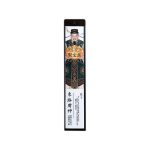
Mt. Longhu Celestial Master Consecrated Career & Success Talisman (Shi Ye Fu)
Your career is your life mission made visible. The Career Success Talisman channels 1,800 years o
Mt. Longhu Celestial Master Consecrated Career & Success Talisman (Shi Ye Fu)
Your career is your life mission made visible. The Career Success Talisman channels 1,800 years o
Alignment isn’t found in grand decisions. It’s restored in quiet, consistent recalibrations — the kind you can begin today, without asking permission or changing jobs.
1. Reclaim Your Desk as a Sovereign Space (Feng Shui Principle: Yangzhai Sanyao)
The Yangzhai Sanyao (《陽宅三要》), or “Three Essentials of the Living Dwelling,” is a foundational feng shui text dating back to the Song Dynasty. It teaches that human well-being is shaped not by cosmic fate alone, but by three physical anchors: the entrance, the kitchen, and the bedroom — and, by extension, the primary workspace.
Your desk is your modern-day command post. If it sits directly in a walkway — where people pass behind you, or where doors swing open into your personal zone — your wei qi (defensive life-energy) remains in low-grade alert. You may feel distracted, defensive, or mentally fatigued, even after eight hours of focused work.
Do this now: Turn your chair so your back is not exposed to high-traffic flow. If space allows, place a low cabinet or tall potted plant (with rounded leaves, not spiky) beside or slightly behind you — not as a barrier, but as a subtle energetic buffer. This simple shift reestablishes your sense of sovereignty. You’re not hiding. You’re holding ground.
2. Audit Your Daily Rituals for Integrity Leaks
Taoist masters don’t measure success by output — they measure it by continuity of intention. A ritual done half-heartedly erodes more energy than skipping it entirely.
Ask yourself: What daily action do you perform because you think you should — not because it serves your values or deepens your craft?
Examples include:
– Scrolling industry news for 45 minutes while telling yourself “I’m staying informed” — when in truth, it’s anxiety masquerading as diligence;
– Attending meetings you know won’t move anything forward — out of fear of seeming disengaged;
– Using language in emails (“as per our discussion”) that distances you from your own voice.
These aren’t moral failures. They’re integrity leaks — tiny drains on your shen (spiritual vitality). Over time, they accumulate like static on a clear channel.
Do this now: Choose one recurring task this week and redesign it to reflect your actual values — not your job description. If you value clarity, replace vague phrases with direct ones. If you value depth, block 25 minutes of uninterrupted thinking time — and guard it like a sacred appointment.
3. Invoke Guan Di Through Action, Not Invocation
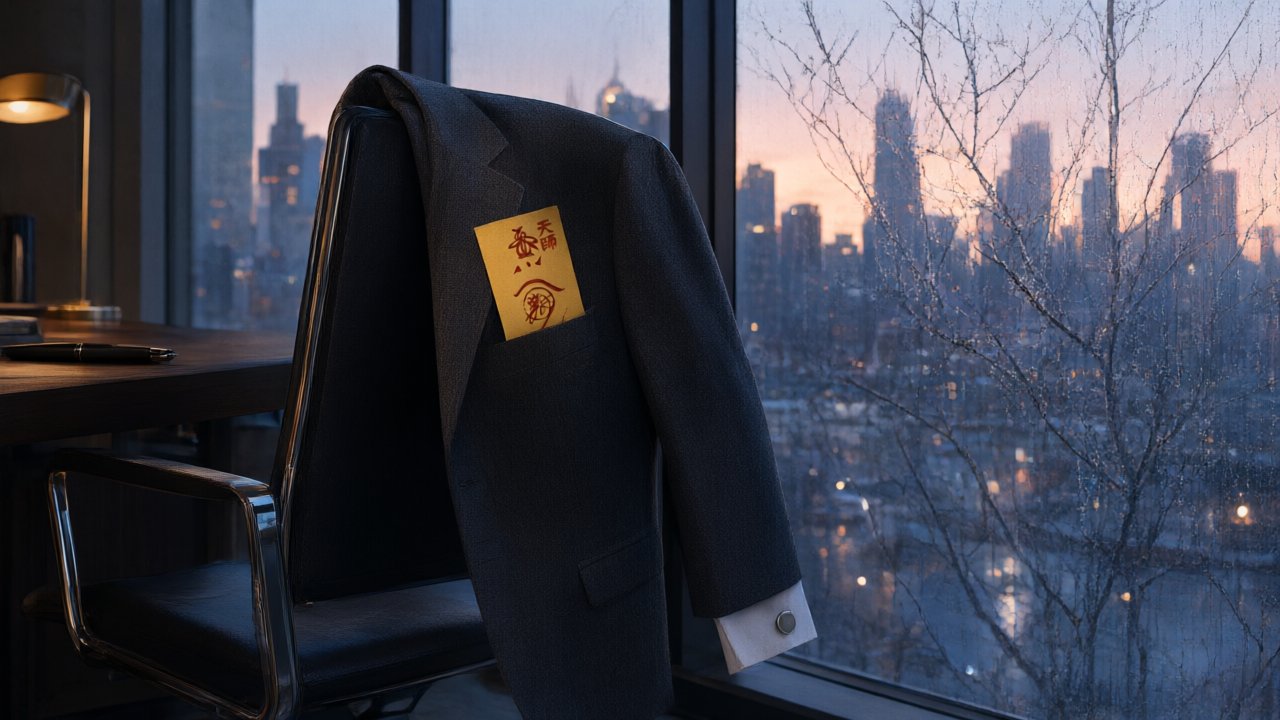
Here’s what most guides miss: Guan Di’s power isn’t activated by chanting or burning incense alone. It’s awakened through embodied righteousness — small, daily choices that reaffirm your internal compass.
The Qingjing Jing (《清靜經》), or Classic of Clarity and Stillness, teaches that “stillness arises not from silence, but from the cessation of contradiction.” When your words match your actions, your posture matches your intent, and your commitments match your capacity — that is the true ritual.
So instead of lighting a candle and hoping for a breakthrough, try this:
At the end of each workday, write down one thing you did today that felt quietly righteous — not impressive, not strategic, just true. Examples: declining a request that violated your boundaries; speaking up for a colleague who wasn’t in the room; choosing rest over performance when your body signaled fatigue.
Keep these notes for seven days. Don’t analyze them. Just collect them. Then reread them. You’ll notice a pattern emerging — not of what you should be doing, but of who you already are when unobstructed.
That pattern is your career alignment. It was never lost. It was simply drowned out.
Why the Mt. Longhu Celestial Master Consecrated Career & Success Talisman (Shi Ye Fu) Is Different
Talismans are not magic bullets. They are resonance tools — designed not to override your reality, but to amplify your innate frequency.
The Mt. Longhu Celestial Master Consecrated Career & Success Talisman (Shi Ye Fu) is drawn in accordance with the Zhengyi Daoist lineage — the same tradition that has maintained unbroken transmission from Zhang Daoling, the First Celestial Master, on Mt. Longhu since the Eastern Han Dynasty.
It does not promise promotions, raises, or viral success. What it does support is clarity of direction, steadiness under pressure, and resilience in ethical choice — precisely the qualities Guan Di embodies and the exact energies disrupted when career movement feels paradoxically heavy.
Each Shi Ye Fu is hand-drawn on xuan paper using cinnabar ink, then undergoes kaiguang — the sacred eye-opening ritual performed by ordained priests at the Zhengyi Daoist Temple on Mt. Longhu. This is not symbolic. It is a documented conventional practice: the ritual aligns the talisman’s form with celestial patterns described in classical texts like the Baopuzi, preparing it to serve as a focal point for zhi qi (focused vital energy).
When placed respectfully on your desk — beneath a clear glass weight, not taped or folded — the talisman functions like a tuning fork: gently reminding your nervous system, your focus, and your decisions of your deeper alignment.
It works best alongside the three practices above — not instead of them. Because real career transformation isn’t about climbing higher. It’s about standing more fully where you already are.
We also offer the Gui Ren Fu (Noble Person Talisman), which supports the emergence of mentors, advocates, and unexpected helpers — especially valuable during periods of transition where external validation feels thin.
In closing: Your career isn’t stuck — it’s waiting for you to return
That heavy feeling at your desk? That quiet doubt after the celebration? That sense of moving forward without moving through?
It’s not a sign that you’re failing. It’s evidence that something inside you is still listening — to your values, your limits, your integrity — even when your resume says otherwise.
Guan Di didn’t win battles by ignoring danger. He won by seeing clearly what needed protecting, and acting without hesitation.
Your next step isn’t another certification, another networking event, or another all-nighter. It’s returning — gently, deliberately — to the quiet center where your loyalty lies not with titles or outcomes, but with your own unwavering standard of right action.
For those seeking authentic support in restoring that alignment, Dehui Hall offers the Mt. Longhu Celestial Master Consecrated Career & Success Talisman (Shi Ye Fu), drawn and consecrated in the living Zhengyi lineage.
Taoist talismans are sacred spiritual tools rooted in 1,800 years of tradition. Their power comes from sincere belief and the consecration rituals of ordained priests. Results vary by individual — approach with an open heart and respectful intention.
Further Reading & Cultural Context
- Taoism on Wikipedia — Overview of Taoist philosophy, history, and practices
- Talismans in world cultures — Cross-cultural overview of talismanic traditions
FAQ
Q: Can I carry the Shi Ye Fu in my wallet instead of placing it on my desk?
A: Yes — though desk placement is traditionally preferred for career alignment, carrying it close to your person (in a wallet, inner jacket pocket, or briefcase) maintains energetic connection during commutes and meetings. Avoid folding or laminating it.
Q: How long does it take to feel a difference?
A: Talismans support energetic alignment, not instant outcomes. Many report increased mental clarity or reduced decision fatigue within 7–14 days of consistent, respectful placement — especially when paired with the three alignment practices outlined above.

Experience Sharing: Has this ever happened to you? Tell us your story.
Frequently Asked Questions
Can I carry the Shi Ye Fu in my wallet instead of placing it on my desk?
Yes — though desk placement is traditionally preferred for career alignment, carrying it close to your person (in a wallet, inner jacket pocket, or briefcase) maintains energetic connection during commutes and meetings. Avoid folding or laminating it.
How long does it take to feel a difference?
Talismans support energetic alignment, not instant outcomes. Many report increased mental clarity or reduced decision fatigue within 7–14 days of consistent, respectful placement — especially when paired with the three alignment practices outlined above.
Related Taoist Instruments
About DeHuiTang — This article is part of our Taoist cultural education series. Explore more authentic Taoist knowledge, Feng Shui wisdom, and destiny philosophy at our main site.