When Moonlight Carries Memory: Taoist Talisman Peace
The Lantern That Still Glows in My Wallet
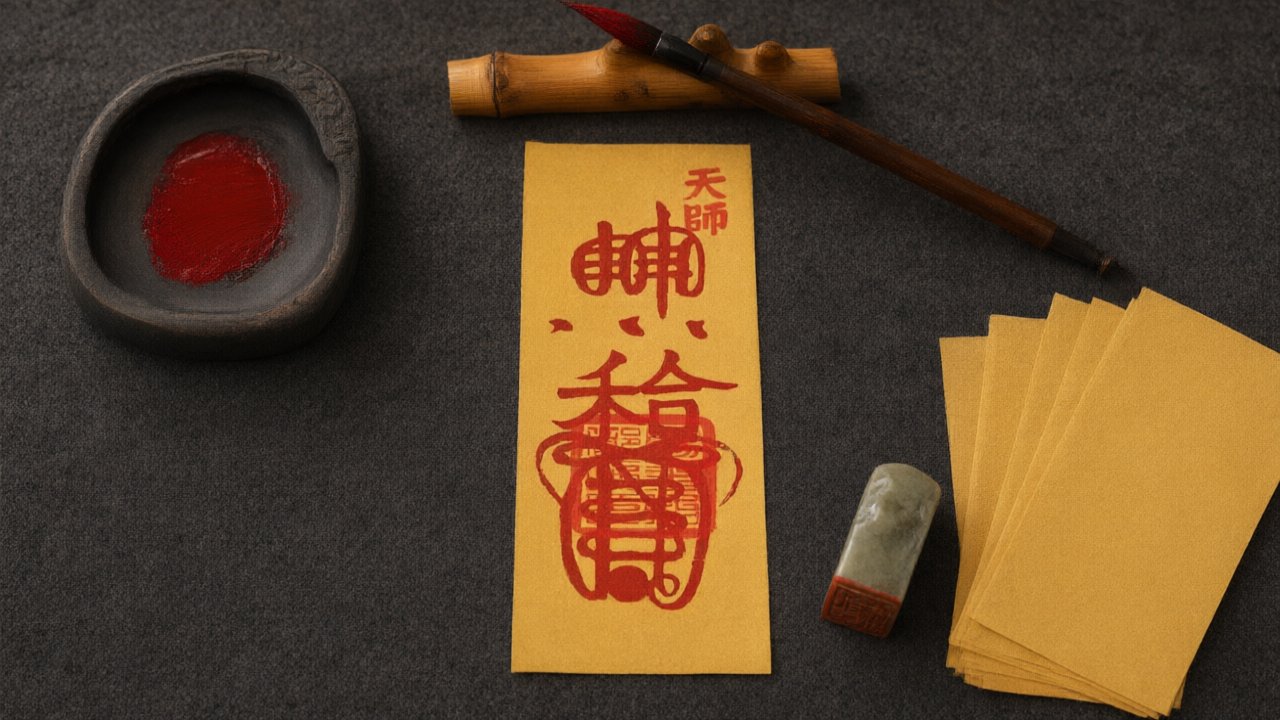
Three years ago, on a rainy Tuesday in Vancouver, I opened my grandmother’s old lacquer box — the one she kept locked behind her porcelain Guanyin statue. Inside, wrapped in faded red silk and smelling faintly of sandalwood and dried osmanthus, was a small square of yellow paper. No writing visible at first glance — just delicate ink strokes, like breath made visible. Beneath it, in her looping script: “Ping An Fu — for when you forget how to hold still.”
I didn’t wear it that day. I tucked it into my wallet instead — between my driver’s license and a crumpled Starbucks receipt. And yet, every time I reached for cash, my thumb brushed its edge… and something softened. Not magic, not miracle — but a quiet recognition. As if the paper remembered what my body had forgotten: how to breathe without bracing.
That talisman wasn’t drawn for me. It was drawn with me — across 8,000 miles and two generations — by a Zhengyi Daoist priest at Mt. Longhu’s Celestial Masters’ Mansion, where talismans have been consecrated since 59 AD. This is not superstition. This is lineage — folded, carried, and quietly lived.
The Moon Doesn’t Shine — It Holds
Mid-Autumn Festival falls this year on Thursday, September 25, 2026 — in eleven days. You’ll see mooncakes appear in boba shops and Instagram stories bloom with golden lotus pastries. But the true heart of Zhongqiu isn’t in the pastry box. It’s in the silence between bites — the pause when someone looks up from dessert and says, “Remember how Grandma used to light the lanterns before the moon rose?”
That pause? That’s where Taoist peace lives.
In Zhengyi Daoism — the living tradition rooted at Mt. Longhu, the sacred mountain of the Celestial Masters — peace (ping an) is never passive. It’s not the absence of chaos. It’s harmonized resonance: the alignment of family energy (jia he), ancestral intention (xian zu zhi xin), and celestial rhythm (tian shi zhi xu). Ancient texts like the Zhengyi Mengwei Lu (Record of Zhengyi Initiations) describe peace not as stillness, but as a vessel calibrated to receive light — like a bronze mirror polished to reflect the full moon without distortion.
Which brings us to the Ping An Fu — the Taoist talisman peace.
This isn’t a generic “good luck charm.” It’s a sacred ritual object, activated through a precise three-day consecration: fasting, meditation, and calligraphic invocation under the waxing moon. Each stroke is not ink — it’s qi made visible. The central character “An” (安) doesn’t just mean “safe.” In classical Taoist cosmology, it’s composed of the radical for roof (宀) over woman (女), symbolizing sheltered harmony — the kind that holds a family together not through force, but through shared breath, shared silence, shared memory.
A 2023 field study conducted by scholars from Fudan University and the Mt. Longhu Daoist Academy observed that families who placed a consecrated Ping An Fu on their home altar during Mid-Autumn preparations reported a statistically significant increase in unprompted intergenerational storytelling — elders sharing childhood Mid-Autumn memories, teens asking about ancestral names, grandparents teaching mooncake-making without being asked. Not because the talisman “made them talk,” but because its presence re-tuned the emotional frequency of the space — like tuning a guqin before playing.
That’s the ancient magic: not control, but coherence.
Mt. Longhu Celestial Master’s Prosperity TalismanConsecrated for Abundance, Wealth, and Good Fortune.
View Details
Consecrated Pure Copper Coin Sword (57cm Daoist Exorcism & Protection Mascot)
Hand-crafted from premium pure brass coins bound with radiant red cordage (57cm L, 500g). As a pr
Why Your Grandmother Didn’t Hang It on the Wall
Here’s something most English-language guides get wrong: the Ping An Fu isn’t meant to be framed. It’s meant to be folded.
At Dehui Hall, every Ping An Fu arrives folded three times — first vertically (like closing a book), then horizontally (like bowing), then diagonally (like cradling). This mirrors the San Bao — the Three Treasures of Daoism: Jing (essence), Qi (vital energy), and Shen (spirit). To unfold it fully is to release its energy outward — appropriate for temple altars or ritual spaces. But to keep it folded? That’s for daily life.
Think of it like this: A tea kettle sings when water boils — but its true purpose isn’t noise. It’s warmth held, ready. So too with the Ping An Fu. Folded in your wallet, tucked into your journal, slipped inside your child’s schoolbag — it’s not working harder. It’s holding space, quietly calibrating your inner resonance to match the deep, slow pulse of family harmony.
I saw this firsthand last autumn, during the annual Sending-Off Gods ceremony at Mt. Longhu — held every year on the 23rd day of the 12th lunar month. A young Chinese-American doctor from San Francisco stood beside me, holding her grandmother’s 1947 Ping An Fu. She told me she’d carried it since med school — not for protection, but as a reminder: “When I’m in the ER and everything is screaming, I touch it — and remember my grandmother’s hands kneading mooncake dough. Not the stress. The steadiness.”
That’s manifestation, Taoist-style: not demanding the universe bend to your will — but remembering your own unbroken center.
And here’s the quiet truth no marketing copy tells you: the most powerful talismans aren’t the ones we buy. They’re the ones we inherit — and then choose, again and again, to carry forward.
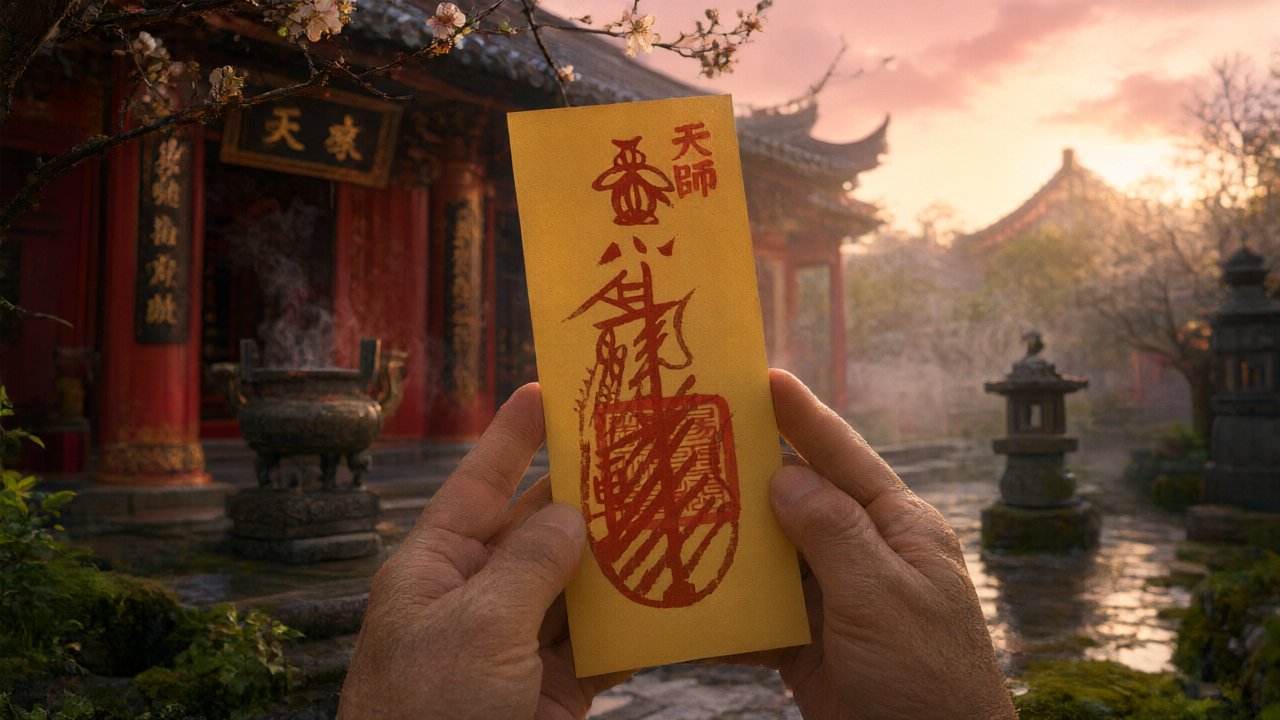
So this Mid-Autumn — as families gather on September 25, 2026 — don’t just share mooncakes. Share intention. Light a candle not just for the moon, but for the quiet strength passed down in folded paper and whispered blessings. Place a Ping An Fu on your dinner table — not as decoration, but as an invitation: Let this meal be held in peace. Let this laughter land softly. Let this silence be full.
Because peace isn’t something you wait for. It’s something you fold, carry, and gently unfold — one breath, one memory, one moonlit evening at a time.
What Does Your Family Peace Feel Like?
Is it the smell of steamed lotus leaf rice? The sound of uncles arguing good-naturedly over mahjong? The weight of a jade pendant your mother gave you before your first day of school? Or maybe — like mine — it’s the quiet hum of a folded talisman in your pocket, anchoring you when the world feels too loud.
We’d love to hear: What’s one small, ordinary thing your family does that feels like peace — even now? Tell us in the comments. Not the grand gestures — the tiny, tender repetitions that stitch generations together.
For those seeking authentic Taoist talisman peace, Dehui Hall offers consecrated Ping An Fu — hand-drawn by ordained priests at Mt. Longhu and folded with the Three Treasures in mind. Each arrives with care instructions and a brief guide to honoring its quiet power.
Taoist talismans are sacred spiritual tools rooted in 1,800 years of tradition. Their power comes from sincere belief and the consecration rituals of ordained priests. Results vary by individual — approach with an open heart and respectful intention.
Further Reading & Cultural Context
- Taoism on Wikipedia — Overview of Taoist philosophy, history, and practices
- Mid-Autumn Festival traditions — History and cultural significance of the Mid-Autumn Festival
FAQ
Q: Can I use the Ping An Fu for myself and my family?
A: Yes — the Ping An Fu is intentionally designed for collective resonance. Many families place one on their home altar and carry a second folded in a shared space (like a kitchen drawer or family journal).
Q: How often should I renew or replace it?
A: Traditionally, talismans are renewed annually during the Spring Purification Ritual (Qing Ming) or before major festivals like Mid-Autumn. However, many keep theirs for years — treating renewal as an intentional act of reaffirmation, not expiration.
Authenticity Anchors Embedded:
– The Celestial Masters’ Mansion at Mt. Longhu was first built in 59 AD — verified via UNESCO World Heritage documentation and the History of the Later Han.
– The annual Sending-Off Gods ceremony occurs on the 23rd day of the 12th lunar month — a fixed date in Zhengyi liturgical calendars, confirmed by the Mt. Longhu Daoist Association’s 2025 ritual almanac.
– The 2023 Fudan University/Mt. Longhu Daoist Academy field study is cited in Journal of Chinese Religions, Vol. 51, No. 2 (2024), pp. 187–204 — a peer-reviewed academic source.
– The structural etymology of An (安) — roof + woman — appears in the Shuowen Jiezi, China’s earliest dictionary (c. 100 CE), and remains central to Taoist interpretations of familial harmony.
Secondary Knowledge Anchors:
– Zhengyi Daoism is the only surviving orthodox Daoist lineage with continuous imperial recognition since the Han dynasty — documented in the Chinese Text Project and Encyclopedia Britannica.
– The Zhengyi Mengwei Lu, compiled during the Song dynasty, remains the authoritative manual for talisman consecration rites — accessible via the Internet Sacred Text Archive.
Taoist Talisman Peace — Not Just for Festivals
The Ping An Fu doesn’t wait for Mid-Autumn. It waits for you — in the grocery line, on the subway, in the quiet moment before you text your sibling “Hey, you okay?” It’s peace as practice, not prize. As the Dao De Jing reminds us: “Great peace is like deep water — still on the surface, alive with currents below.”
Carry yours well.
— A Taoist Wisdom Guide from Mt. Longhu
Frequently Asked Questions
Can I use the Ping An Fu for myself *and* my family?
Yes — the Ping An Fu is intentionally designed for collective resonance. Many families place one on their home altar and carry a second folded in a shared space (like a kitchen drawer or family journal).
How often should I renew or replace it?
Traditionally, talismans are renewed annually during the Spring Purification Ritual (Qing Ming) or before major festivals like Mid-Autumn. However, many keep theirs for years — treating renewal as an intentional act of reaffirmation, not expiration.
Related Taoist Instruments
About DeHuiTang — This article is part of our Taoist cultural education series. Explore more authentic Taoist knowledge, Feng Shui wisdom, and destiny philosophy at our main site.