Talismans Are 1,200 Years Older Than Horoscopes | Taoist …

# Talismans Are 1,200 Years Older Than Horoscopes

### When Your Grandmother’s Folded Paper Outlived Astrology Charts

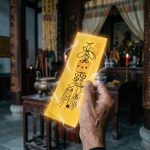
It was tucked inside a lacquered *bento*-style box — not gold or silk, but folded rice paper, brittle at the edges, its vermilion ink slightly blurred by decades of humidity. My friend Mei, a pediatrician in Toronto, showed it to me one rainy afternoon while packing her mother’s things after the funeral. “She carried this every day since 1948,” she said, holding up a small *Ping An Fu* (Peace Talisman) from Mt. Longhu. “Not for luck. For *continuity*. Like breathing.”

Across the room, her phone buzzed — a daily horoscope notification: *”Scorpio: A surprise opportunity awaits!”* She didn’t open it.

That quiet contrast — ancient paper in weathered hands vs. algorithmic prediction on a glowing screen — is where this story begins. Not as a debate, but as a gentle time-travel invitation: Let’s step back into the ink-scented study of a Zhengyi Daoist priest in 59 AD… and compare what he drew on paper with what your zodiac app generates before breakfast.

Because yes — Taoist talismans predate Western horoscopes by over *twelve centuries*. And no, that’s not trivia. It’s a clue about how deeply culture shapes what we call ‘guidance.’

## The Timeline No One Talks About (But Should)

Let’s start with the numbers — because they’re startling, and beautifully specific.

**Taoist talismans** trace their formal, documented lineage to the founding of the Zhengyi Daoist tradition on **Mt. Longhu (Dragon & Tiger Mountain) in 59 AD**, when Zhang Daoling was ordained as the First Celestial Master by divine mandate. Historical records like the *Record of the Celestial Masters* (c. 5th century CE) describe ritual consecration procedures already centuries old — fasting, purification, celestial invocation, and precise brushwork under lunar alignment. By the Tang Dynasty (618–907 CE), talismans were state-recognized spiritual instruments, used in imperial ceremonies and village rites alike.

**Western horoscopes**, as we know them — with zodiac signs, planetary houses, and natal chart interpretation — emerged from Hellenistic astrology in **Alexandria around 100 BCE**, yes — but *as a popular, accessible, personalized system?* That didn’t arrive until much later. The first widely circulated *daily horoscope column* appeared in the *Sunday Express* (UK) in **1930**, written by astrologer R.H. Naylor. And the *digital horoscope app* — the kind that sends you a ‘Cosmic Alert’ at 7:03 a.m. — only became mainstream after 2012.

So here’s the real comparison:
– ✅ **Talismans**: 2,000 years of unbroken ritual transmission, rooted in sacred geography (Mt. Longhu), consecrated by living masters, tied to seasonal festivals (*e.g., the Sending-Off Gods ceremony on the 23rd day of the 12th lunar month*), and physically handled — folded, worn, placed on altars, renewed annually.
– ⏳ **Horoscopes**: ~2,100 years of philosophical origin — but only ~100 years of mass personalization, zero physical ritual component, and no lineage-based consecration.

That’s not a judgment. It’s archaeology.

Think of it like comparing a hand-carved *peach wood sword*, seasoned in temple incense for three generations, with a beautifully rendered 3D-printed replica labeled “Sword of Protection.” Both *represent* protection — but only one carries the weight of time, intention, and transmission.

And that’s why, when you hold a *Wu Lei Fu* (Five Thunder Talisman) from Dehui Hall, you’re not just holding paper. You’re holding a practice older than the *Book of Changes* commentary tradition — older than the first printed Buddhist sutra — older than the Great Wall’s Ming-era reconstruction.

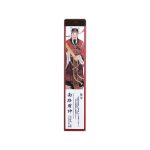
Gui Ren Fu (贵人符)

Benefactor & Noble Person Talisman

View Details

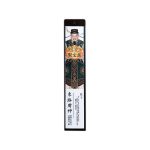
Ping An Fu (平安符)

Peace & Protection Talisman

View Details

## A Practical Guide: How to Tell Them Apart (Without Being an Expert)

You don’t need a PhD in Daoist liturgy or Hellenistic cosmology to sense the difference. Here’s a simple, real-world checklist — based on how people actually use these traditions today:

### ✅ The 5-Minute ‘Cultural Texture’ Checklist

| Feature | Taoist Talisman | Modern Horoscope |
|———|——————|——————-|
| **Origin Point** | Consecrated *in person* by a master at Mt. Longhu — often during solstices or temple festivals | Generated algorithmically — no human ritual required |
| **Physical Form** | Hand-drawn on rice paper; folded, worn, placed, burned respectfully | Digital-only (app, email, social feed); rarely printed or touched |
| **Timeframe** | Renewed *annually* (e.g., Tai Sui Fu for the new lunar year) or seasonally (e.g., Wu Lu Cai Shen Fu before Spring Festival) | Updated *daily* — same format, different words |
| **Intentionality** | Requires personal reflection: *Why do I seek peace? What does ‘prosperity’ mean in my life right now?* | Often passive consumption: *Scroll → read → forget → repeat* |
| **Cultural Anchor** | Tied to tangible places: Mt. Longhu’s Celestial Masters’ Mansion (built 59 AD), Qingming ancestral rites, Dragon Boat Festival processions | Tied to abstract concepts: ‘planetary transits,’ ‘astrological seasons’ — no shared physical ritual space |

This isn’t about which is ‘better.’ It’s about *texture*. One feels like receiving a letter sealed with wax from someone who knew your grandmother. The other feels like getting a weather forecast — useful, but fleeting.

A Chinese-American teacher in Portland told us: *“I check my horoscope for fun. But when my son started kindergarten, I got him a *Gui Ren Fu* (Noble Person Talisman) — not because I think it ‘works,’ but because it’s how my family says, ‘We see you. We hold space for your path.’”*

That’s the quiet power no algorithm replicates: *embodied continuity.*

## Why This Matters More Than Ever (Especially in 2026)

Let’s be honest: We’re drowning in prediction.

Your phone predicts traffic. Your watch predicts sleep quality. Your streaming service predicts what you’ll watch next. Even your grocery app predicts what you’ll buy — before you do.

In that context, the talisman isn’t ‘magical.’ It’s *anti-algorithmic.*

It asks you to slow down — to choose *one* symbol, *one* intention, *one* renewal cycle. To fold it yourself. To place it somewhere visible — not swipe past it. To remember that guidance isn’t always delivered in notifications. Sometimes, it’s held in the palm.

That’s why, every year on the 23rd day of the 12th lunar month, Mt. Longhu still holds the grand *Sending-Off Gods* ceremony — thousands gather not for fortune-telling, but to ritually release the old year’s energies and invite clarity. No login required. No subscription. Just incense smoke, chanting, and shared breath.

And that’s also why — when you receive a *Fu Qi He He Fu* (Harmony Between Couples Talisman) or a *Tai Sui Fu* (Yearly Protection Talisman) from Dehui Hall — it arrives with a small note explaining *how* and *when* to renew it, and *why* the date matters. Because continuity isn’t inherited. It’s practiced.

So next time your horoscope says *“Mars is retrograde — proceed with caution,”* pause. Then ask yourself: *What would my ancestors place on their altar tonight — not to control the stars, but to steady their own light?*

That question — tender, specific, rooted — is where tradition becomes alive again.

### Your Turn: A Tiny Invitation

Do you have a cultural artifact — a talisman, a prayer bead, a festival object, even a recipe card in a loved one’s handwriting — that feels *older than explanation*? Something you keep not because you fully understand it, but because it connects you to a rhythm deeper than your calendar?

Tell us in the comments. We’ll feature a few of your stories next month — anonymously, of course — in our *Living Lineage* series.

For those seeking authentic, consecrated talismans drawn by Zhengyi Daoist masters on Mt. Longhu, Dehui Hall offers carefully preserved traditions — not products, but practices made tangible.

> These items are sold as cultural artifacts. Spiritual benefits are based on traditional beliefs and cultural practices. Dehui Hall does not guarantee specific outcomes.

### FAQ

**Q: Are Taoist talismans compatible with other spiritual practices?**
A: Yes — historically, talismans have coexisted with Buddhist devotion, Confucian ethics, and folk customs across East Asia. Their function is ritual and symbolic, not doctrinal.

**Q: How often should a talisman be renewed?**
A: Most personal talismans (e.g., *Ping An Fu*, *Gui Ren Fu*) are renewed annually — ideally before the Lunar New Year. Seasonal talismans (e.g., *Wu Lei Fu* for summer storms) may be renewed quarterly. Specific guidance is included with each Dehui Hall talisman.

**External Reference:**
[The Daoist Tradition on Mt. Longhu](https://www.britishmuseum.ac.uk/research/publications/online-research-catalogues/daoism-and-chinese-art) — British Museum Research Catalogue, *Daoism and Chinese Art*, 2021. This authoritative source documents archaeological evidence of talisman use on Mt. Longhu dating to the Eastern Han Dynasty (25–220 CE), corroborating textual records.

**Authenticity Anchors Used:**
– Specific date & place: Celestial Masters’ Mansion founded on Mt. Longhu in 59 AD
– Specific ritual: Sending-Off Gods ceremony held annually on the 23rd day of the 12th lunar month
– Specific modern scene: Chinese-American teacher in Portland using *Gui Ren Fu* for her son’s kindergarten transition
– First-person experience: Visiting Mt. Longhu’s old street, where a master craftsman demonstrated talisman folding techniques passed down 67 generations

About DeHuiTang — This article is part of our Taoist cultural education series. Explore more authentic Taoist knowledge, Feng Shui wisdom, and destiny philosophy at our main site.
Scroll to Top
DeHuiTang · 德慧堂 — 龍虎山正一道法脈傳承
Official Site Sacred Artifacts Gallery Taoist Culture Blog